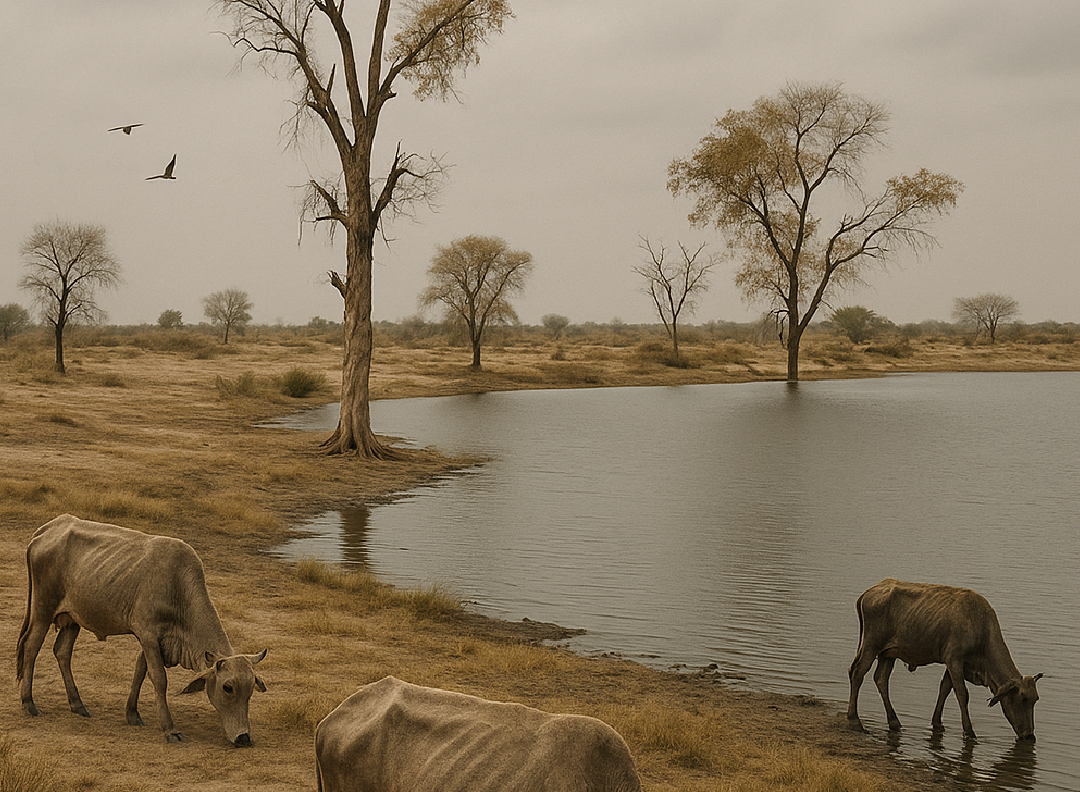


The Sindh Engro Coal Mining Company (SECMC), which mines coal and operates a coal power plant in Tharparkar, was awarded ‘Gold Certification’ by the global organisation Alliance for Water Stewardship (AWS) four months ago. This award was given to the company for its responsible use of water and its sustainable management.
The AWS issues three-tier certifications to companies/sites on improved water management, including Core, Gold, and Platinum (the highest) categories. The SECMC is presenting the AWS certification as a certificate of “environmentally friendly” performance. However, the local people, especially the residents of Gorano and Dhakkarcho villages and the surrounding areas are surprised by the award as they have been protesting against the disposal of coal mine wastewater into the dunes since the start of the project.
Locals complain that the dirty water ponds (artificial lakes) of Gorano and Dhakkarcho have wreaked havoc on the area, causing irreparable environmental and economic damage. Now, after nine years of struggle, the Sindh government has not only accepted their demand for payment of compensation arrears but has also announced a complete stop to the discharge of contaminated mine water in Gorano, which endorses the position of the Thar residents.
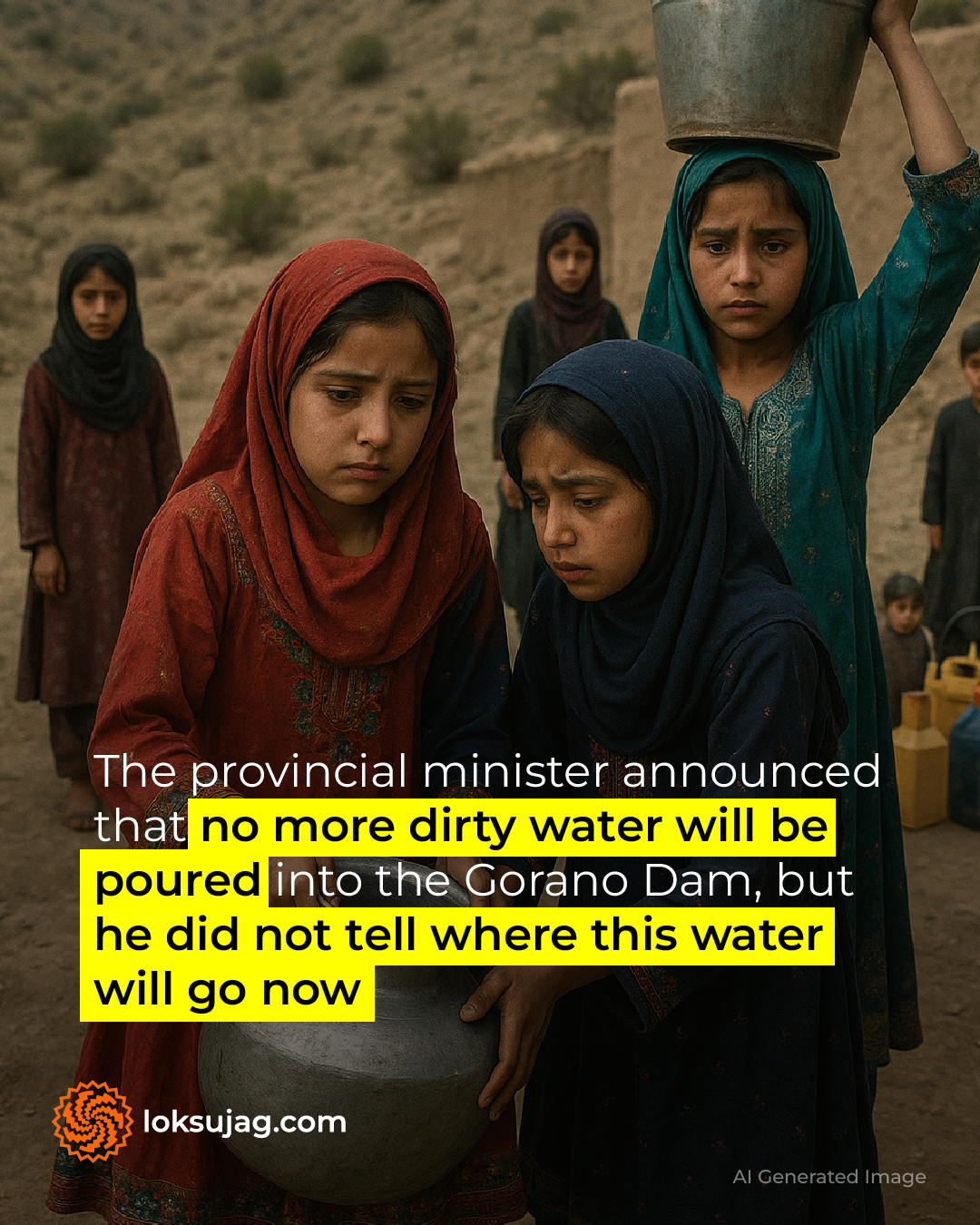
Sindh Minister for Energy, Development and Planning Syed Nasir Hussain Shah visited Thar Coal Block-II and Gorano recently (Friday, Aug 8) along with MNA Mahesh Malani. Later, while addressing an open court in Islamkot, he said that the company management had assured that the discharge of Thar coal water into Gorano dam would be completely stopped within three/four months. However, he did not say where the polluted water coming out of the coal mines would be dumped now.
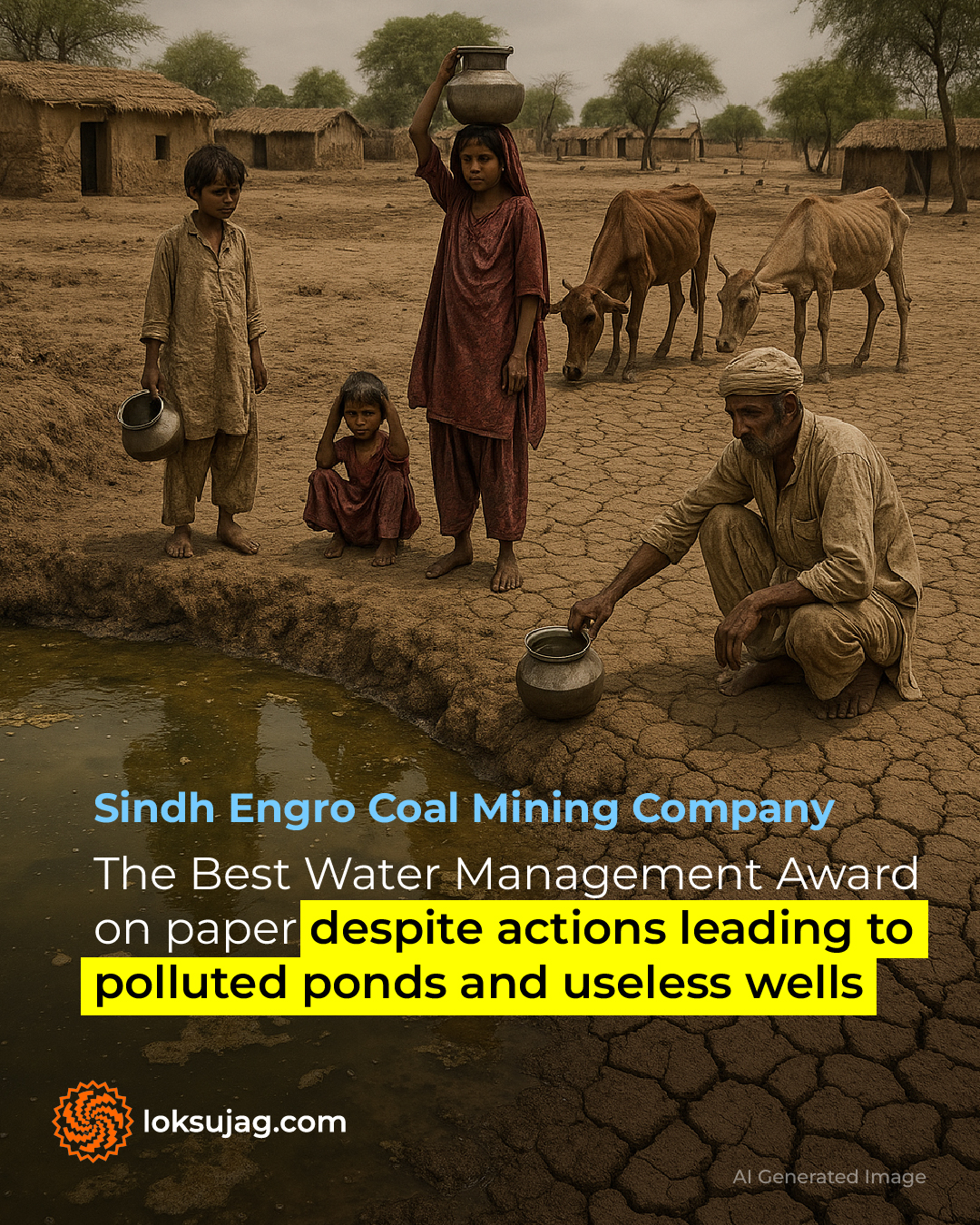
Coal mining firm had applied for certification after getting AWS registration
The Sindh Engro Coal Mining Company (SECMC), , a joint venture of the Sindh government and a private firm, has told Lok Sujag in written replies that the company had obtained formal registration with the AWS and applied for certification. The audit team of this international organisation had visited the site last October and on May 14 this year and later, the company was granted ‘Gold Certification’ for three years. According to the coal mining company, the requirements for the AWS certification included good water governance, sustainable water balance, good water quality and safe water for all, sanitation and hygiene.
Water expert and researcher Dr Hassan Abbas is suspicious about the process of the award, saying that big companies like SECMC get reports written in their favour from the organisations like the International Union for Conservation of Nature (IUCN) and also get awards for better water management on their own request. This is not an award from any independent organization, he asserts and adds, “In Thar, pollution of local water resources and water scarcity has become a serious public health issue and I have already written about this in my report on the coal project.”
Bhim Raj, a resident of Gorano, also has similar views about the award, saying that the company tests the water of the lakes on the days when the water has changed its form during the rainy season and such reports are also not made available to the locals.
“Dry trees, ruins, protests by the locals and cases filed in the courts in the vicinity of Gorano and Dhakkarcho are also a ‘certification’ for the coal company. But the global organization (AWS) probably didn't see all these things and didn't contact us.”
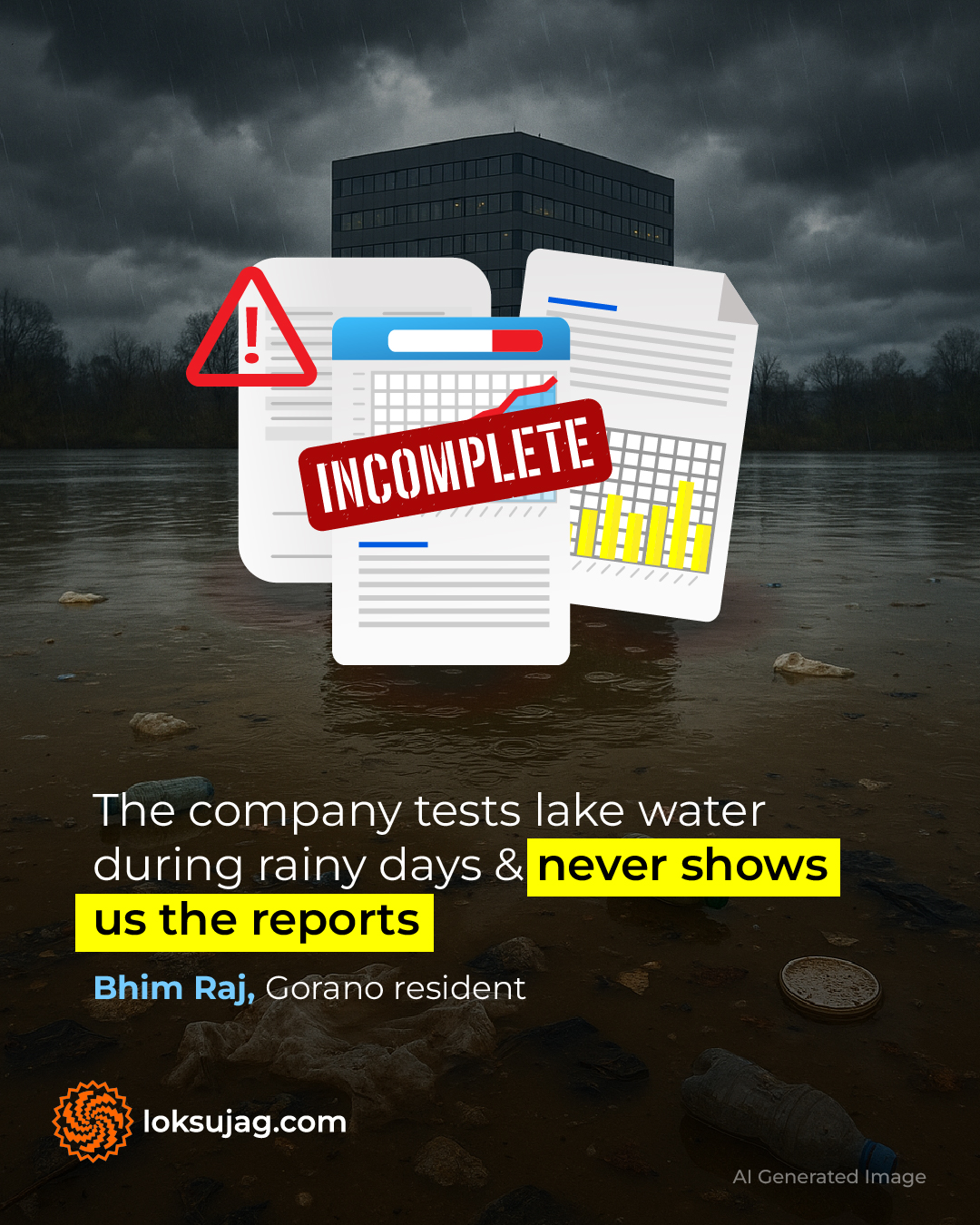
Dozens of wells have dried up near coal mines
The coal field spread over 9,000 sq km in Tharparkar district has been divided into 14 blocks, with coal currently being extracted from only two blocks. Coal Block-I covers an area of about 122 sq km, which has been developed by a Chinese company and is extracting coal from here.
Block-II covers an area of about 95 sq km in Islamkot tehsil.
The SECMC is operating here also extracting Thar coal through open-cut mining, which also requires large amounts of contaminated water and mud to be removed from the mines. This causes the water level in nearby areas to drop and serious problems such as salinity and sea salt are created where contaminated mine water is disposed of.
Paul Winn, a researcher at the University of Sydney (Australia), released his report on the potential impacts of drainage from the Thar coal field in 2020. He warned that after 30 years, there would be a severe shortage of water in the mining area and this trend would spread far to the west and north. Millions of residents could lose access to groundwater or they would have to dig deeper wells. This prediction proved correct within seven to eight years and dozens of wells in communities near the mines have dried up.
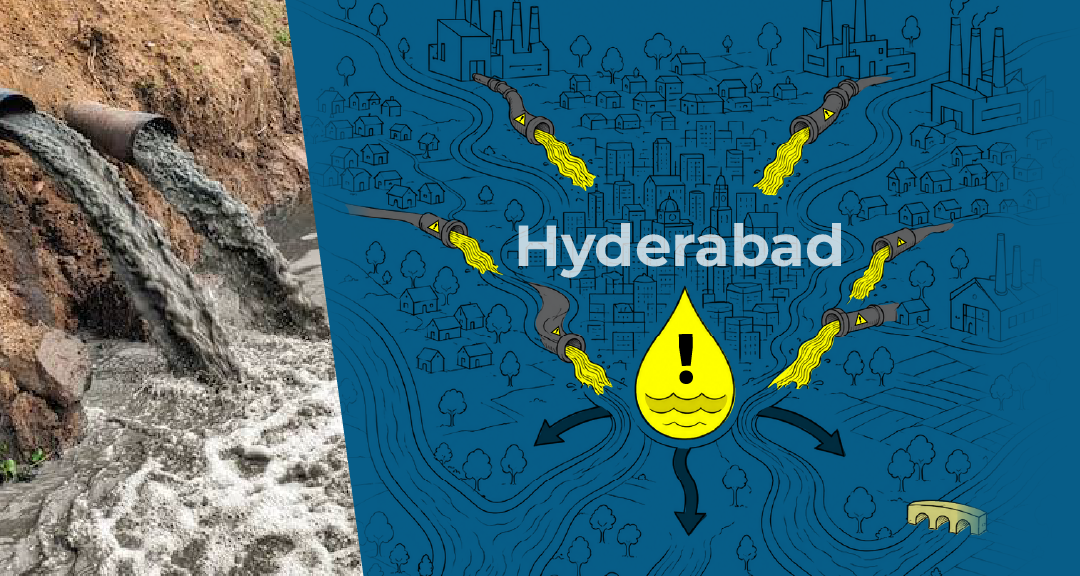
On the other hand, in 2016, a reservoir (or artificial lake) was built in the village of Gorano, 35km from the mines, to store wastewater and drainage from Block-II. It is also known as the ‘Gorano Dam’.
Long protests and litigation against the coal-mining project
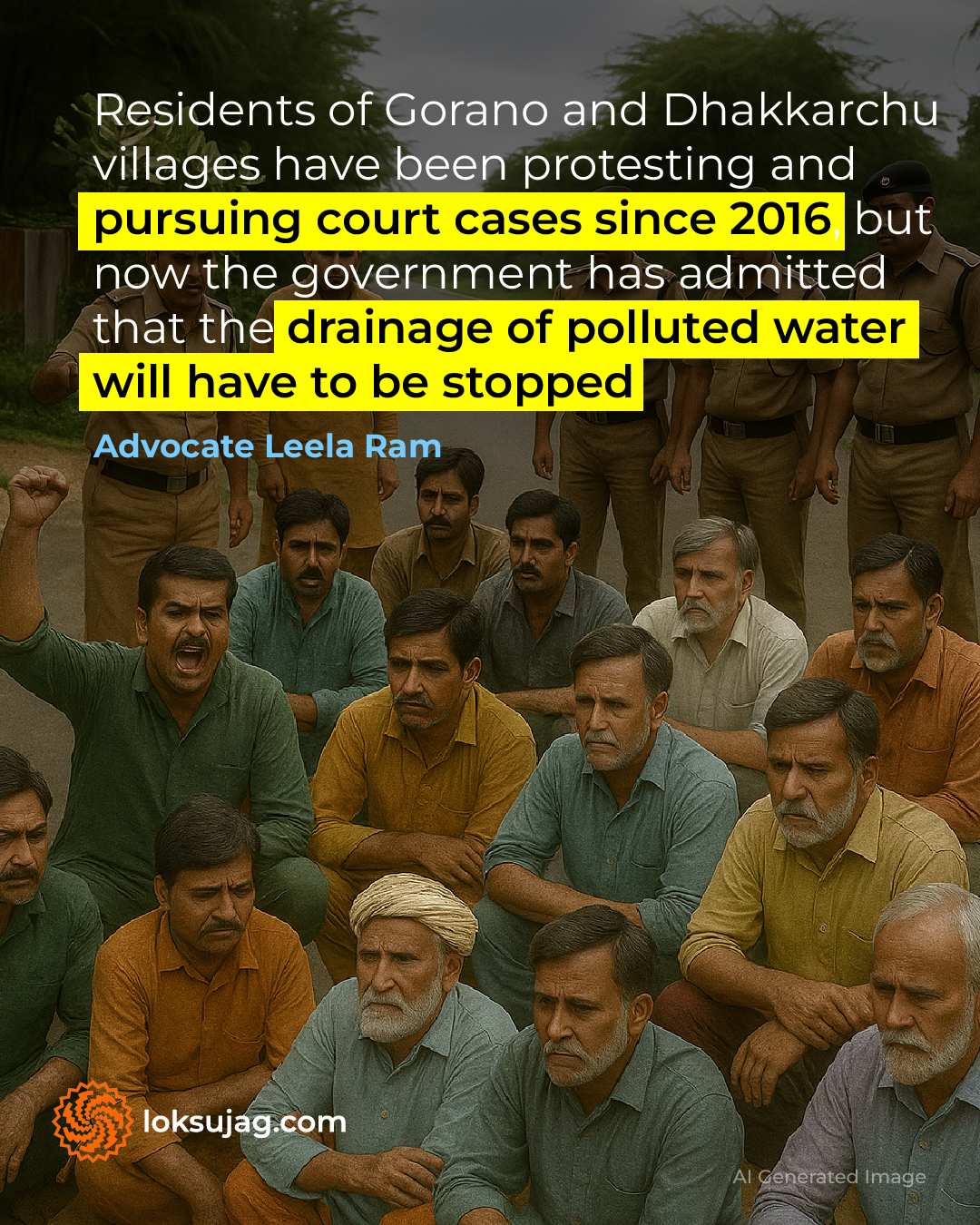
Locals have not only been protesting for years against the project but have also approached the courts and one of petitions is pending before the Supreme Court. One of the dozens of petitioners, Bhim Raj Thar, has been continuously protesting against the negative impacts of the coal project since 2016.
“Before the coal mining, hundreds of families in Gorano used to drink water from only 27 wells here, but now all these wells have become so toxic (saline) that their water is unusable. The residents of the village had filed a constitutional petition in the Sindh High Court Hyderabad Circuit on the environmental and other issues of the project, which was later transferred to the Central Bench in Karachi. The two-judge bench of the high court did not accept his position in its judgment on May 10, 2023, which he has challenged in the Supreme Court.
According to Bhim Raj, the documents and reports relied on by the high court in the judgment were ‘managed’ and none of them was related to the destruction by water of the coal mines.
The petitioners’ lawyer, Leela Ram, who is himself one of the victims, says that the foul-smelling sewage and waste pond (Gorano Dam) are destroying the agricultural land, groundwater and environment of the area. However, the SECMC has been denying these allegations.
Another such constitutional petition was filed before the Mirpur Khas Circuit of the high court last year, which was dismissed by the court on the ground that the petitioner was not a direct victim of the Gorano site.
Gorano Lake and increasing salinity in groundwater
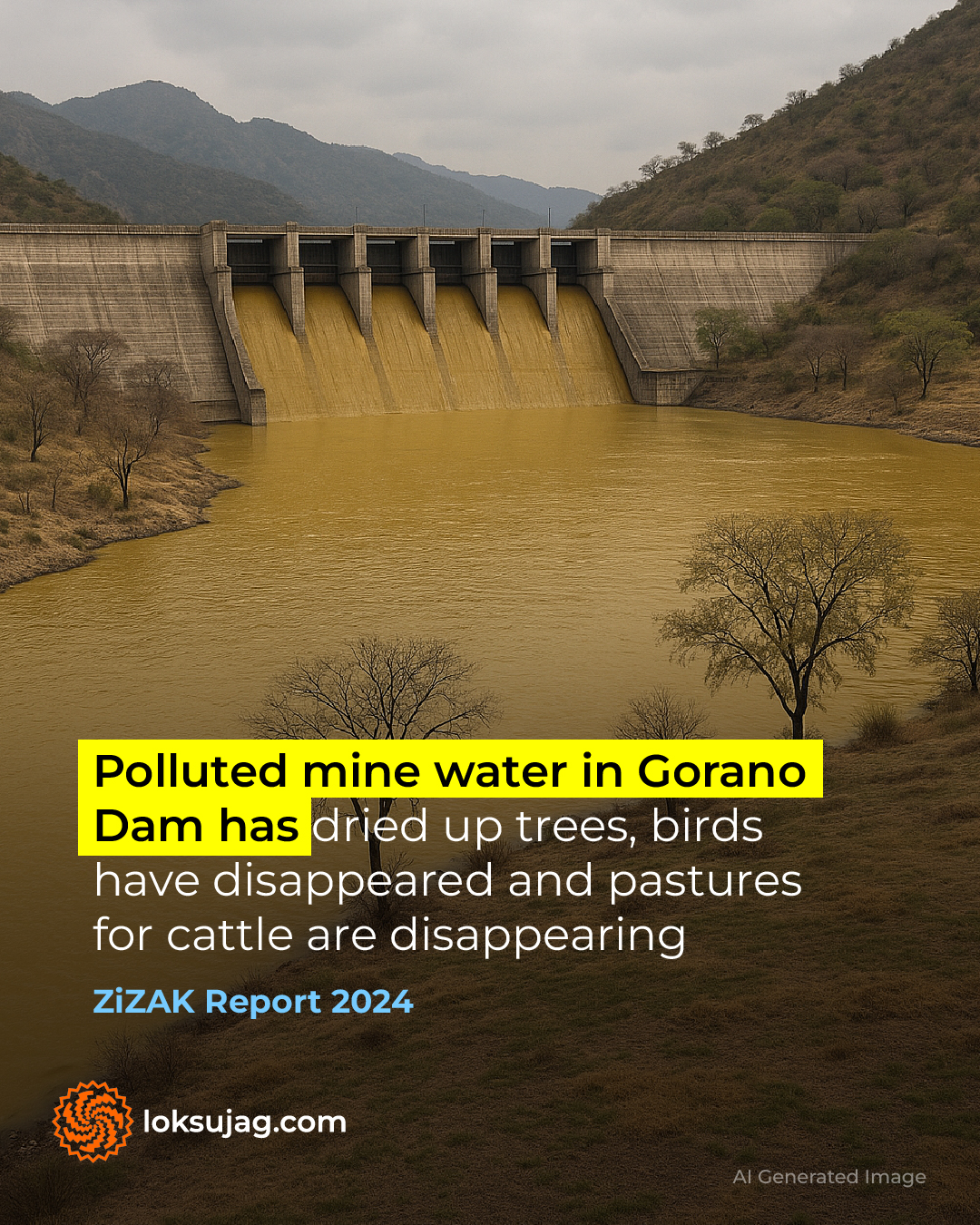
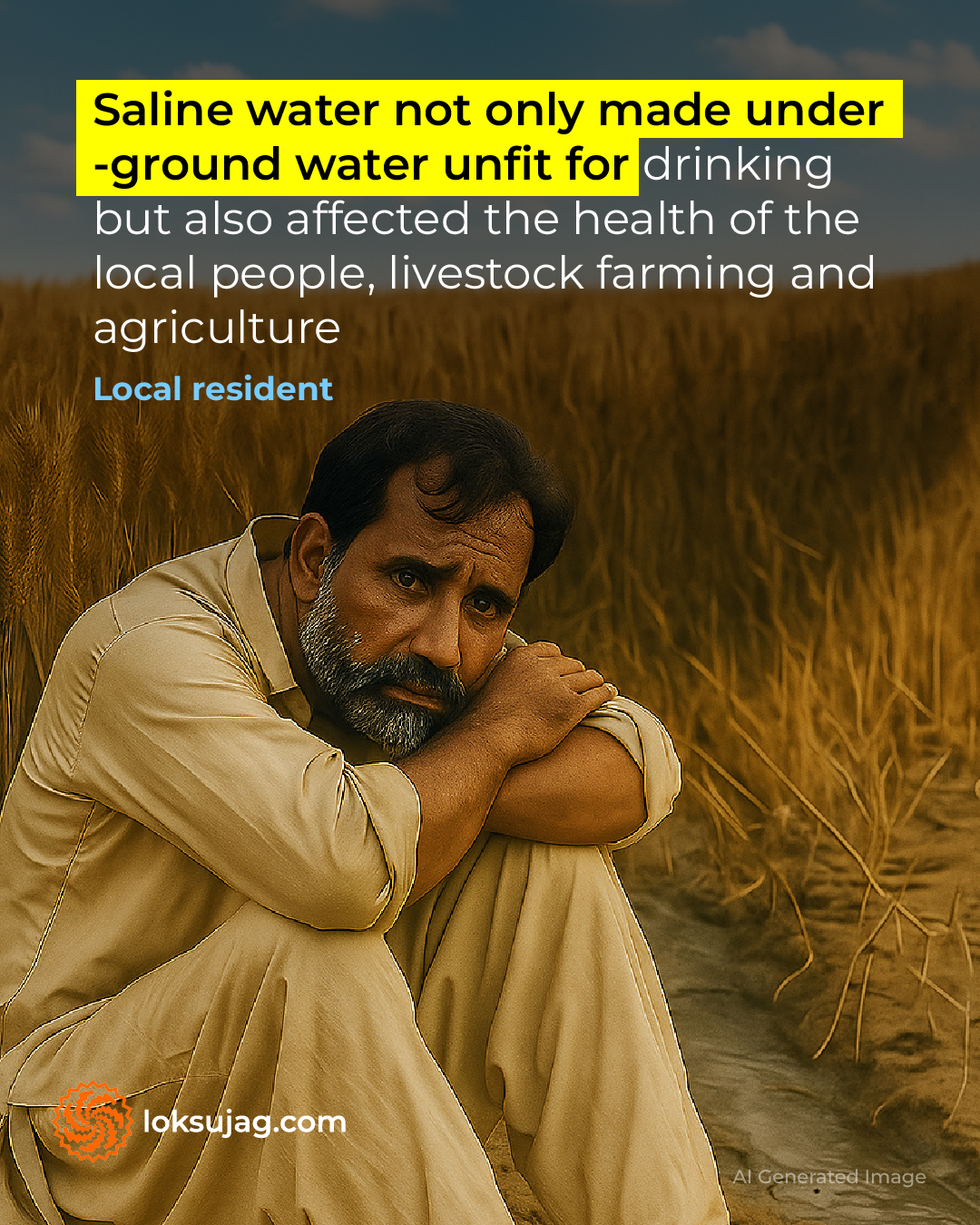
In December 2018, experts from the IUCN visited Gorano. Their report came out in 2019, in which the lake was declared a new habitat for migrating birds. The SECMC also put this report on its website. However, a report by ZiZAK Pvt Ltd, an environmental organisation working in Pakistan, shows that now migrating birds are nowhere to be seen around the coal-mining sites. All the trees, plants and herbs that come under the influence of this lake, which covers an area of about 500 acres, have already died. According to this report, the amount of salinity (TDS) in the water flowing from the mines into the lake is around 3,000 PPM (parts per million), but the amount of TDS in the lake is increasing due to evaporation.
“Our team made three visits to Gorano from March 2019 to February 2024. During this time, the TDS level in the water entering the lake remained the same, but in the water already present, it increased to more than 5,000 PPM.”
It should be noted that the TDS in drinking water should not exceed 1,000 in any case.
In 2019, when the TDS was around 3,000, birds were seen in the lake, but they were never seen again in 2023 and 2024. The village wells have also become saline.
This report confirms that the health, sanitation, livestock farming, agriculture, etc. of the people around the dam are all being affected. The number of livestock has decreased significantly because there is neither water left for them nor pasture. Gorano Lake is becoming a symbol of death due to increasing salinity in the water.
Open-pit coal mining and its impact on groundwater
Open-pit or open-cut coal mining is a method in which a large open pit (stadium-shaped pit) is created to extract coal. This method is adopted in areas where the coal seams are close to the surface, which makes it easier to extract more coal at a lower cost and in a shorter time.
Chinese experts say that coal mining adversely affects the terrestrial ecosystem, groundwater recharge, flow, and natural drainage processes. This not only damages the underground water reserves (aquifers) but also changes the quality and quantity of the water. Since coal is located between aquifers, when it is extracted, cracks and fissures appear in the ground, causing the ground to sink. Water from the upper aquifers flows into the mine, and then this water and mud have to be pumped out to keep the mine dry.
They say that the spaces, passages and wells left empty by coal extraction destroy the natural cycle of underground water (aquifers). This process not only depletes underground water reserves and wells dry up, but also the water is absorbed into the limestone layers below, which also contaminates deep water reserves.
As a result, the fertility and productivity of the land along with the local water supply system are affected and vegetation begins to die out.
Not just drainage management, but also environmental protection
Experts believe that just drainage management is not enough for coal mining as environmental protection is also an important part of water management (coal-mine water management). Comprehensive water management should include at least three subsystems, including mine water drainage, water supply and environmental protection systems. That is, groundwater in mines and adjacent areas (during operation and after the mines are closed) should remain usable for domestic, industrial and agricultural purposes.
Chinese researchers say that if water or waste extracted from mines is left untreated, it pollutes the water on the surface of the ground as well as below it. Coal waste releases toxic substances that can endanger human health in nearby water bodies, soil and residential areas. They suggest two effective ways to control this pollution, one of which is activated carbon, which is not very expensive and is also commonly used for sewage treatment. The other is the treatment of coal wastewater through biotechnology.
Experts believe that the use of biological technology is an effective method that helps in removing odors and toxins from polluted water. This technology not only removes pollution quickly but also makes the water reusable.
The third solution is to create an artificial lake (such as the Gorano Dam), but experts call it an ineffective method.
Read this
Dry as dust: Rush to mine local coal worsens Tharparkar's long-standing water woes
No assessment of post-mining social impacts
The post-mining social impacts of Gorano and Dhakkarcho lakes will also be a matter of concern.
According to environmentalists, if the mines stop discharging salt water into the lake, even then, after the water dries up, the lake area will turn into a salt pan.
Due to the lack of vegetation on the surface of the land, the winds will spread these salts into the atmosphere, which will cause breathing and vision problems among people. People living near the lakes will have to relocate.
According to ZiZAK Pvt Ltd, when the operational team of SECMC was asked whether they had conducted any post-mining impact analysis for Gorano Lake and its environs, they said that no such modeling or study had been conducted.
On Friday, a resident of Thar, who was present in the open court of the provincial minister, on the government's announcement not to pour more polluted water into the Gorano Dam, said that there will be drainage from the mines, but who knows who will bear this calamity now.
Published on 28 Aug 2025