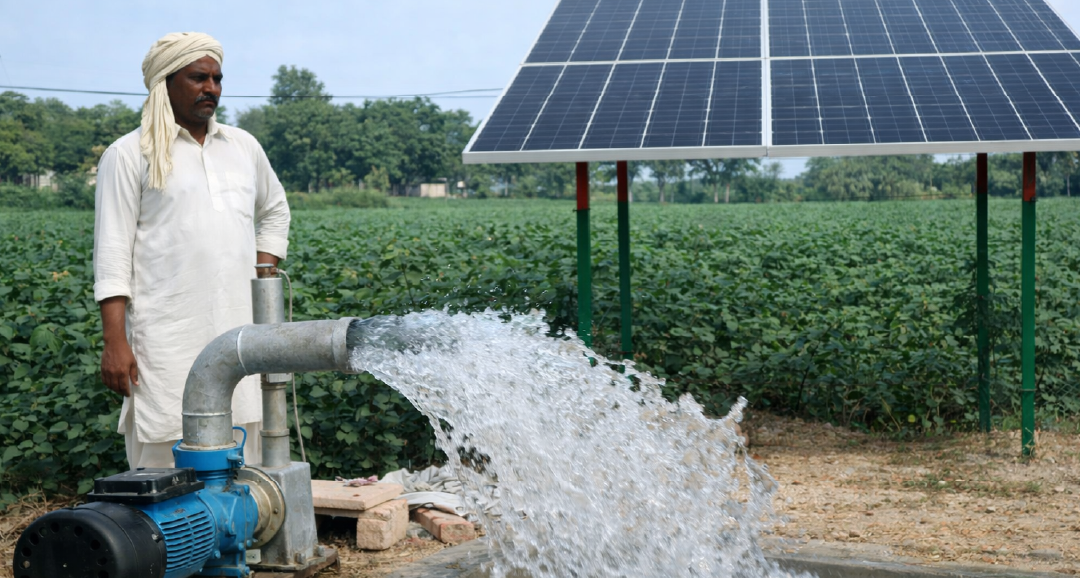


The process of converting registered agricultural tube wells from grid to solar in Balochistan is almost complete. This project has been carried out by the Balochistan Energy Department in collaboration with the Questta Electric Supply Company (Qesco) and the Zamindar Action Committee.
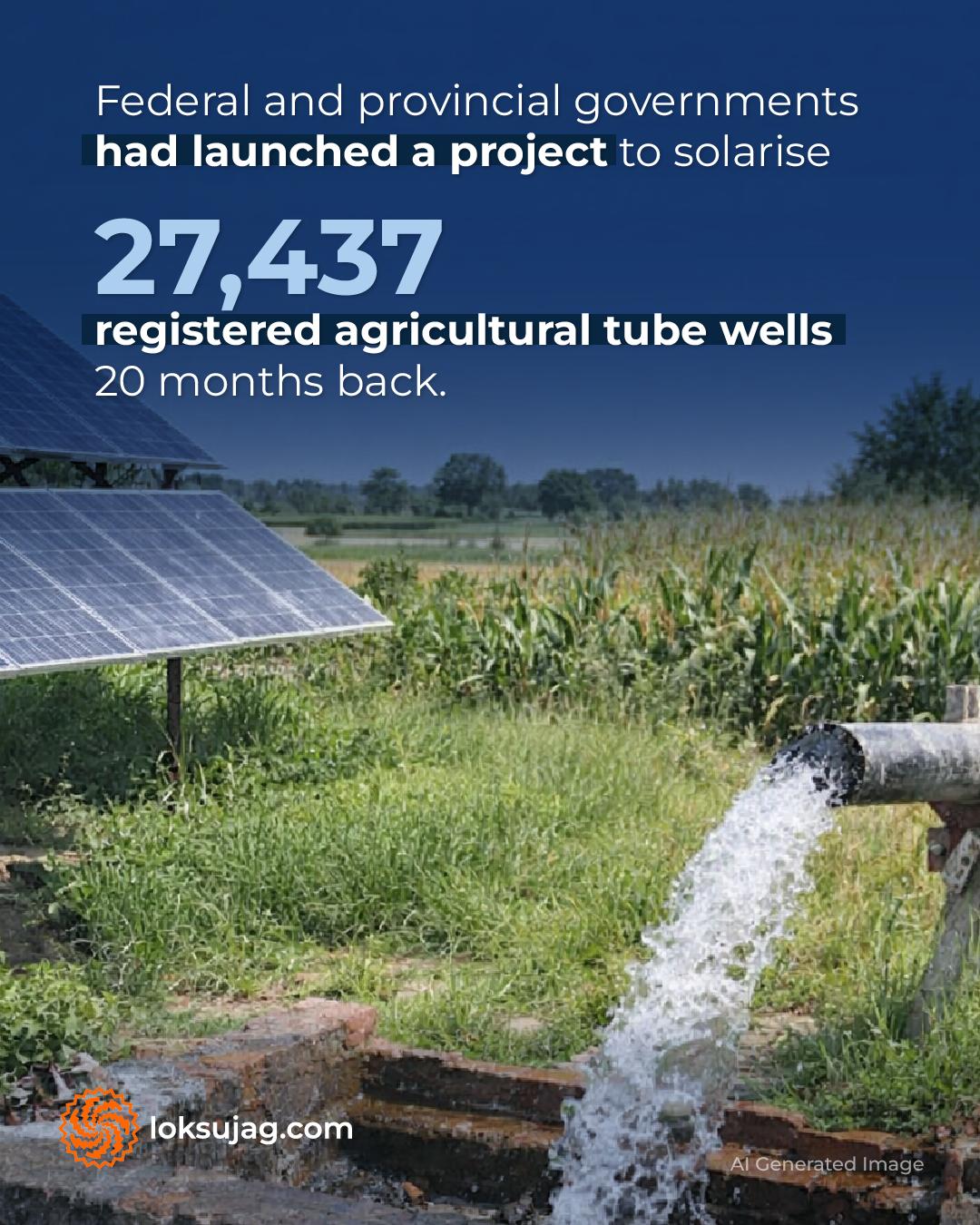
he federal and provincial governments, 20 months ago, had launched a project to solarise 27,437 registered agricultural tube wells running on legal connections of Qesco. The federal government provided 70 percent of the funds for this programme of about Rs55bn and the provincial government provided 30 percent.
The agricultural solarisation plan was first presented to the World Bank by the Ministry of Energy (Power Division) in March 2022 in order to control circular debt. It had also sought financial assistance for this, but the bank agreed only to pilot projects and technical assistance.
Later, the government decided to carry out the project on its own. Balochistan was given top priority because the gap between billing and revenue collection was wide. Agricultural consumers were not only being paid Rs23bn in annual subsidies but were also facing serious problems like loadshedding, low voltage, uncertain supply and power theft.
In July 2024, the federal and provincial governments reached an agreement, immediately after which the phased distribution of Rs2m each to farmers for solarisation of registered tube wells was started.
Now, in the fifth and final phase, cheques worth Rs2.48bn have been issued to 1,243 agricultural consumers.
According to the Balochistan government, the process of converting about 27,000 agricultural consumers to solar is close to being successfully completed. However, contrary to claims, Qesco and the Balochistan Energy Department do not seem to be fully successful in achieving the desired results.
'Qesco load has been reduced by 200 to 250MW'
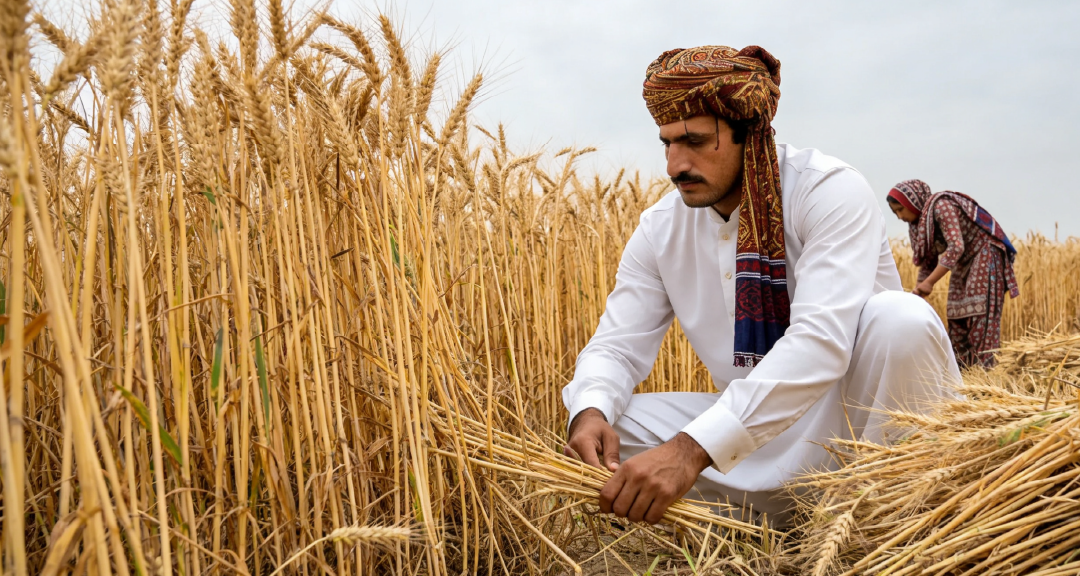
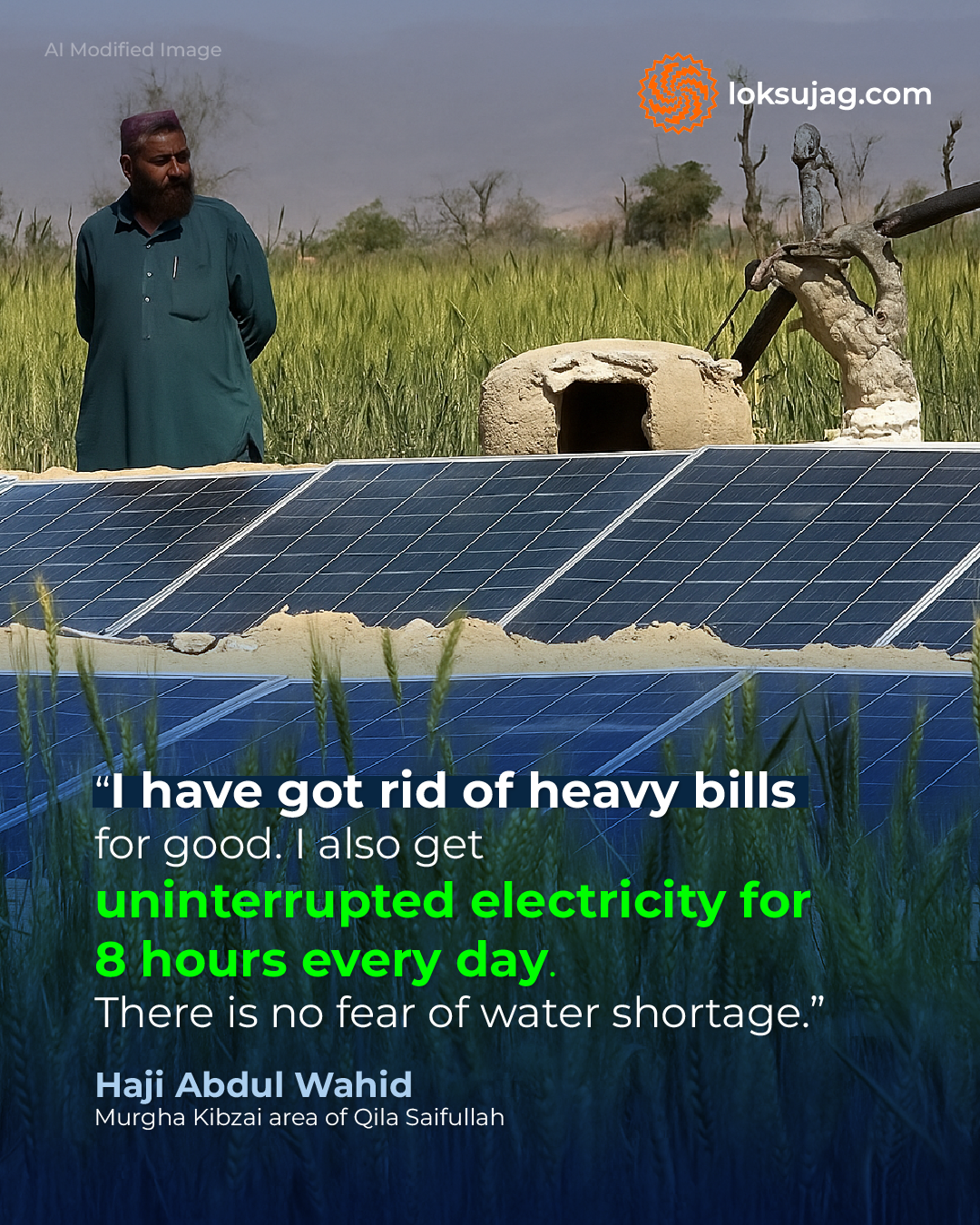
Haji Abdul Wahid, a farmer from Murgha Kibzai area of Qila Saifullah. He cultivates wheat, cumin, onion and seasonal vegetables on 25 acres, for which he had installed an electric tube well.
He says there was loadshedding for 20/21 hours every day, and sometimes electricity supply remained suspended for several days. As a result, the crop was damaged and on top of that, he had to pay a monthly bill of Rs60,000 to Rs80,000. Now, after receiving money under the government programme, he has converted his tube well to solar.
"I have got rid of heavy bills for good. I also get uninterrupted electricity for about eight hours every day; however, its efficiency is relatively low in winter and dusty weather. But there is no fear of water shortage.”
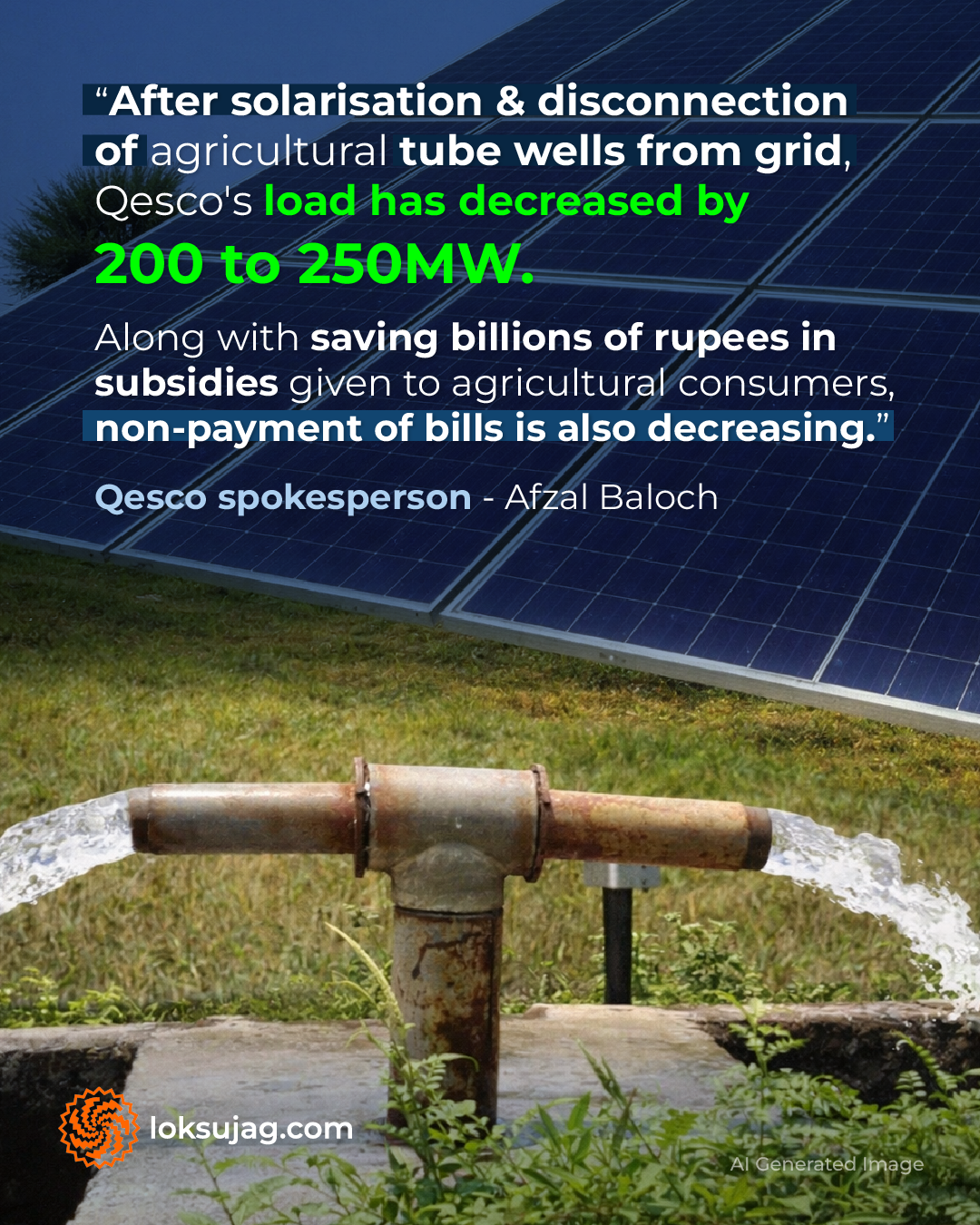
Qesco spokesperson Afzal Baloch says the total electricity demand in Balochistan is around 1,200 MW, but an average of 600 to 650 MW is supplied from the national grid. Most of the available electricity, i.e. around 350 MW, was used by agricultural consumers.
He claims that after solarisation and disconnection of agricultural tube wells from the grid, Qesco’s load has decreased by 200 to 250 MW. Along with saving billions of rupees in subsidies given to agricultural consumers, non-payment of bills is also significantly decreasing.
According to him, as a result of reduced pressure on the grid, the efficiency and stability of the system has improved, which is directly benefiting domestic consumers. Tripping, faults and load shedding are also decreasing compared to the past.
Shortage of solar technicians in Balochistan
Haji Rehmatullah, a farmer from Battazai village in Pishin, had applied for financial assistance in the tube well solarisation programme long ago. He complains that till date he has neither received the money nor has any team come to inspect his tube well.
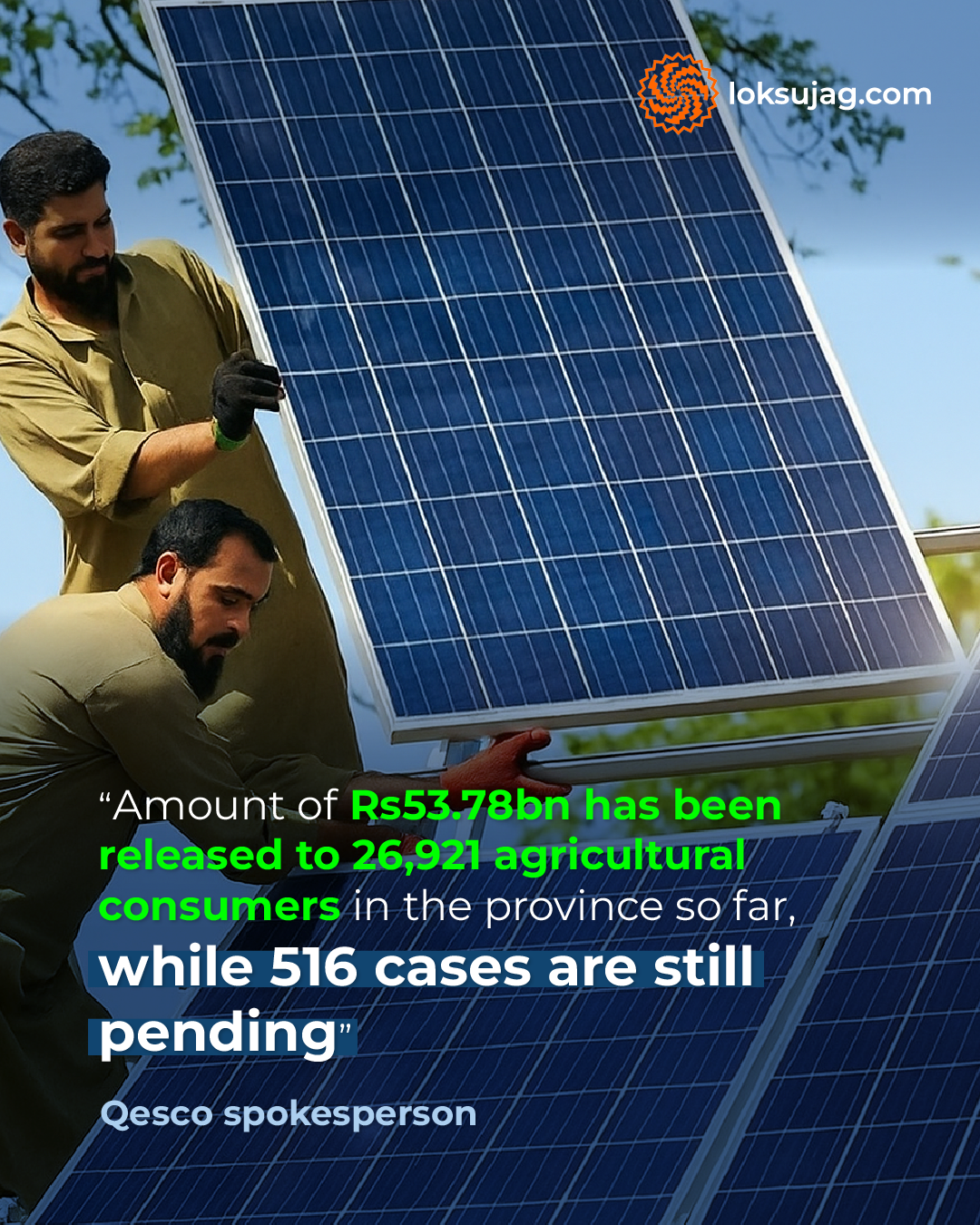
According to a Qesco spokesperson, a total of Rs53.78bn has been released to 26,921 agricultural consumers in the province so far, while 516 cases are still pending.
Khalid Hussain Batth, leader of the Zamindar Action Committee, confirms that some farmers have not been paid on time. This is due to errors in data entry, incomplete or incorrect information entered in the bank and delays in the work of physical inspection teams.
“Farmers are not responsible for administrative problems, but in water-scarce areas like Pishin, it is having a direct impact on their crops.”
Also Read
Delay in conversion of tube wells to solar energy riles Balochistan farmers
He says that many farmers have complaints that money was stopped even for minor mistakes in their case number, identity card or bank account details etc. These hurdles need to be removed on a priority basis.
Farmer Abdul Wahid points out another problem facing solar tube-well owners that he recently faced. He says that there is no one to repair inverters or solar systems here. Once his system started malfunctioning, he did not have a good solar technician available before Quetta.
If the government provides training to some people on solar systems, the farmers’ problem will be solved.
Grant received but tube well is still running on grid
Farmer Muhammad Aslam of Lehri in Sibi district also received a government grant a few months ago but has not yet converted his tube well to solar. He is still using grid electricity and is paying heavy bills.
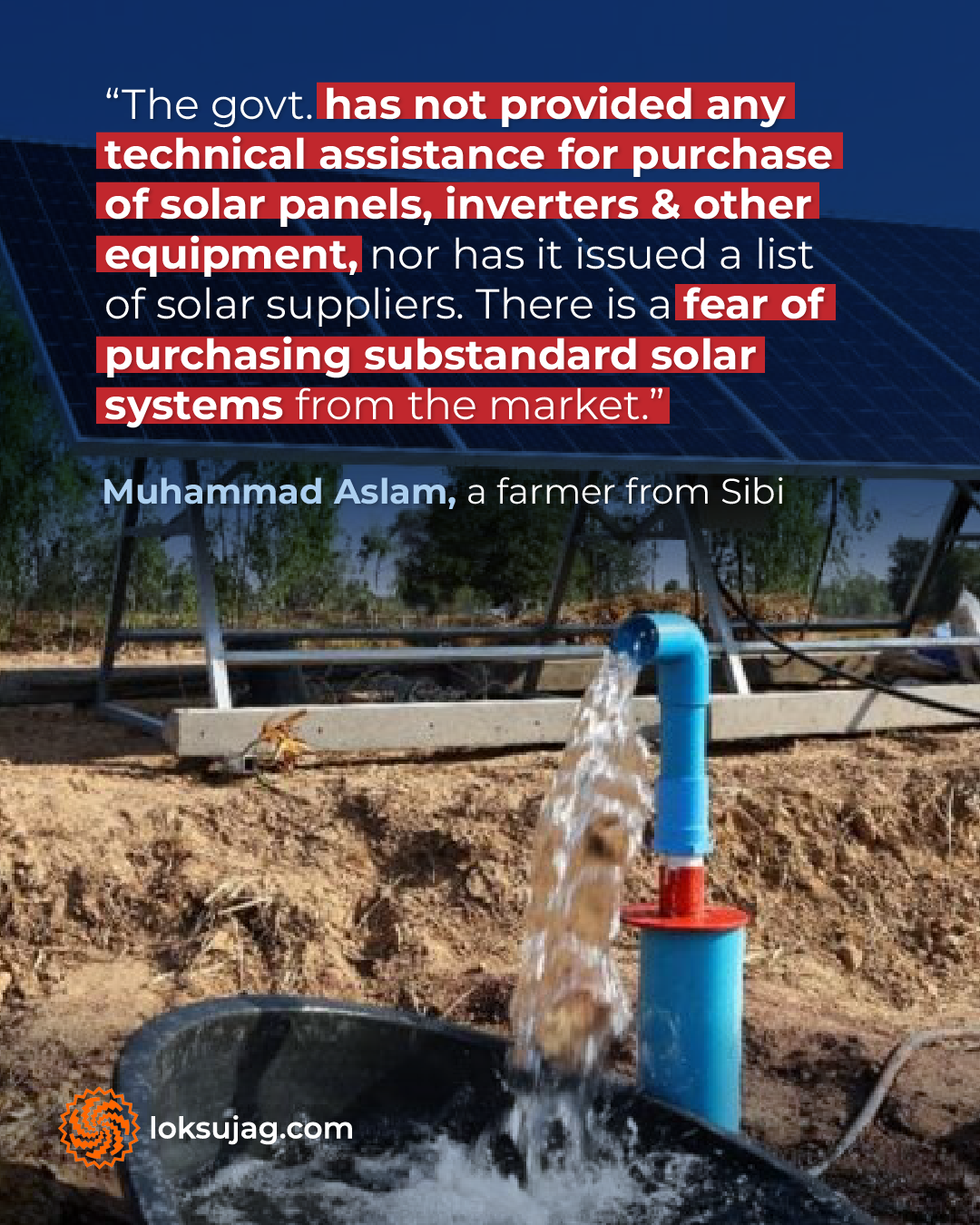
He complains that the government has not provided any technical assistance for the purchase of solar panels, inverters and other equipment, nor has it issued a list of solar suppliers. There is a fear that if a substandard solar system is purchased, the investment will be wasted.
However, the energy department says that the cash payment method has been adopted for the benefit of the farmers. This allows them to choose the best solar system available in the market according to their land and water requirements.
Now Muhammad Aslam is also concerned that if one day the Qesco suddenly severs the electricity connection, he will have to temporarily run a diesel engine, which will further increase the cost.
It should be noted that the main objectives of the tube well solarisation project included reducing the burden of losses on Qesco, preventing power theft, improving bill collections and providing uninterrupted power to the farmers during the day.
In view of these objectives, it was agreed in the accord between the federal and provincial governments that as soon as the solarisation money is released, the grid connection of the tube well concerned will be disconnected and the farmers will hand over the transformer and other electrical equipment to Qesco.
"If there are no domestic consumers on this feeder, then the high transmission poles will also be removed from here so that there is no possibility of illegal connections or power theft again."
Qesco seeks action against 8,000 agricultural consumers
Qesco had started the process of disconnecting agricultural connections from the grid along with the distribution of funds to farmers. However, the spokesperson admits that now, after the completion of the fifth phase and payment to 26,921 farmers, only about 14,500 (53%) tube well connections have been disconnected by mid-March.
Although Qesco claims that the load on it has reduced to 250MW, the rate of power theft with line losses and the possibility of illegal connections has reduced, the work of removing 43% of legal agricultural connections and dismantling electrical installations is still pending.
According to the spokesperson, under this project, landowners are required to hand over their agricultural transformers etc to Qesco but agricultural consumers are not fully cooperating in this regard.
"For this purpose, we have sent written letters to the district administration for legal action against 8,398 agricultural consumers.”
It should be noted that the provincial government has also passed a law called the “Balochistan Agricultural Solarisation and Anti-Electricity Theft Act 2025” to fully implement the conditions of the solarisation project.
Under this law, grid connection will be prohibited for agricultural consumers who avail solar facilities. If any such consumer is found guilty of electricity theft, he can be punished with a fine of at least Rs2million or imprisonment for up to one year or both.
"In addition to confiscation of electrical equipment, violation of the affidavit (criminal breach of trust) can be punished with imprisonment for up to three years."
Are tube wells with illegal connections still in operation?
The Agriculture Census 2024 shows that the total cultivated area in Balochistan is 7.75 million acres, of which 2.32 million acres are irrigated through canal systems while the remaining 5.427 million acres are cultivated through tube wells, rain dams, river wells or pumps, etc.
In the province, 2.47 million acres of land is irrigated only through tube wells, while about 400,000 acres of canal area also requires tube wells due to lack of water.
According to the Balochistan government, there were a total of 77,089 tube wells for irrigation in the province in 2024. Of these, 27,437 tube wells were running on legal connections of Qesco which were registered with the agriculture department, while 10,263 were illegal.
This means that not only these tube wells with illegal connections still exist, but the remaining 39,000 tube wells are also using diesel, tractors, etc. Some farmers may have converted some tube wells to solar at their own expense, but most cannot afford to invest that much.
Published on 10 Apr 2026