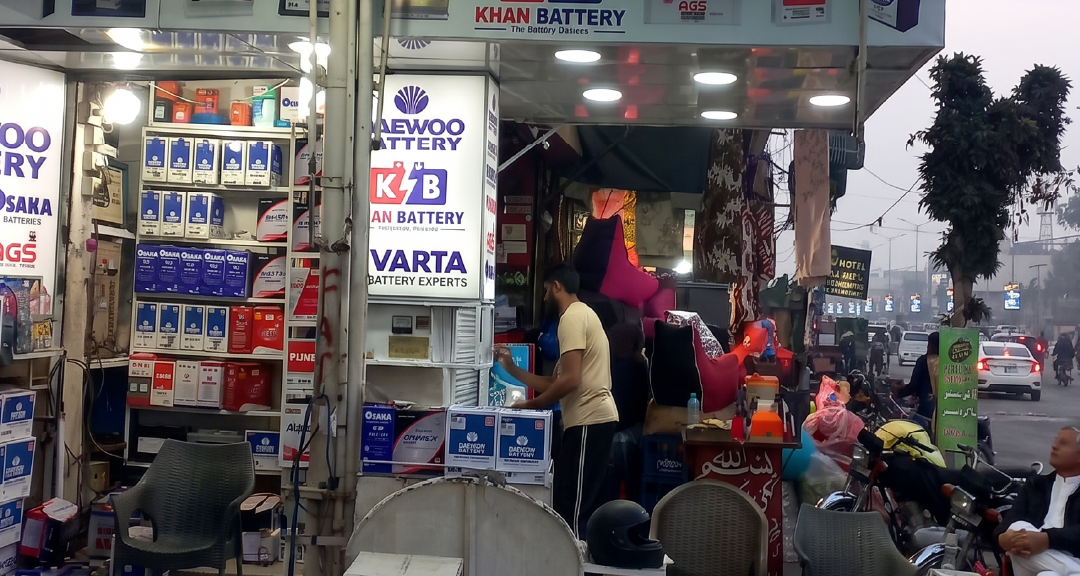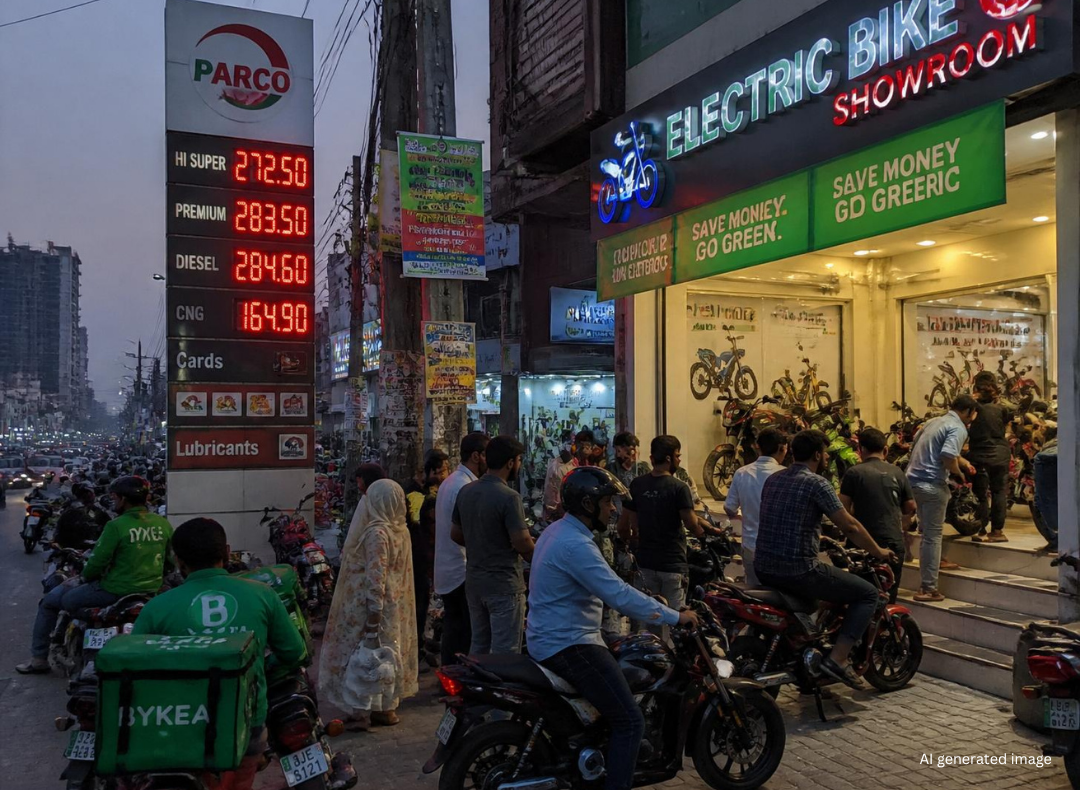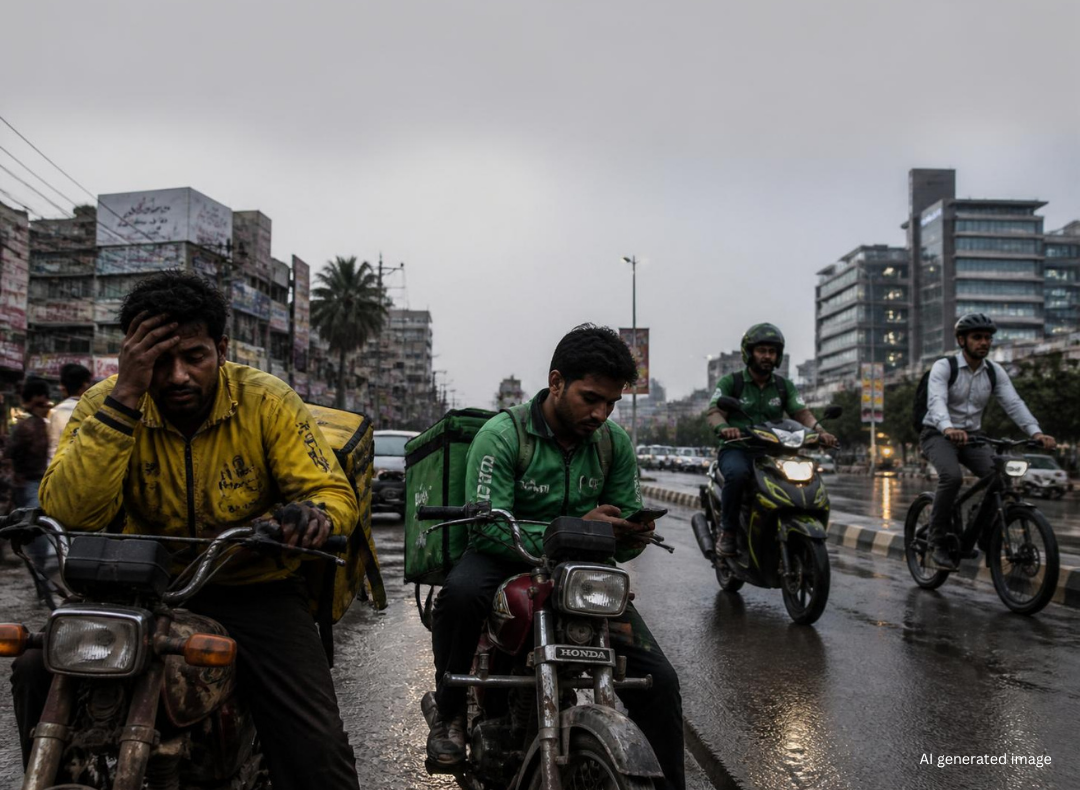
It’s quarter to sundown. The parking lot at Panda Mart in Lahore’s posh locality is full and busy. It is a grocery store from where riders in pink shirts make deliveries 24/7. Some of them are hurrying to their delivery locations while others are chatting away the time but their eyes incessantly dart back to their phones, waiting for the next order notification.
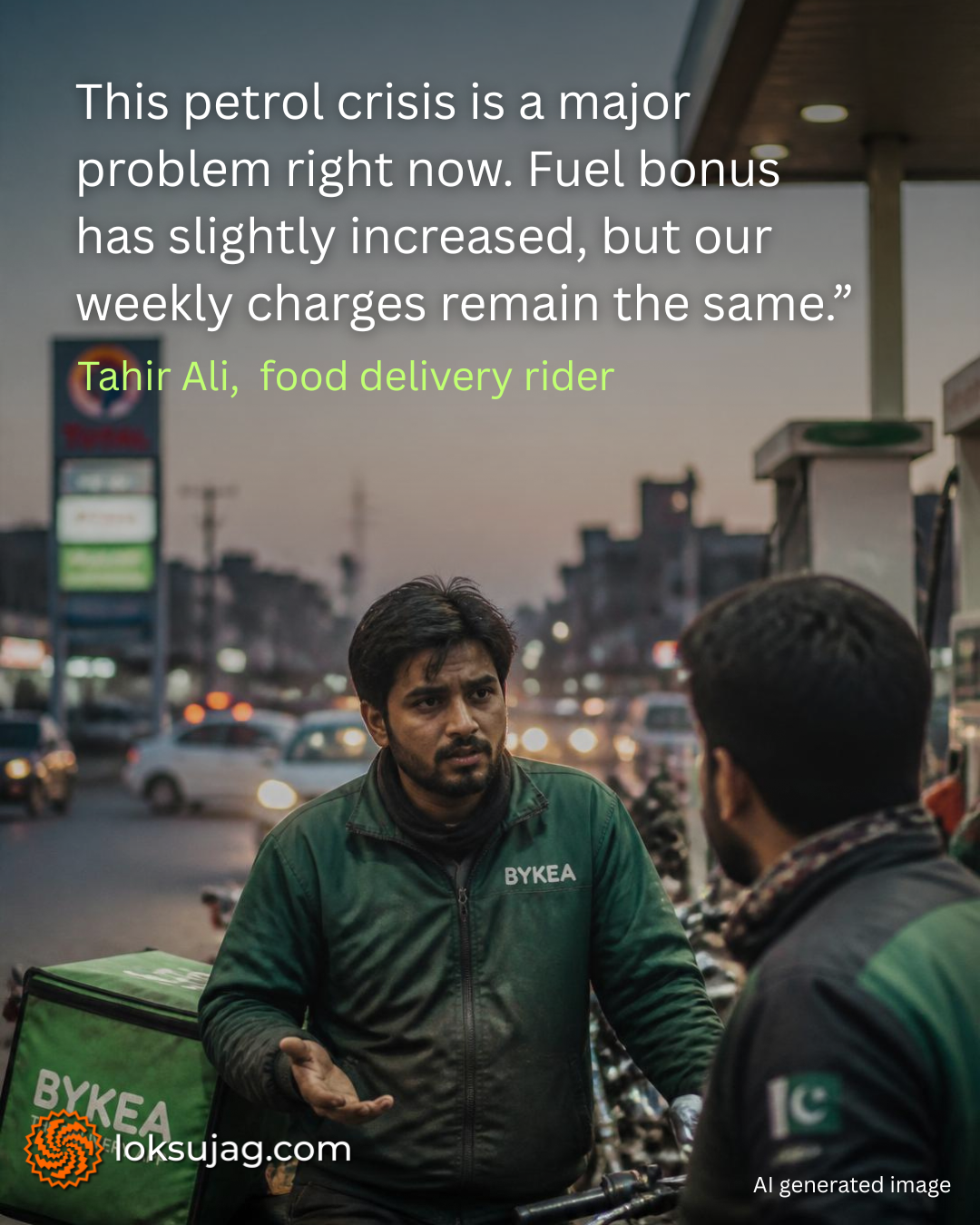
“This petrol crisis is a major problem right now. Fuel bonus has slightly increased, but our weekly charges remain the same,” reveals Tahir Ali, an intermediate graduate working as a delivery rider.
“We have to work up to 15 hours just to earn Rs 3,000. Out of that, Rs 1,100 goes toward fuel, leaving us with Rs 1,900, from which we spend Rs 300–400 on daily meals. How can we sustain our households? It’s simply not possible,” his quick math made things simpler.
Some riders circle around Ali nodding in agreement or even chime in, but apart from one dissenter, everyone refused to speak about the issue at hand — even on the condition of anonymity — fearing consequences.
One by one, they scattered.
“They are scared. Most of them aren’t educated enough on their rights. They don’t understand that they cannot be fired for simply discussing the fuel crisis,” he says.
The US-Israel war on Iran has triggered a major global energy crisis. No surprise that fuel prices in Pakistan have also hit record highs. While the conflict has lately come to a pause, no pundit claims that the situation will any time soon go back to where it was.
What does it mean for Tahir Ali?
“People suggest we switch to ebikes to avoid expensive fuel but they don’t realize that it is not easy for everyone,” he says.
Ebikes are speeding up but can they overtake petrol bikes?
Electric vehicles (EV), especially two-wheelers, have slowly been making their mark on Pakistan’s roads. It started with only 2,000 units sold in 2022 which moved to 6,000 in 2023. The sector took a leap of faith in the next year clocking sales of 33,000 units. This number raced to 90,000 in 2025 and in the first two months of 2026 alone, the EV sector has reported a 36 per cent increase compared to the same period last year.
This, however, still represents only a fraction of the market.
There are 30,470,376 on-road motorcycles in Pakistan, according to Economic Survey 2024-25. The two-wheeler plays an important role in the daily economies of a vast majority of the people. But for the delivery riders, it is the main source of their livelihood.
According to the Labour Force Survey (LFS) 2024-25 Annual Report, delivery services account for 12.2 percent of all primary gig work while taxi services have a 16.8 percent share. Both these put together become 638 thousand in real numbers. The primary work means it is their sole or main source of income.
The LFS did not distinguish delivery or taxi service on the basis of vehicles used, implying we cannot exactly know how many of them are two-wheelers. But in any case, a shift to EV can have a major impact on the daily income of these workers.
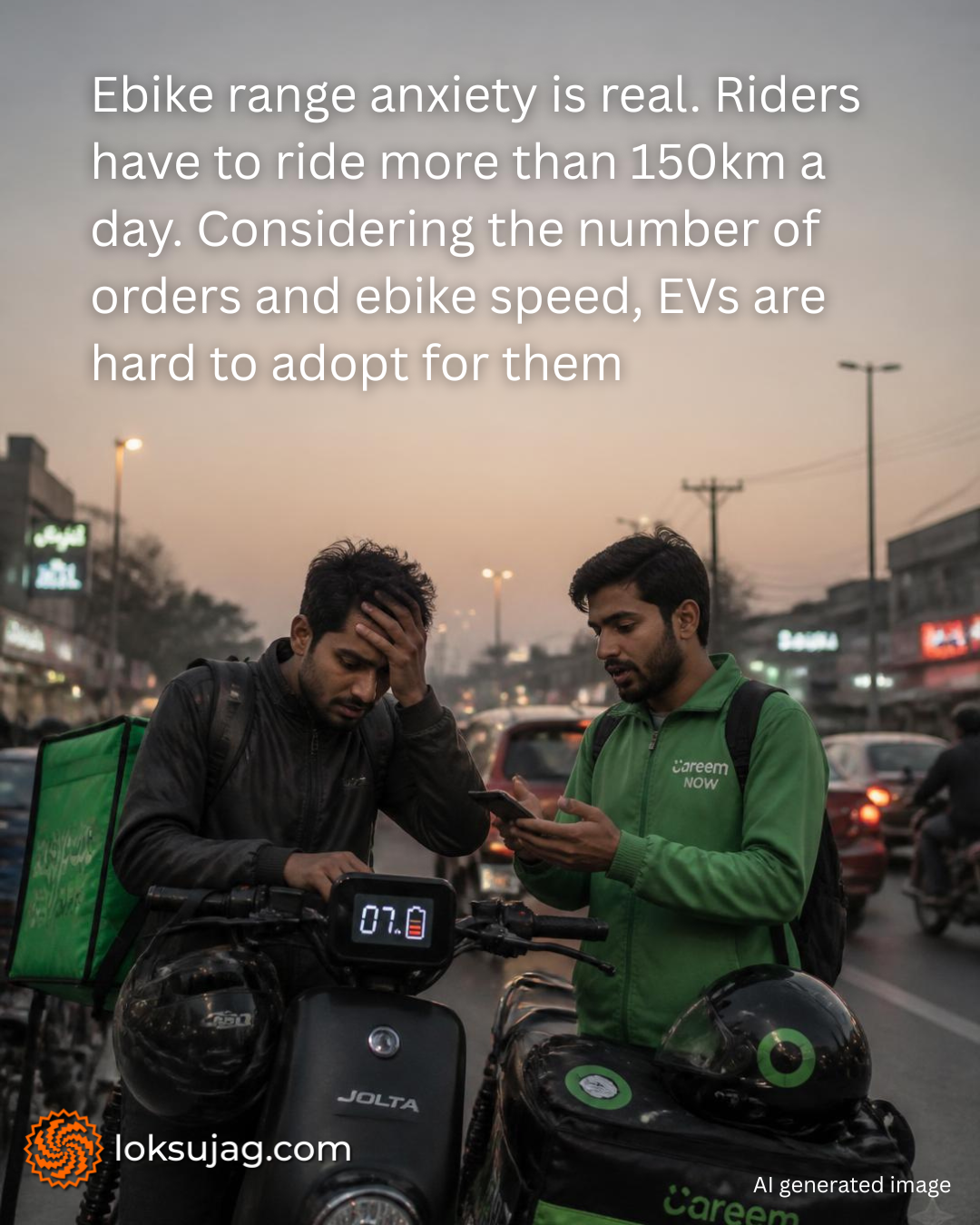
“A couple of riders have tried EV bikes on-duty,” says 20-year-old Shahzeb Nawaz [named changed on request], from Okara, working as a delivery rider in Lahore. “We have to move more than 150 km a day. And considering the number of orders we have to deliver, its speed is slow. EVs are probably not for us,” he says.
Affordability test drive on the bumpy road to transition
Ehtasham Sikandar, another rider, believes that EV bikes are a “good option” to fight the fuel inflation but points to the imminent issue. “The problem is that if we are in an area where there is no charging station, what will we do? It’s not the same as petrol stations.”
Range anxiety is a real obstacle in adoption of EVs at all levels. The National Electric Vehicle Policy 2025–30 recognized it and set a target of 3,000 EV charging stations across Pakistan by 2030. But almost a year later, the work is yet to begin.
Eevee Flipper, an electric bike model, is the most economical option at Rs 102,000, but it has a range of just 35 km and a top speed of 25 km/hr. Jolta Sparrow is priced at Rs 144,900. It has a top speed of 35 km/hr but its maximum range is 35 km too. Evee Mito retails for Rs 135,000, with a bit longer range of 70-90 km and a top speed of 40 km/hr.
None of these can pass the delivery riders’ test.
There are high end bikes that can, like Vlektra Velocity 180 SE offers a top speed of 85 km/hr and a range of 180 km. But then its price is forbidding - Rs 384,000.
It’s simple. What they can afford doesn’t serve their purpose and what can is beyond their reach. For riders, range anxiety means more than the fear of running out of charge in the middle of a trip.
Can swappable batteries soothe out range anxiety?
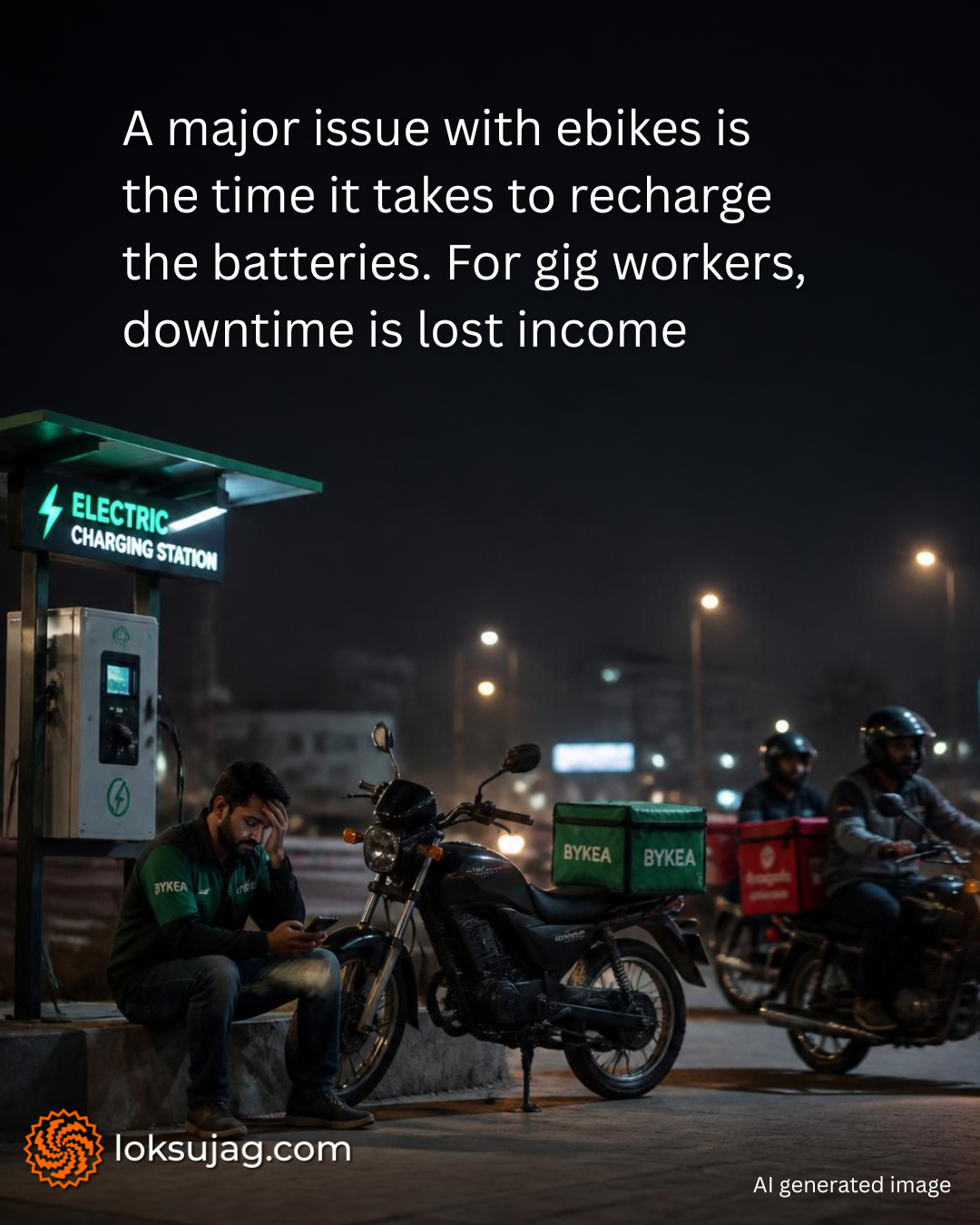
Another major issue with ebikes is the time it takes to recharge the batteries. For gig workers, downtime is lost income. Experts have found another solution - battery swapping stations where they can drop their exhausted batteries and pick up fully charged ones, wasting no time.
Battery swapping stations can itself become a profitable business. A station every few kilometers in dense cities like Lahore and Karachi can certainly incentivize the transition to ebikes.
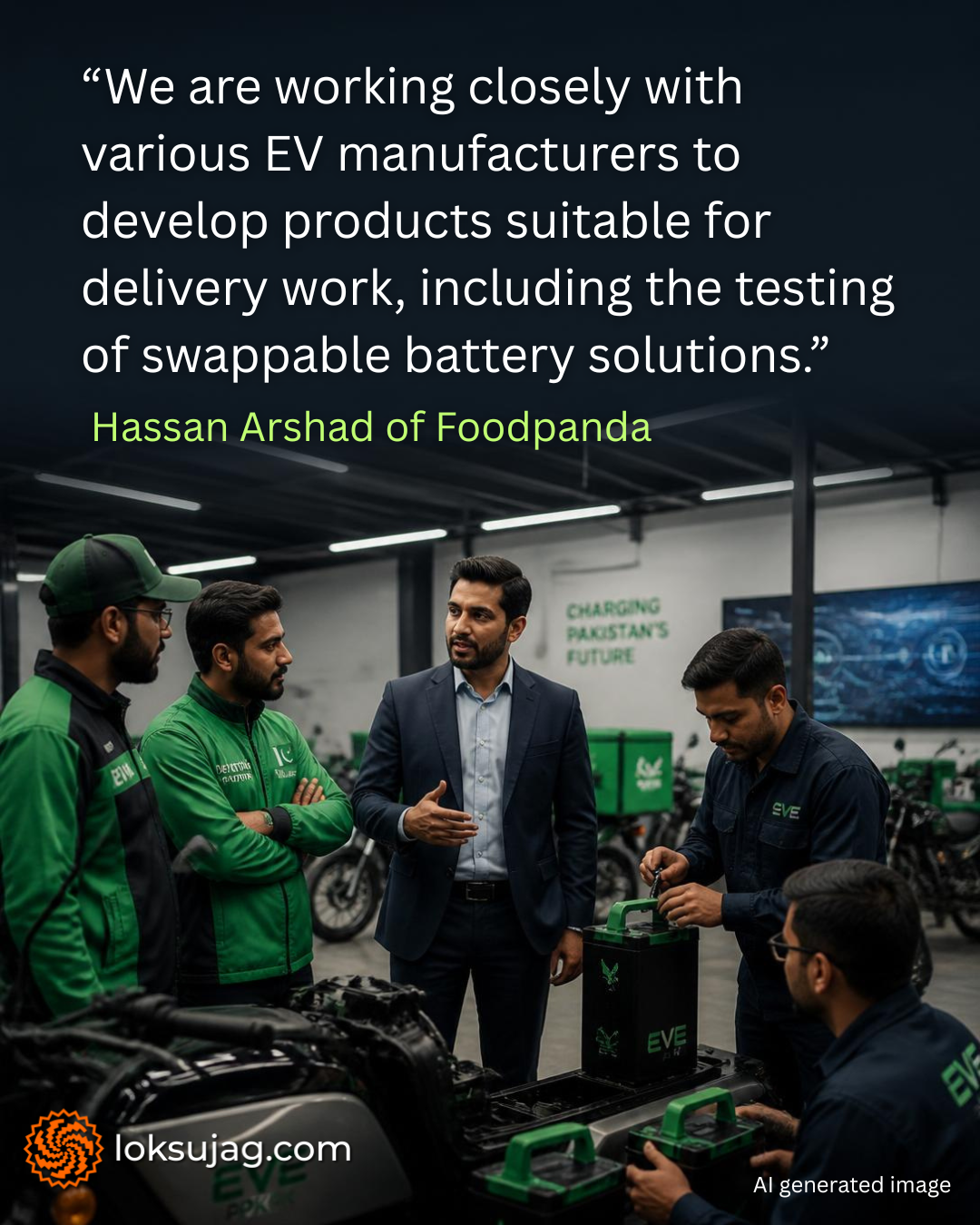
FoodPanada management is thinking on similar lines. Hassan Arshad, Director of Policy & Communications at Foodpanda told Lok Sujag in a Whatsapp communication, “We are working closely with various EV manufacturers to develop products suitable for delivery work, including the testing of swappable battery solutions. This initiative aims to make electric mobility a practical and efficient reality for the future of our delivery network.”
But before swappable batteries can soothe out the range anxiety, we have to solve another problem.
Starting with the basics, are all batteries the same?
The answer is no. So how can a battery be swapped with a different one?
“In the absence of standardization, markets tend to fragment with each manufacturer or operator developing its own battery format and swapping infrastructure. This means that riders can become locked into specific networks depending on their bike, which reduces flexibility and slows overall adoption,” explains Dr Aazir Khan, director of the Integrated Engineering Center of Excellence University of Lahore.
The calculus of upfront cost and total cost of ownership
The swappable batteries are a cheaper solution than petrol but swap stations are more expensive to build than simple charging stations. “[If the stations are poorly designed or operate at low utilisation], a monthly subscription could begin to approach or even exceed fuel costs,” warns Dr Aazir.
But he insists that these risks do not define the electric future. “The economics need to be looked at in terms of Total Cost of Ownership rather than just the per-swap price.”
He explains that even when petrol prices were around Rs 250 per litre, the Total Cost of Ownership of ebikes was 75 percent lower. With petrol now crossing Rs 400 makes the financial advantage even greater. “Over a typical ownership period of four years, riders can save in the range of Rs 300,000 through lower running and maintenance costs, even if the upfront cost of the vehicle is slightly higher,” he calculates.
Even if the total-cost-of-ownership argument wins over delivery riders, they fail to cross the barrier placed by ‘the upfront cost’.
Do they have any financing options?
Technically, yes. We have here analyzed them one by one.
The story of government subsidy and installment schemes
The companies selling bikes do offer installment plans. They mostly comprise a down payment with the remaining money equally divided into 12 monthly installments.
Evee Mito is priced at Rs 135,000. With 30 per cent down (Rs 40,500) payment, its monthly installment for a zero-interest one-year program comes to Rs 7,875 which seems affordable for delivery riders.
But then the bike’s range and speed is completely unsuitable for the delivery job.
Any rider will happily transit to Vlektra Bolt 3k – but with a down payment of Rs 164,700, its monthly installment comes to Rs 32,025. Both make it a non-starter for the riders.
The problem with financing remains the same as with the bike’s performance specifications - what the riders can afford doesn’t serve their purpose and what does is beyond their means.
The government of Pakistan launched Pakistan Accelerated Vehicle Electrification (PAVE) Program in September 2025, offering a subsidy of Rs 50,000 on purchase of an ebike. Applications were invited from the general public and ‘winners of the subsidy’ were decided through a draw. The banks then received guarantees and a down payment from the winner before paying the company the price of the bike. The company delivered the bike to the winner and the bank divided the remaining amount (price of ebike minus subsidy minus down payment) into 24 interest-free monthly installments. Depending on the model, the installment amount varies from around Rs 2,000 to more than Rs 10,000 per month.
The program also offered a subsidy of Rs 80,000 to those who were willing to self-finance the purchase meaning they paid the company the remaining amount out of pocket without involving the banks.
The first phase of the program was completed in April 2026 and among the 1,339 applicants, who opted for self-financing, 1,033 received the promised subsidy. But the banks have been reluctant. As of May 2026, only 4,075 bank-leased vehicles were approved out of 44,689 applications.
The government is now launching PAVE-2 which will provide a direct subsidy of Rs 80,000 per bike to manufacturers on behalf of the successful applicants. This will reduce the program to its self-financing part only, and banks will not provide any financing facility.
The scale of the program is quite small, selection is based on lucky draw and then if it doesn’t offer any installment facility, it means only one thing - it is not for the likes of delivery riders.
Banks are for ‘documented’ middle class and not for gig workers
One bank explained to Lok Sujag that they have to calculate every loan applicant’s Net Disposable Income (NDI) to assess their capacity to pay back. “We see how many dependents they have, the rent they pay, their credit card expenditure etc,” says a banker requesting anonymity.
So even if they meet the minimum income requirement, the riders or low-wage workers surviving hand-to-mouth are turned back from the bank’s first window as their NDI falls below the bank’s ‘safety margin’.
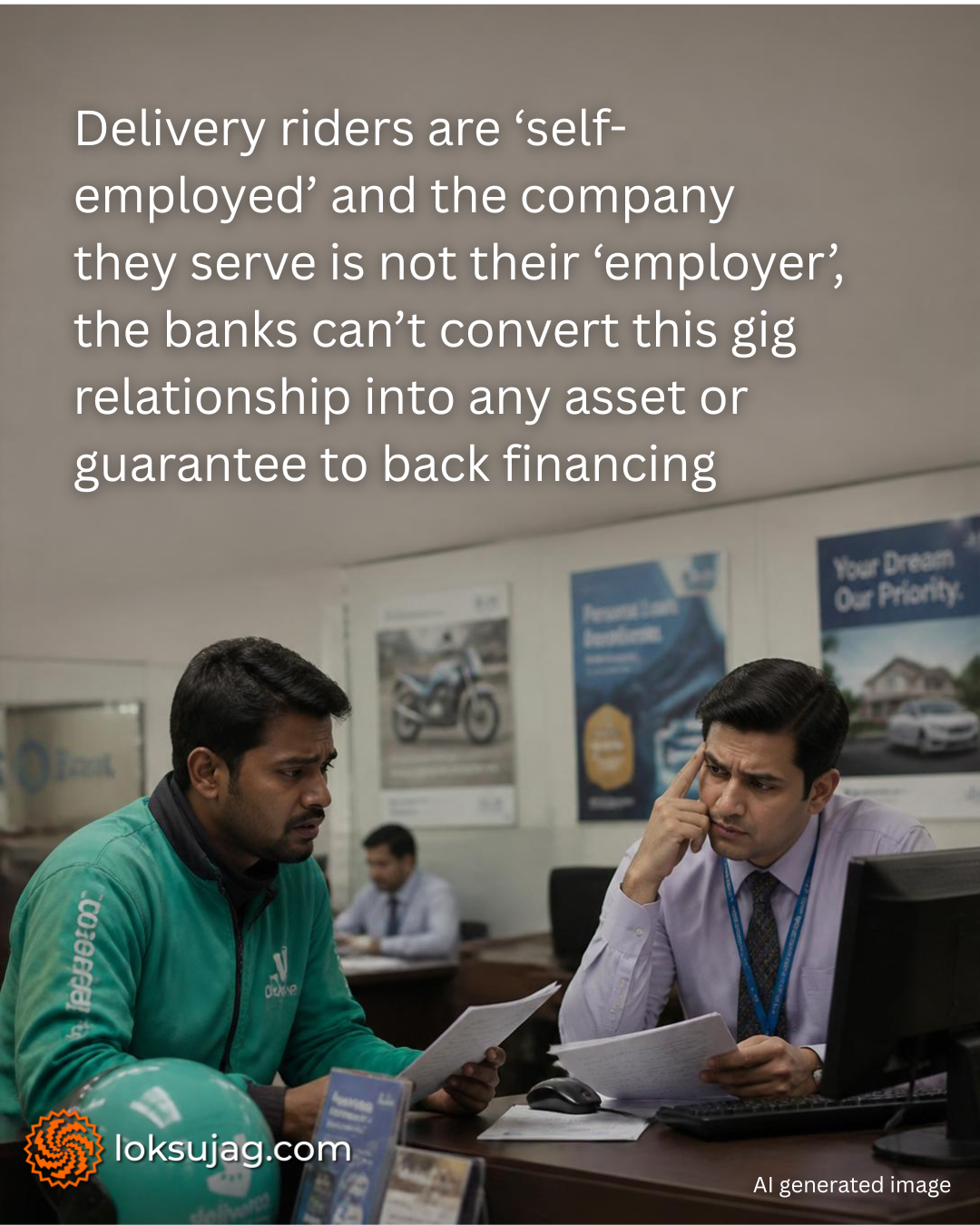
Moreover, legally speaking, the delivery riders are ‘self-employed’ and the company they serve is not their ‘employer’, the banks thus can’t convert this gig relationship into any asset or guarantee to back a financing facility.
Mobilink Microfinance Bank describes itself as “serving the unserved [...] and promoting financial inclusion.” But one only needs to scratch the surface to get to reality.
They can loan up to Rs 500,000 for purchase of an ebike to be paid back in three years. The conditions include a down payment of 10 to 30 percent and a 12 percent markup and an affordability assessment like any other commercial bank.
“Mobilink is a for-profit bank and we do not provide large, collateral-free loans. In cases where income is fully consumed by expenses, financing may not be approved. This is primarily driven by risk and responsible lending considerations,” confirmed a representative in a written reponse.
Admitting the systemic exclusion, the representative stated, “There are gaps, especially for purely cash-based or highly variable income segments. Mobilink is exploring ways to better serve gig workers through alternative data, but current limitations remain from a credit risk perspective.”
Foodpanda’s Hassan Arshad also made similar sounds when he told Lok Sujag that they are working on “making the shift [to ebike] financially beneficial for the rider from day one.” The company is working to structure financial products so that “the monthly loan installment is lower than the amount a rider typically spends on petrol.”
We don’t doubt the company’s intentions but the reality points to a different direction.
Three riders revealed that Foodpanda provides Honda 70 motorcycles to riders who maintain monthly earnings of approximately Rs 70,000 for at least three consecutive months. The company is also offering e-bikes priced at Rs 450,000.
The riders, however, are sceptical. One highlighted, "We can’t meet the requirement of earning 70k a month. We can only do that if the delivery rates are fair, not at Rs 40 per order."
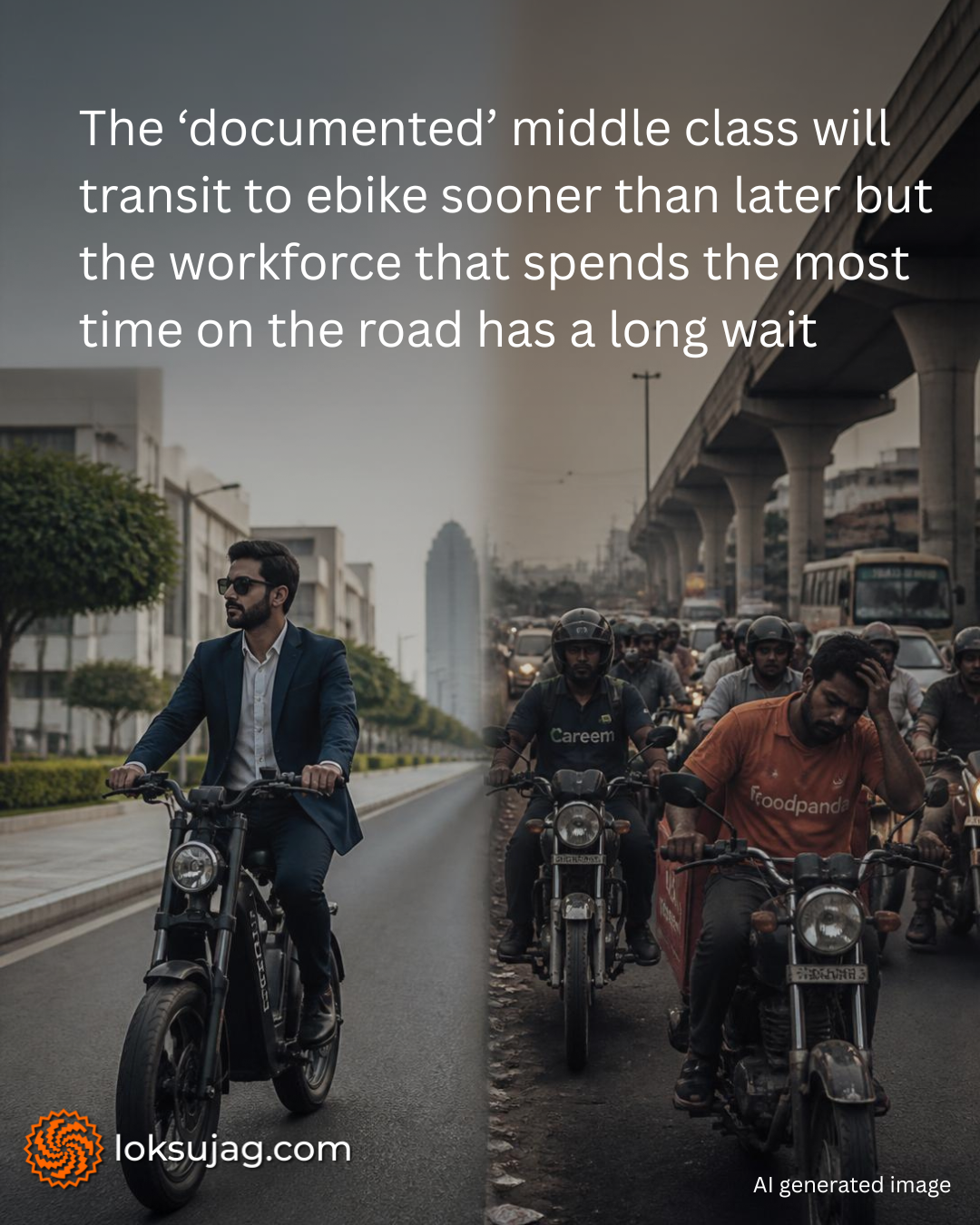
It is obvious that the ‘documented’ middle class will transit to ebike sooner than later but the workforce that spends the most time on the road have a long wait before the transition signal could turn ‘green’ for them.
Published on 16 May 2026