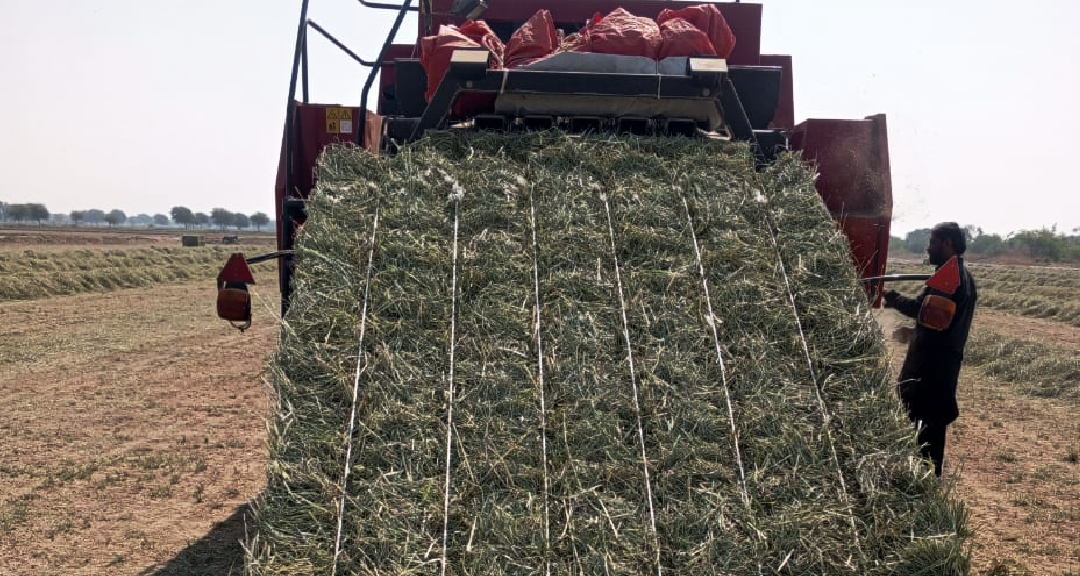


In the Middle East war, everyone's attention is focused on the crisis of petrol and gas, but Ali Murad Shah's concerns are even more serious. He grows fodder for cows and camels on the farms in Saudi Arabia, the United Arab Emirates and other Arab countries.
The Gulf countries have been importing dry fodder, including Rhodes grass, alfalfa, etc, for their dairy and beef cattle farms from the US, Australia and African countries. Sudan had been supplying dry fodder to the UAE for years, but this stopped when civil war broke out in Sudan in 2023. Pakistan emerged as a natural alternative where there is a high production capacity for fodder due to the land, weather and suitable climate. Taking advantage of the opportunity, not only farmers here started planting Rhodes grass, but also big companies that acquired thousands of acres of land in Cholistan under the Green Pakistan Initiative preferred it.
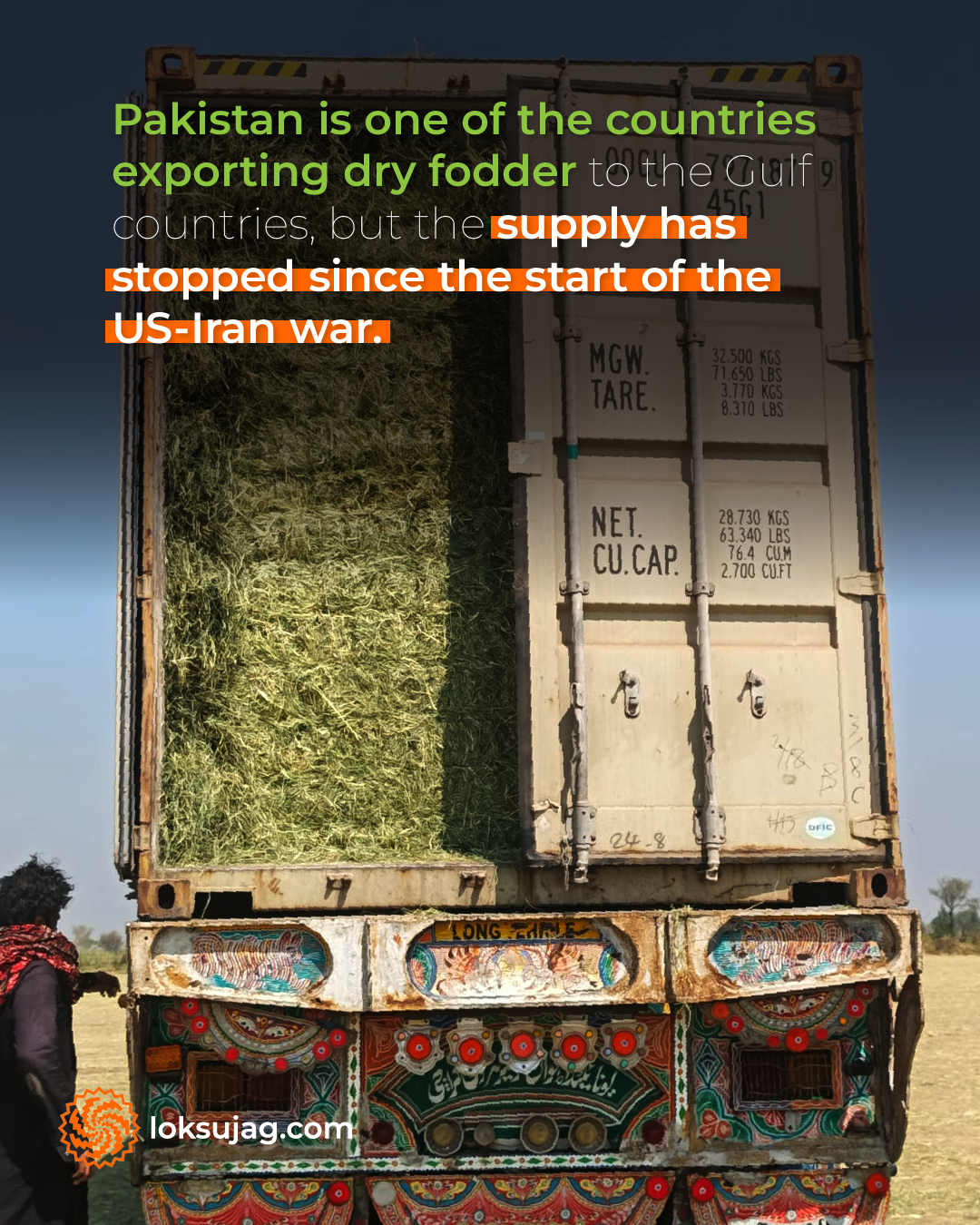
Pakistan is now one of the countries exporting dry fodder to the Gulf states, but the supply has stopped since the start of the US-Iran war. Sultan Zehri, a Pakistani trader of Rhodes grass based in Dubai, told Lok Sujag over the phone that the goods that were on the way during this time could not reach their destination. Pakistani farmers do not have any alternative market for their grass.
The best bargain for Sindh land
Syed Ali Murad Shah, a resident of Thall area of district Jacobabad, left his bank job in 2016 on the advice of friends in Dubai and started farming Rhodes grass by taking land on lease in Umerkot. Now he has planted Rhodes grass on 200 acres here.
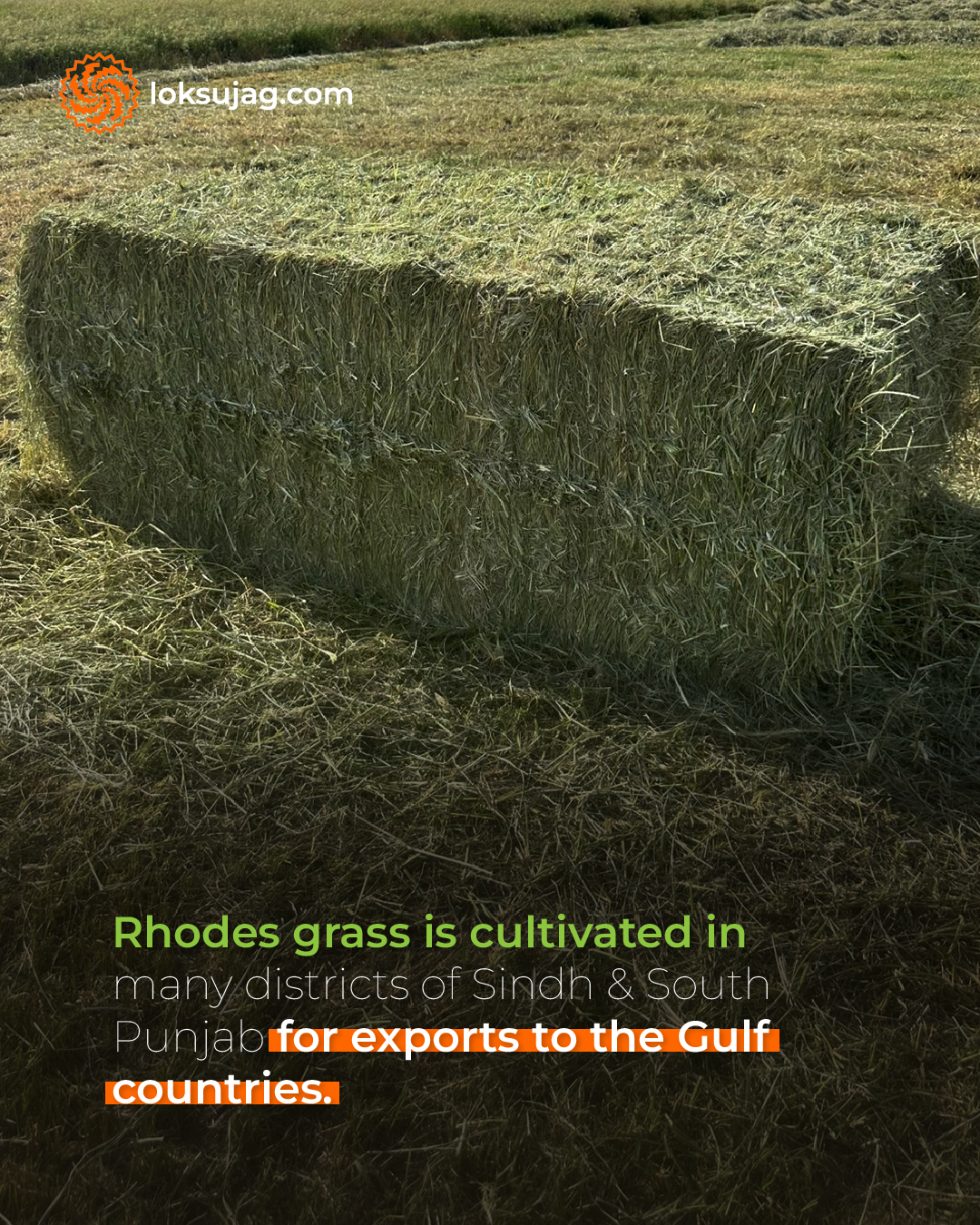
He says grass cultivation in Sindh started 26 years ago in Mirpurkhas where Dubai’s Al Dahra Company leased the land of parliamentarian Ali Nawaz Shah. Now it is also grown in Umerkot, Sanghar, Nawabshah, Dadu, Jacobabad, Thatta, Sujawal and Sukkur.
The farmers in Pano Aqil Cantonment have planted this grass on more than 5,000 acres. In Punjab, it is mostly cultivated in Rahim Yar Khan, Bahawalpur and Bahawalnagar, in addition to the areas adjacent to Cholistan, it is also being cultivated in Muzaffargarh, Layyah, Khanewal, Rajanpur districts.
Ali Murad Shah says that some landowners have also tried planting Rhodes grass in Lasbela, Balochistan, but they were not successful.
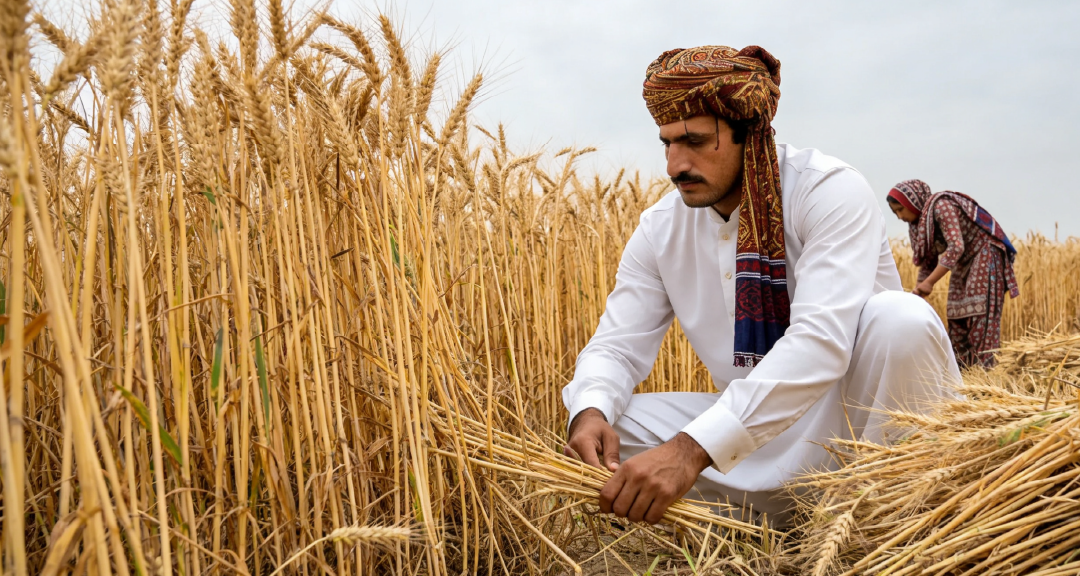
Rhodes grass (Chloris gayana) is native to Africa but is now widely cultivated around the world from Australia to Canada. According to export company Saremco International, Rhodes grass contains seven to 12 percent crude protein, which is retained even after drying.
It is a high-quality feed for horses, camels and dairy or beef cattle. Ali Murad Shah says that Rhodes grass is cultivated in Sindh from February to November. It can be grown in saline soil and relatively brackish water. It tolerates severe cold, high heat and requires relatively less water than other crops. Due to these properties, Rhodes grass is successful in the areas where growing other crops is impossible or not profitable.
Calculation of profit and loss
Being a former banker, Ali Murad keeps a complete account. According to him, it costs Rs90,000 per acre to level and prepare the land for grass. The cost of 10kg of seed per acre is Rs35,000 to 40,000. On this, one sack of DAP and at least 16 sacks of urea cost Rs90,000 per year.
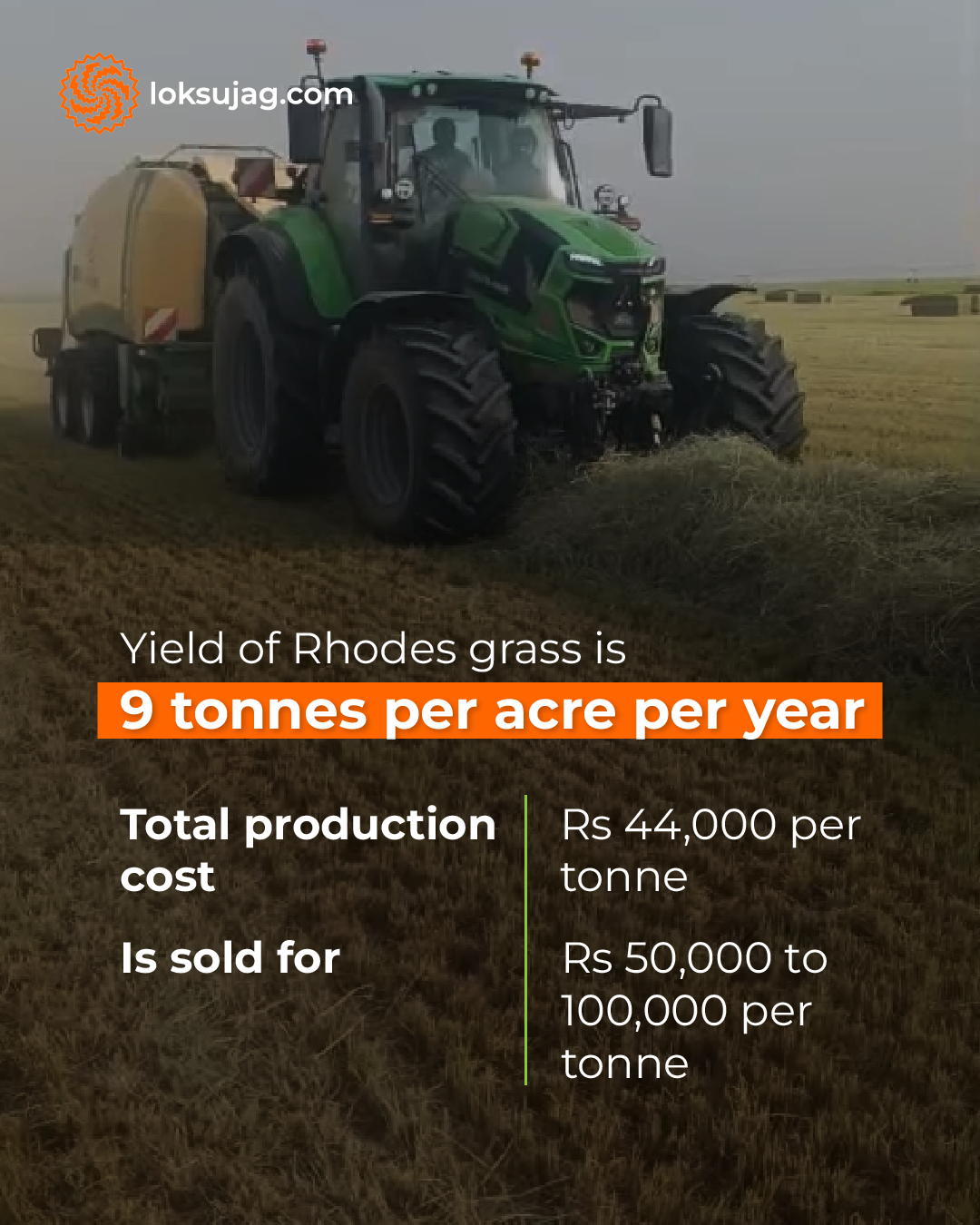
The crop is ready in three months, and the first harvest yields one-and-a-half tonnes per acre. Then the same amount can be harvested every two months. There are usually six harvests in a year. Harvesting costs Rs15,000 per tonne. Once the grass is cultivated, it lasts for 10 years.
According to this calculation, the yield of Rhodes grass is about 9 tonnes per acre per year and if water and labour expenses are also included, the total production cost is Rs44,000 per tonne, while the selling price is usually Rs50,000 to Rs100,000 per tonne. Farmers agree that a farmer planting less than 100 acres of grass cannot earn any significant profits.
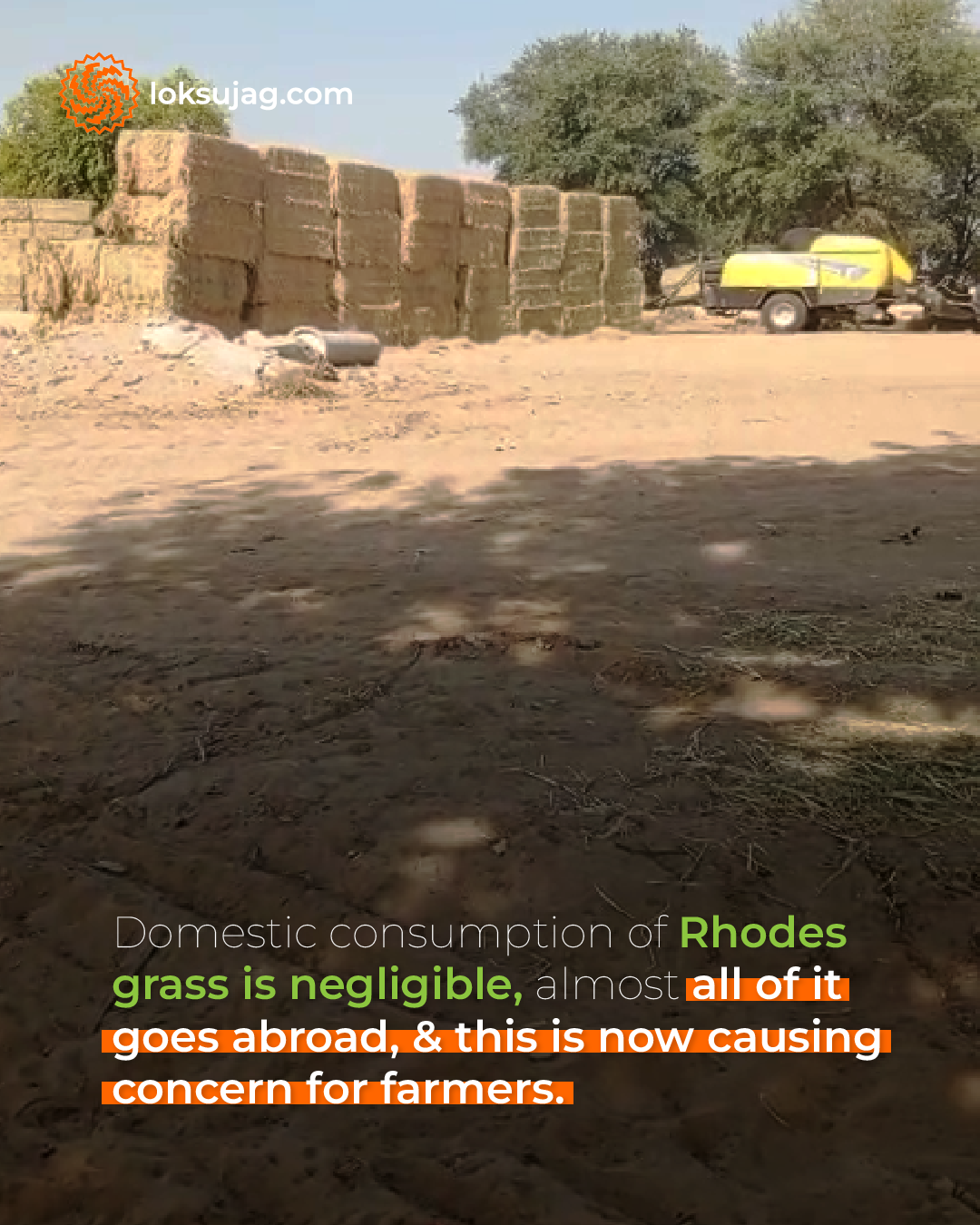
According to Ali Murad, after harvesting, the grass is spread out in the open. Then it is baled in a press and loaded in containers to be sent for shipment.
“Grass cultivation is an agricultural industry that is quite different from traditional agriculture. From harvesting to shipment, everything is done through special machinery, which is very expensive and is imported from Australia,” he adds.
Blockade of sea routes beyond imagination
Pakistan ranks third to fifth in the world in terms of the number of cows and buffaloes. According to the 2023-24 agricultural census, there are more than 100 million cows and buffaloes in the country, but their fodder does not include Rhodes grass. Ghulam Asghar Jamali has been planting Rhodes grass for 10 years. He told Lok Sajag that now the number of large commercial dairy farms in the country is increasing, which have imported cows.
Some of these farms use Rhodes grass, but it has not gained general acceptance. Domestic consumption of Rhodes grass is negligible, almost all of it goes abroad, and this is now causing concern for farmers. According to Ali Murad Shah, some people had planted grass two years ago with heavy investment, they are more worried. Export companies are facing problems in their own place. Gulf ports are deserted, with goods stuck in the way.
“This has never happened to us before. Now, due to the war situation, people have stopped harvesting here.”
Ghulam Asghar Jamali used to cultivate Rhodes grass by taking land on lease in Cholistan. Now, he has planted 600 acres of grass in Sujawal. He says that now Pakistan is stocking up on goods.
“It is not that this grass will rot, the problem is that the average farmer cannot afford to keep his produce of even one harvest with him. A very rich farmer or company also will tolerate a maximum of two harvests.
“The sea routes have never been closed before, nor did we imagine that there would be a war here and exports would stop. Companies, farmers and workers are worried that the grass is growing, which will have to be fertilised and watered anyway,” says Jamali.
Pakistan’s position in global fodder market
The global market for Rhodes grass was worth $3 billion in 2023 and more than half of the exports come from the US alone. Australia and Canada are the major exporters of grass. Pakistan comes in 27th place in this list, with the Gulf states as its only market.
According to a research report by scholars from the Institute of Business Administration (IBA) Karachi, the annual demand for fodder in the United Arab Emirates has reached 3.4 million tonnes. Saudi Arabia has almost five times more animals than the UAE, and millions of animals are imported from around the world every year before the Haj season.
The demand for grass there is much higher, but despite good diplomatic relations with Saudi Arabia, Pakistan has failed to create export opportunities for itself.
Ghulam Asghar Jamali believes that exporting from Pakistan to the Gulf countries is easy. Most of the grass deals are made in Dubai. Agents of buying companies do the deals there. Shipments are made from Port Qasim and the goods reach the Gulf in three days. Japan is the largest importer of Rhodes grass in the world, accounting for more than 25 percent of global fodder imports. After that, China, Saudi Arabia and the Emirates come in second, third and fourth place, respectively. Pakistani officials have been claiming for some time that they will gain access to the Saudi and Chinese markets, which will help the country's fodder exports reach $1 billion in the next five years, but this has not happened. And now, after the suspension of supply in the only Gulf market, Pakistani Rhodes grass farmers can do nothing but pray for a ceasefire.
Published on 23 Apr 2026