

It has been almost a month since the wheat harvesting season ended in Sindh, but government warehouses are empty. The food department started the wheat procurement on April 1 with the target of purchasing one million tonnes of wheat, but by the third week of May, it had barely purchased 100,000 tonnes of wheat.
But why did this happen? The rate the government had fixed for purchasing wheat from farmers was not less than the market rate. Still, government procurement centres look deserted. During the Rabi season, the department kept claiming that this time wheat was cultivated on a record area in Sindh, so where did its record production go? Either the cultivation estimates were not correct or the government failed to procure the wheat it was supposed to do?
It will take time for the full situation to emerge, but evidence suggests that this time wheat was cultivated on the much less area than the government claims. The provincial government had given billions of rupees in subsidies to small farmers to grow wheat on 2.3 million acres, but even there, the crop was not cultivated on the entire area. That is, the farmers did receive the subsidy but did not cultivate wheat.
Recently, Sindh Agriculture Extension Director General Allah Warayo Rind has written a letter to the deputy commissioners of 23 districts to recover the money from those farmers who did not cultivate wheat despite receiving subsidy under the Sindh Wheat Growers Support Programme. The deputy commissioners have also been provided with the lists of the such farmers.
This letter written at the end of April refers to the Sindh Cabinet meeting (Oct 3, 2025) regarding the support programme.
“The Cabinet had decided that if any farmer/cultivator violates the rules of this programmes, he will not only be ineligible for government subsidy for five years but will also be obliged to return the money.”
A copy of this letter has been sent to the commissioners of Hyderabad, Benazirabad, Mirpurkhas, Sukkur and Larkana divisions, additional secretary (technical) Agriculture, Supply and Prices Department and others, as well as the Senior Member Board of Revenue.
The estimates that proved wrong
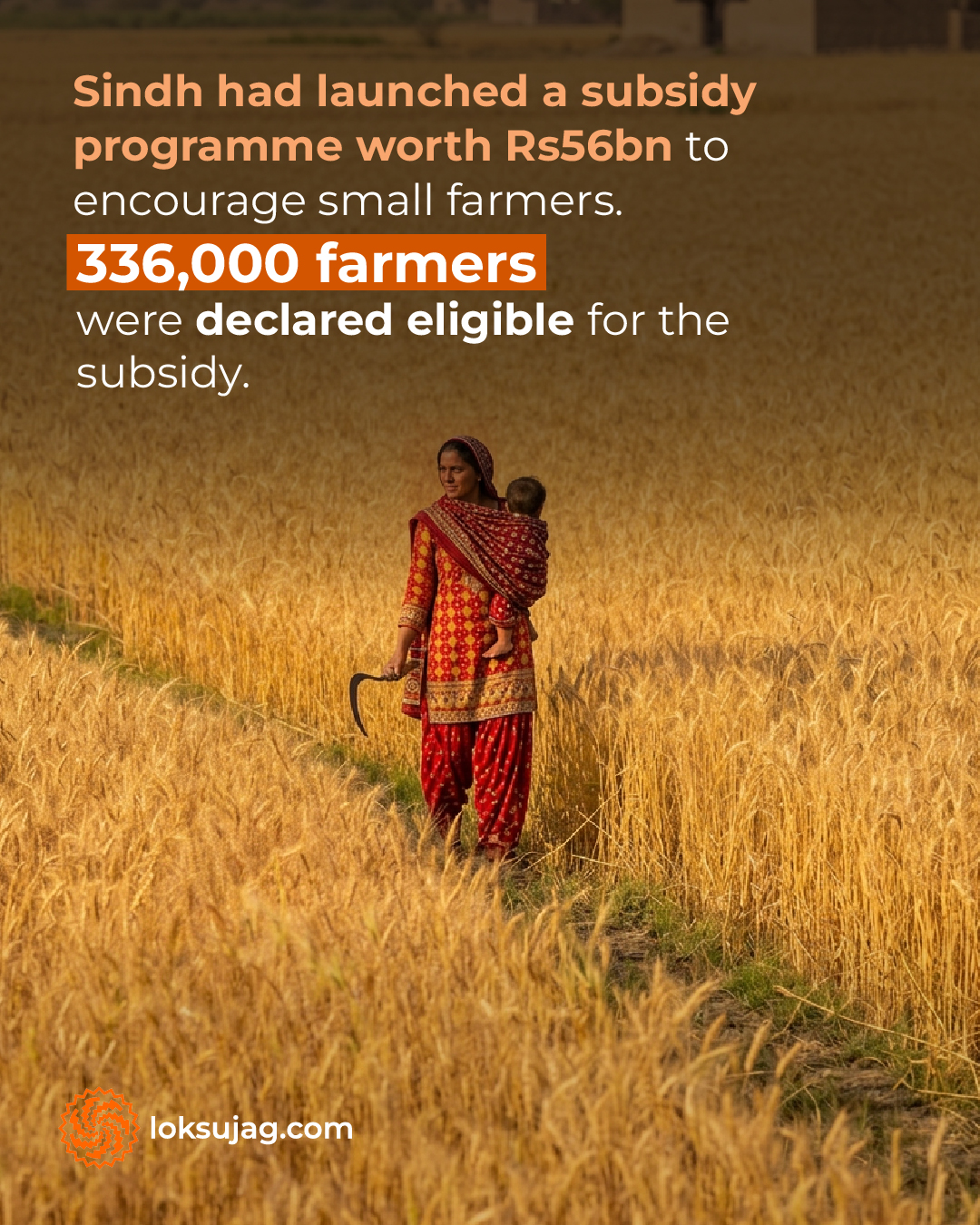
The Sindh government had launched a subsidy programme worth about Rs56bn to encourage small farmers with land holdings of one to 25 acres to grow wheat, under which they were to be provided with free fertiliser (as a subsidy).
According to the Department of Agriculture Extension, about 400,000 farmers registered for this programme. However, after verification by the Mukhtiarkars (tehsildars), 336,000 farmers were declared eligible for the subsidy, whose wheat area was about 2.3 million acres. The farmers were paid Rs22,000 per acre in two installments. Later, diesel subsidy was also given for threshing.
The government set the wheat price at Rs3,500 per maund (40kg) and the procurement target at 1 million tonnes. The purchasing plan was that 12.5 maunds (500kg) of wheat per acre would be purchased only from subsidised farmers, which would increase the farmers’ confidence and the target would be easily achieved.
However, when the food department was unable to purchase even a single sack of wheat at many centres by the end of April, the rumours started spreading. Meanwhile, the recovery letter from the DG Extension to the deputy commissioners confirmed the concerns of under-cultivation of wheat.
DG Allah Warayo Rind says that the recovery list includes the names of only 1,764 farmers from across the province who received the subsidy but did not cultivate wheat. The total area of these farmers is 8,392 acres.
The director general of Agriculture Extension’s position is correct, in fact, this area is much more than the details given in these recovery lists where wheat was not cultivated.
The story of subsidy in farmers’ own words
Nasir Hussain (name changed on request) owns 23 acres of land in Chambar tehsil of Tando Allahyar and he tells the story of the subsidy amount himself. He says that after verifying his Sattu (Form VII-B containing details of cultivation and occupation), the patwari concerned called him to his office and asked him how much wheat he planned to sow.
“I told him that the area of wheat was 13 acres. The patwari asked for my mobile number and bank account, which I gave. In the second week of March, I received Rs182,000 (14,000 per sack) for the purchase of 13 sacks of DAP, while my wheat had been harvested by Dec 15 and this fertilizer is applied during sowing. In the first week of April, when the wheat was ready, Rs182,000 for 26 sacks of urea (4,000 per sack), two sacks per acre, was transferred to my account. At the same time, the government gave another Rs19,500 (1,500 per acre) as diesel subsidy for threshing. I kept getting information about these amounts through text messages.”
Nasir Hussain had sown only four acres of wheat. At the rate of Rs23,500 per acre, his subsidy was Rs94,000, but he received Rs305,500, which he withdrew from the bank.
According to him, during this time no official from any department approached him to confirm the cultivation. Everyone was sitting in their offices doing paperwork.
Nasir’s name is not included in the recovery list but he says that he would see what to do when government asks for returning the money. He has already sold the wheat he had at present in March for Rs3,300 per maund in Chambar city.
The subsidy came very late
Allah Warayo Rind says that 235 teams were formed in the province to monitor the programme and verify cultivation area and they included agriculture officers, field assistants and patwaris. On their identification, recovery is being made from those who did not cultivate wheat. However, he admits that the verification process was so weak that those who did not cultivate wheat received not only urea money after DAP, but also money for threshing.
A recently retired director of agricultural extension also does not agree with the DG’s figures. He told Lok Sujag, on condition of anonymity, that the number of farmers who did not cultivate wheat and the area not cultivated is much higher.
"As far as the recovery letter by the department to the deputy commissioners is concerned, it was written simply to hide their incompetence.”
He says that wheat has been transported from the fields to factories and private warehouses, now how will any farmer or department prove who cultivated how much wheat. The recovery process is meaningless, even if the money is recovered from some the poor or ‘helpless’ farmers, it will not change anything.
The DG agriculture extension tried to save himself by sending a letter but the question remains as to how and why such a huge subsidy scheme failed to yield the desired results?
When the same question was asked to the retired director of agriculture extension, he says that there was no incentive for wheat farmers in the market and they had been selling wheat for peanuts for the two years and no one cared, now the farmers were not ready to face losses from the same crop again so soon.
Another factor is that the people did not believe in the government's announced policy. If the government had given the DAP subsidy money on time, i.e. by the first week of November or December, perhaps the farmers would have believed and sown more wheat.
Wheat procurement: a new story every year
According to the data of the Department of Agriculture Extension, wheat was cultivated on 38,79,857 acres in Sindh this year in the Rabi season, which is about 800,000 acres more than last year.
The total wheat production in the province this year was estimated at more than 4.8 million tonne. The food department was given a target of purchasing one million tonne, which was limited to farmers receiving subsidies only.
It is almost impossible that in the season of wheat procurement in Sindh, the food department is not in the news for its ‘high performance’. The provincial government announced in March that the food department will start purchasing wheat at 109 centres from April 1.
Wheat harvesting here starts from Mirpurkhas in the first week of March and is almost completed in the province by the end of April. But when the Lok Sujag team visited the procurement centres of Sanghar, Tando Allahyar and Badin in the late April, there was no staff there.
In Hyderabad, a board was put up in front of the Hattri Police Station, saying ‘Wheat Procurement Center Tando Jam’, while procurement was being done only in Hyderabad.
According to District Food Controller Hyderabad Ahsan Kori, the Agricultural Extension Department has sent lists of farmers receiving subsidy but wheat is not reaching the centres. Help has also been sought from local revenue officials, but it seems difficult to meet the procurement target, he adds.
The chief minister announced that in future only those farmers will get assistance who will sell wheat to the government. Still, wheat has not arrived at the government centres.
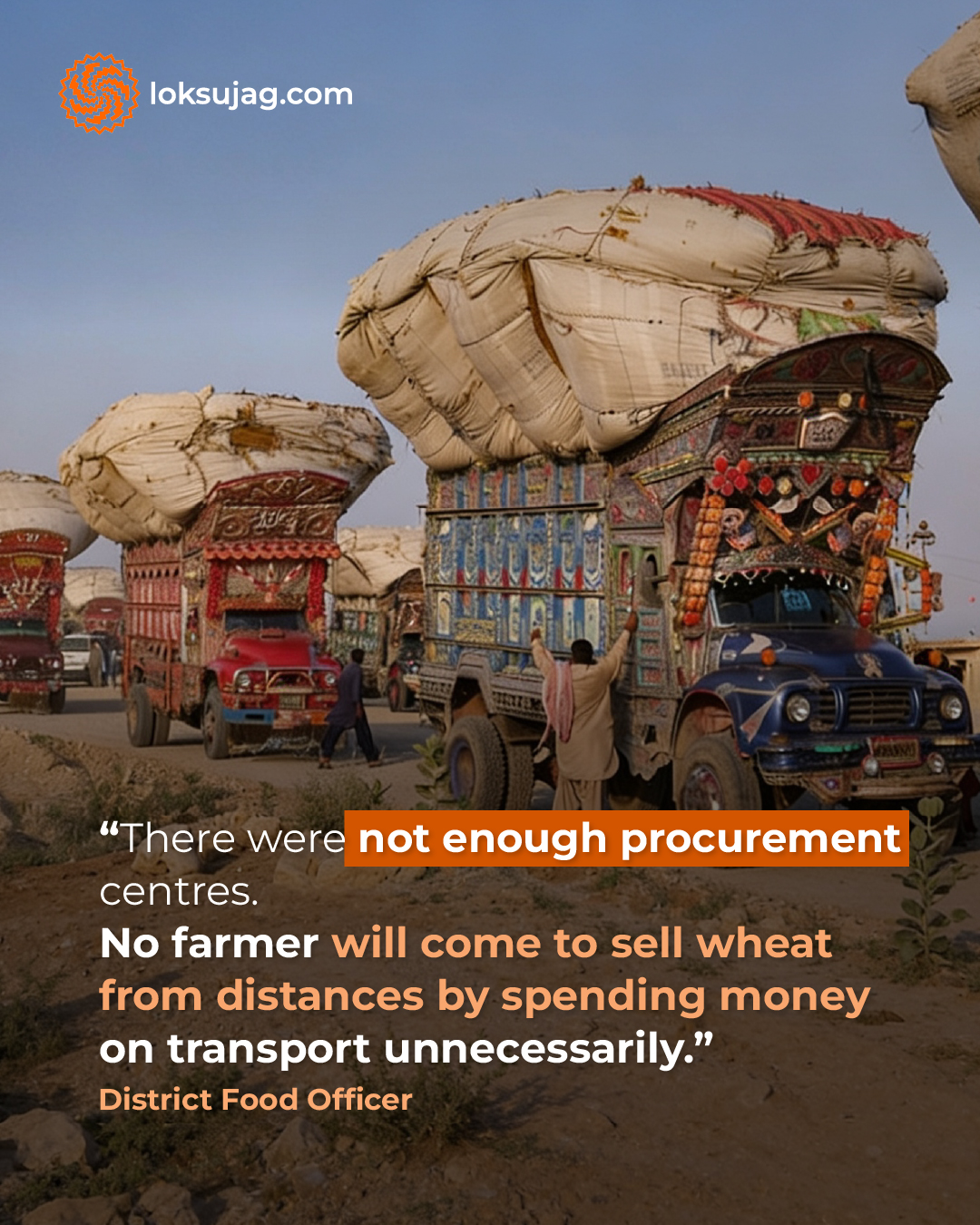
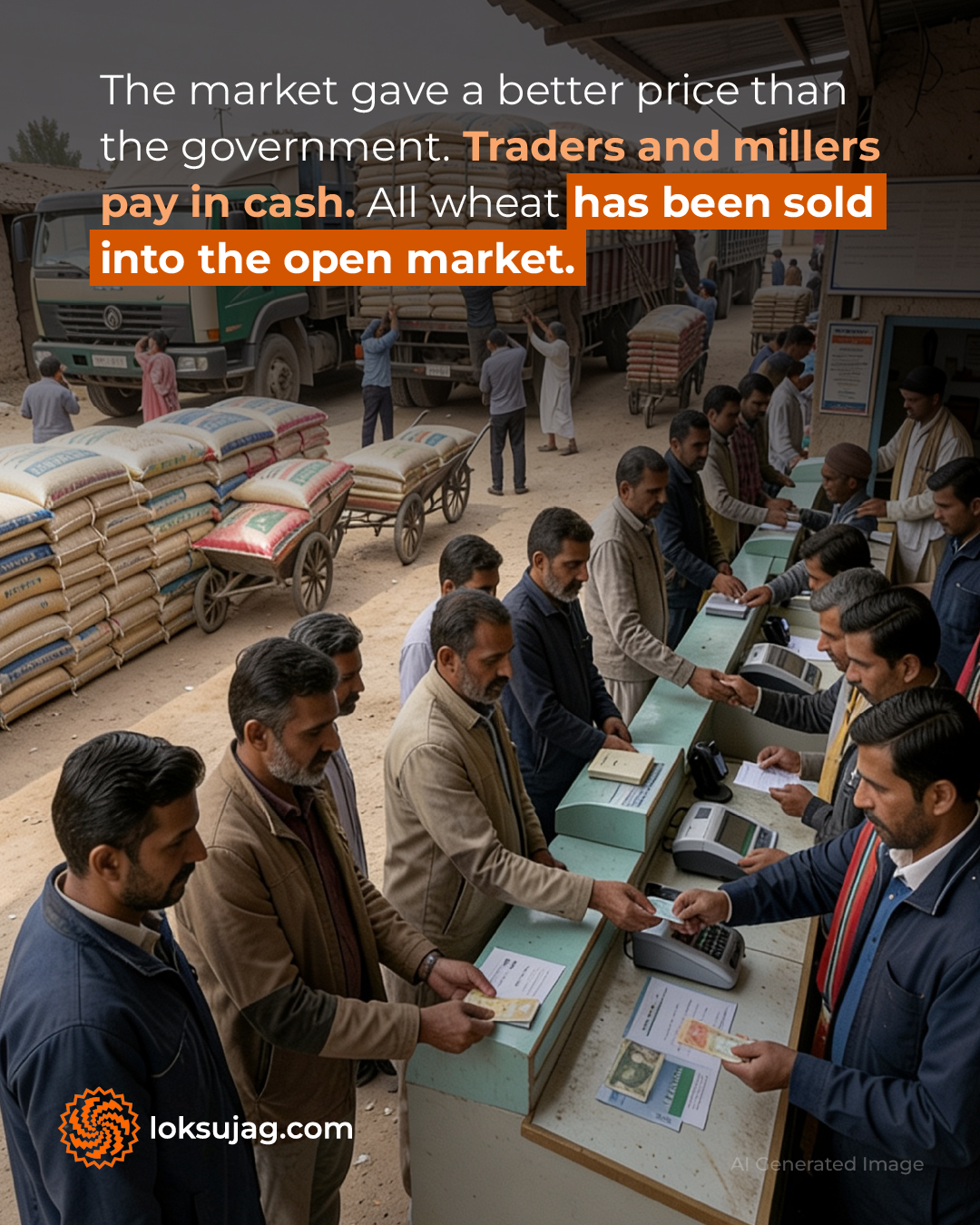
Another district food officer complained that small landowners did not cultivate as much wheat as they had stated. Procurement centres were less in number. No farmer will come to sell wheat from distances by spending money on unnecessary transport. The market gave a better price than the government rate, traders and millers pay in cash. All the wheat has been released into the open market.
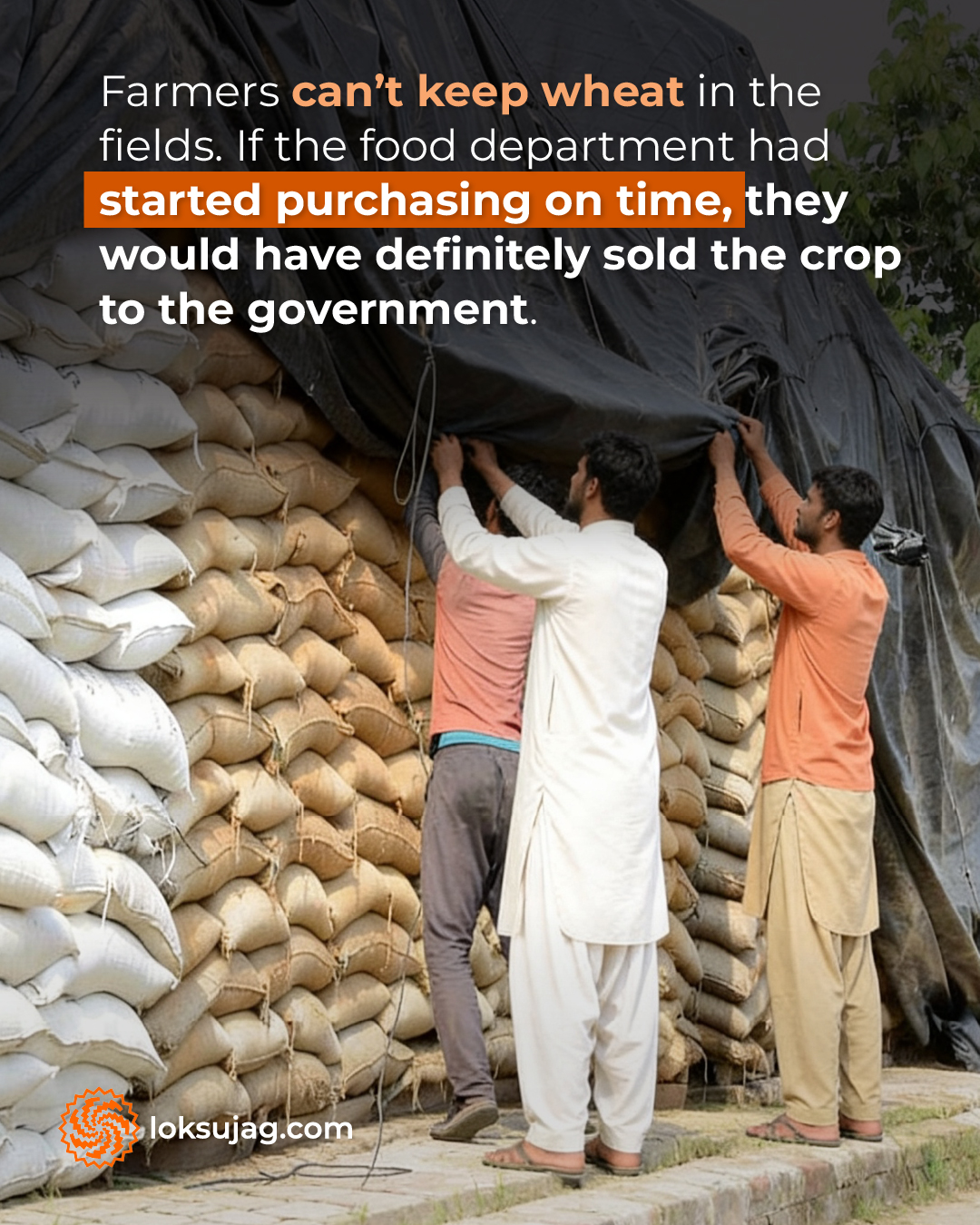
Nasir Hussain insists that farmers cannot keep wheat in the fields. If the food department had started purchasing on time, they would have definitely sold the crop to the government.
He says, “I regret that the subsidy money was received late and we could not take advantage of it. If the subsidy scheme is repeated again next year, we will not waste the opportunity of growing wheat”.
Published on 3 Jun 2026