

Transport accounts for 28 percent of Pakistan’s environmental pollution. It is the largest consumer of fossil fuels (petrol, diesel, gas) in the country and is responsible for 35 percent of the hazardous components (2.5ppm) that cause smog.
To control air pollution, the federal government has decided in the National Electric Vehicle Policy 2025-30 that by 2030, 30% of all new vehicles on the roads will be EVs (electric vehicles) that do not burn petrol or emit smoke and, therefore, do not cause pollution.
This target is quite ambitious, but even if it is achieved, the millions of old vehicles already in the country will continue to burn petrol and pollute the environment. Can there be any arrangement to make old vehicles environmentally friendly?
Dr Aazir Khan of the Integrated Engineering Center of Excellence (IECE) at the University of Lahore suggests that old petrol vehicles should be converted to EVs. Experts call this process retrofitting. He points out the flaw in the national policy, saying that all the attention is focused on new vehicles and the fact that old vehicles will continue to pollute has been ignored.
"The government has mentioned retrofitting in the policy but has not given it any special importance, whereas we have practically proven that it can be done. Therefore, the same facilities should be given to retrofitting that are being given to those who buy or manufacture new EVs," he suggests.
Transport accounts for 28 percent of Pakistan’s environmental pollution. It is the largest consumer of fossil fuels (petrol, diesel, gas) in the country and is responsible for 35 percent of the hazardous components (2.5ppm) that cause smog.
To control air pollution, the federal government has decided in the National Electric Vehicle Policy 2025-30 that by 2030, 30% of all new vehicles on the roads will be EVs (electric vehicles) that do not burn petrol or emit smoke and, therefore, do not cause pollution.
This target is quite ambitious, but even if it is achieved, the millions of old vehicles already in the country will continue to burn petrol and pollute the environment. Can there be any arrangement to make old vehicles environmentally friendly?
Dr Aazir Khan of the Integrated Engineering Center of Excellence (IECE) at the University of Lahore suggests that old petrol vehicles should be converted to EVs. Experts call this process retrofitting. He points out the flaw in the national policy, saying that all the attention is focused on new vehicles and the fact that old vehicles will continue to pollute has been ignored.
"The government has mentioned retrofitting in the policy but has not given it any special importance, whereas we have practically proven that it can be done. Therefore, the same facilities should be given to retrofitting that are being given to those who buy or manufacture new EVs," he suggests.
Only bike’s powertrain needs to be changed
Pakistan is the world’s largest motorcycle market, with 1.8 million new motorcycles sold in the last year alone, with a large portion of them being 70cc and 125cc petrol bikes.
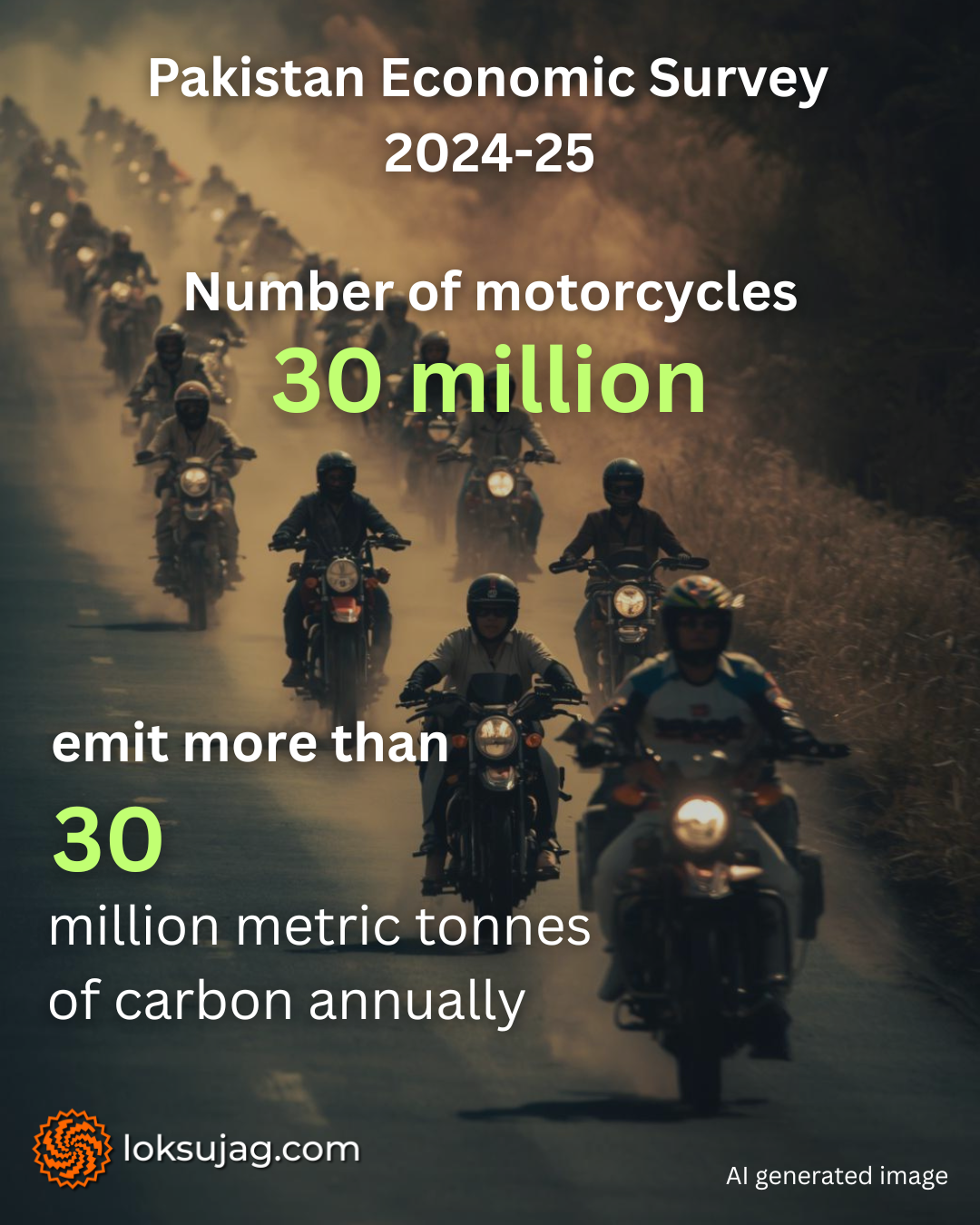
According to the Pakistan Economic Survey 2024-25, there are more than 30 million motorcycles plying on Pakistan’s roads, which, according to conservative estimates, emit more than 30 million metric tonnes of carbon annually. During the first quarter of this year, motorcycles were found to contribute 10 percent to Pakistan’s total carbon emissions.
Getting rid of the pollution of these petrol-powered motorcycles can play a significant role in improving our environment. So how can they be converted into electric bikes?
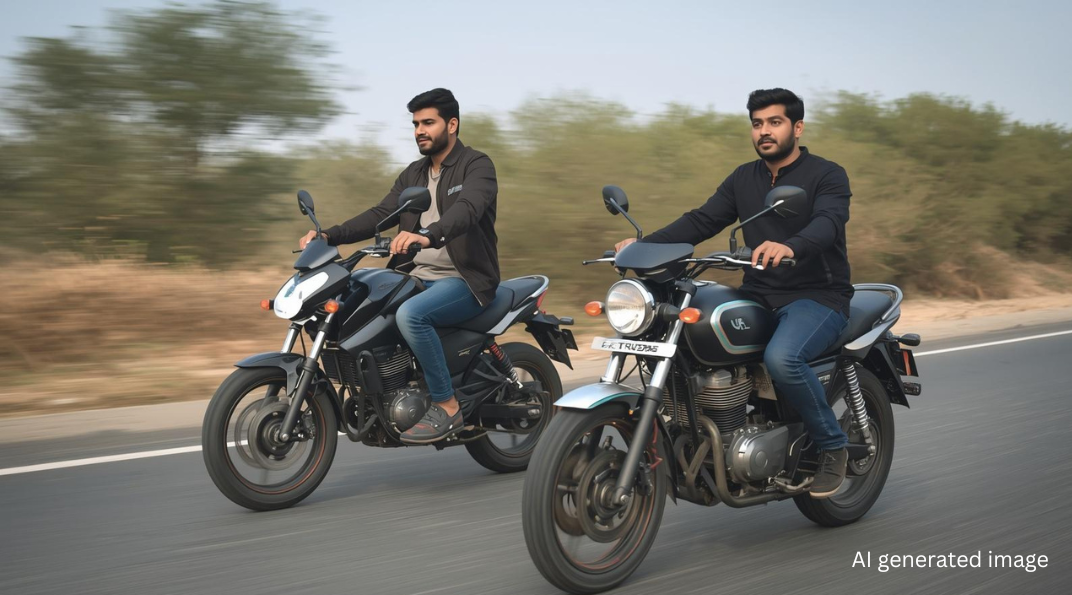
A project to electrify motorcycles is being worked on at the University of Lahore (UoL). Project head Muhammad Waqar told Lok Sujag that the engine of a petrol bike is removed and an electric motor is installed, which is powered by a battery.
“We install a lithium-ion battery pack in the motorcycle. Along with that, we install a motor controller that controls the electric current.”
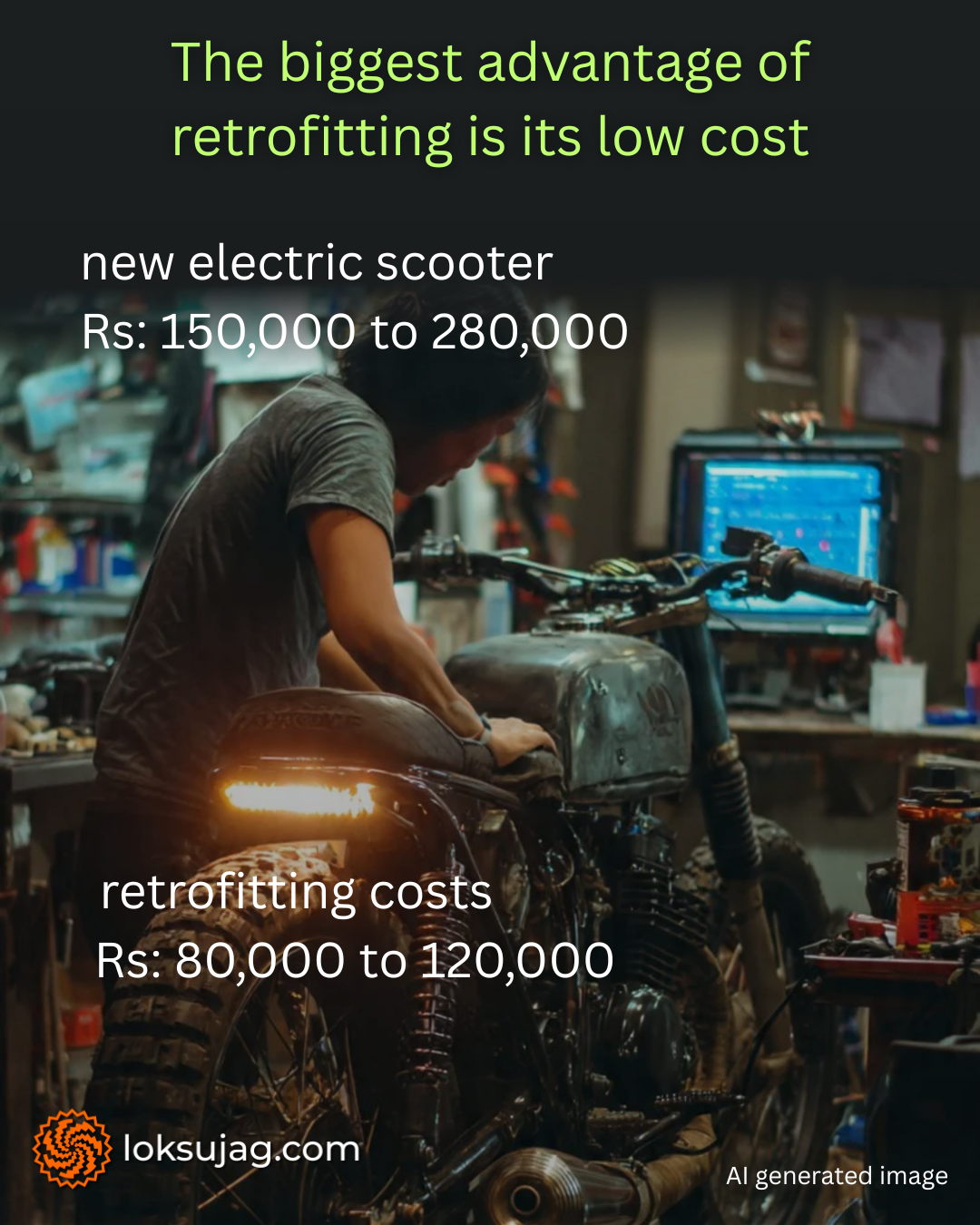
He says the biggest advantage of retrofitting is its low cost. A new electric scooter costs Rs150,000 to 280,000, while retrofitting costs Rs80,000 to 120,000. This difference of almost half the price is of great importance to the common man.
Dr Aazir says that in Pakistan, motorcycles are not only a means of transportation but also an asset that people have to resell. That is why many people do not want to buy an e-bike from an untested brand whose resale value they do not know. “Retrofitting is also better for those people in which the frame remains the same, only changes are made to the powertrain.”
The Thailand model can be more effective
The government has issued licenses to 77 companies to manufacture e-bikes. At the same time, a subsidy of Rs9 billion has been allocated for e-bike buyers, which will benefit 116,000 people. This subsidy will be transferred to the user in the form of Rs50,000 in cash.
Dr Aazir believes that the subsidy is good, but steps are also needed to ensure that the industry can stand on its own feet after the subsidy ends.
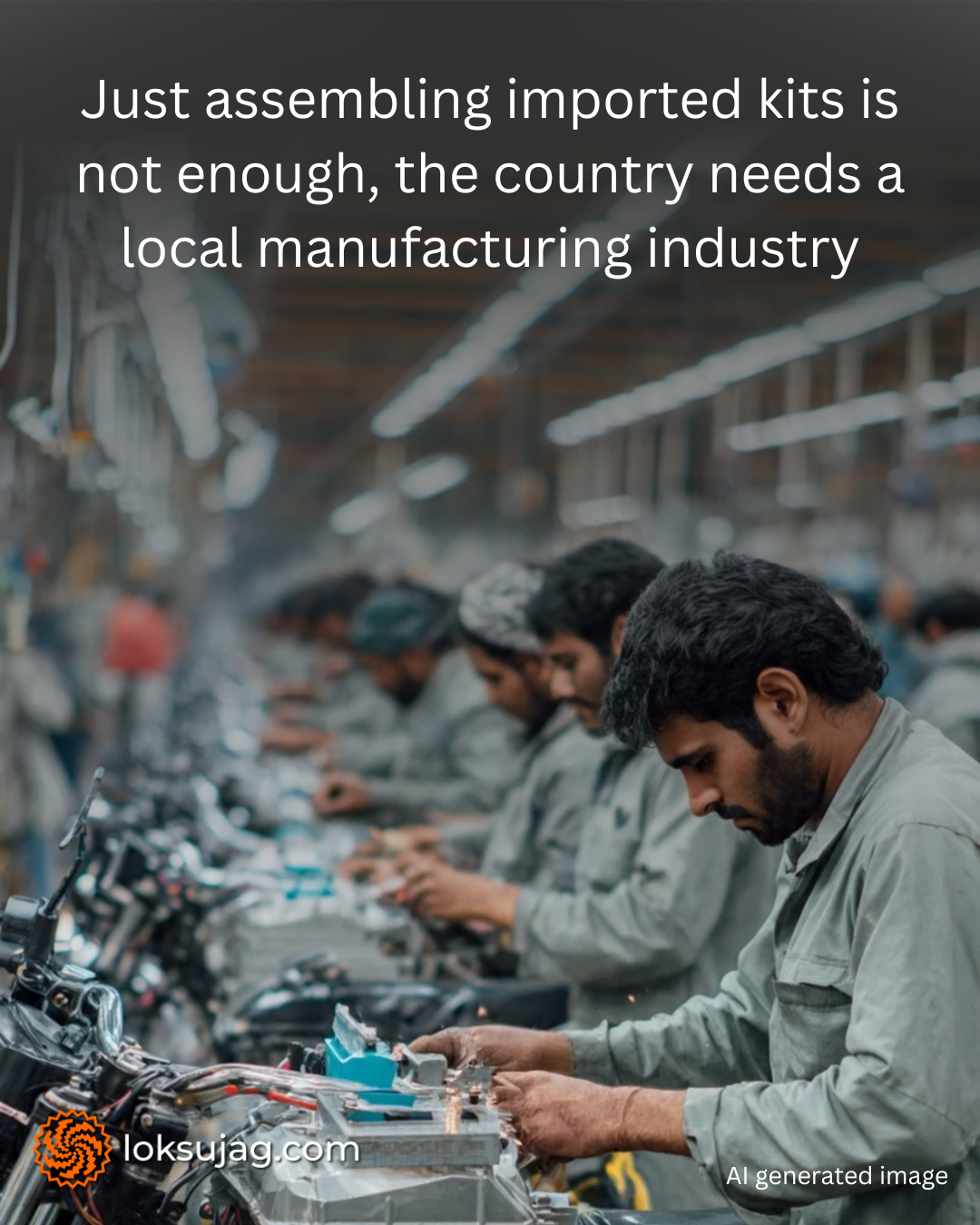
“Just assembling imported kits is not enough, the country needs a strong local manufacturing industry.”
In his opinion, Pakistan's EV policies are often based on the European model, which is very different from ours, so they do not work much. “A model like Thailand could be more effective here, meaning that parts are manufactured here and technical problems are also solved here. We should involve local mechanics and manufacturers who already make 90 percent of motorbike parts here.”
He points out that another problem for retrofitters is the unbearable tax burden. He gives the example of a pilot project in Multan where the tax reached 61 percent. No small or medium business in this sector can afford such a burden.
Retrofitting is so attractive to ordinary consumers that some people do not want to wait for government initiatives to promote it. They have started making their own way.
Muhammad Bashir of Iqbal Town, Lahore, had a battery pack installed in his motorbike along with the original petrol engine a year ago. Now it can run for 40 to 45 kilometers on a single charge. Such bikes are called hybrids in the market.
"When the battery runs out, I shift the bike on petrol. It hasn't broken down once in the whole year. It runs great and the good thing is that I have both the options of running on battery and engine,” says Bashir.
Incompetent mechanics can make retrofitting dangerous
The technology of retrofitting is ready and is slowly making its way but no legislation has yet been enacted to make it standard and safe. The process of retrofitting and the vehicles produced from it can be dangerous, for example, if an incompetent mechanic installs a substandard battery or controller, the risk of fire increases.
Experts recommend a system similar to the British Department of Transport in this regard, where private workshops under public-private partnership test the safety and carbon emissions of vehicles under government supervision. Through such a system, retrofitted bikes can be made as safe as new electric bikes.
Abdul Hadi, head of the Department of Automotive Electronics at the National Institute of Electronics, Islamabad, says retrofitting large vehicles is easy. The transition of garbage trucks and buses to EVs in many countries, including India, is a good example that can happen here too.
“The case of motorcycles and small cars is complicated. They are built for engines, if heavy batteries are put in their place, the balance will be disturbed and the performance of the car will be affected.”
He says that retrofitting can only be done properly if the entire process is in accordance with specific standards set and each stage is monitored. Strict testing should be done to ensure that no vehicle is dangerous.
"EV batteries are often suitable for small-wheeled vehicles like scooters, but we are installing them in big bikes, which will damage the motorcycle in the long run. Until standards are set, retrofitting should be avoided."
Hadi says EV batteries are explosive and in-depth research is necessary for retrofitting but we are not ready for it yet.
Published on 8 May 2026