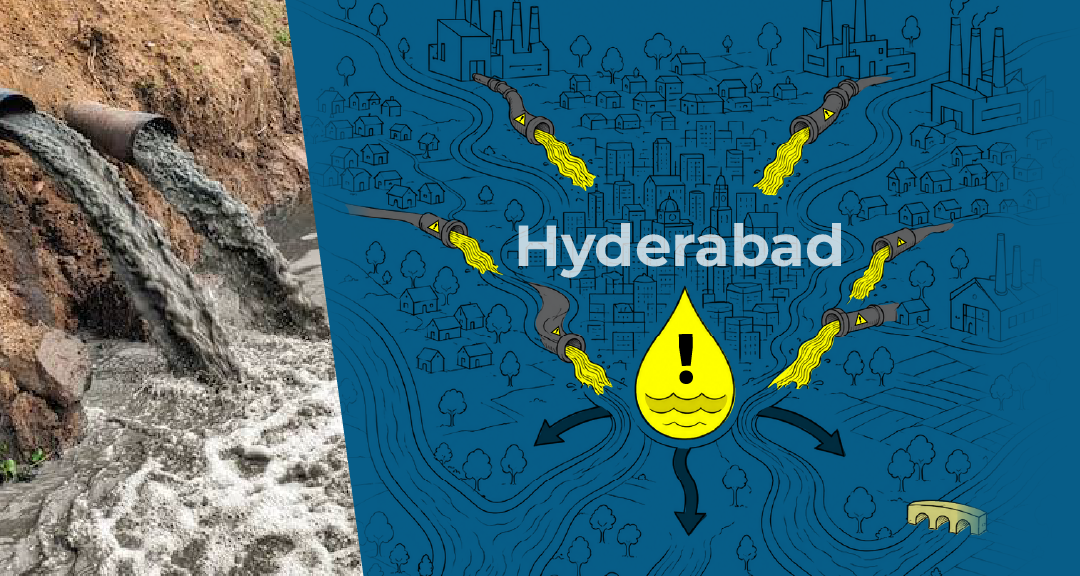


The Sindh government has launched a project in Hyderabad, the second largest city of the province, to drain wastewater into the sea through the Karo Ghungro Outfall Drain (rainwater drain).
Farmers of the lower districts of Tando Muhammad Khan and Sujawal have serious reservations about this project. They say that the polluted sewage water containing industrial waste entering Karo Ghungro will affect dozens of surrounding villages.
“The groundwater will get polluted, which will not only destroy agricultural lands but also cause diseases in humans and livestock.”
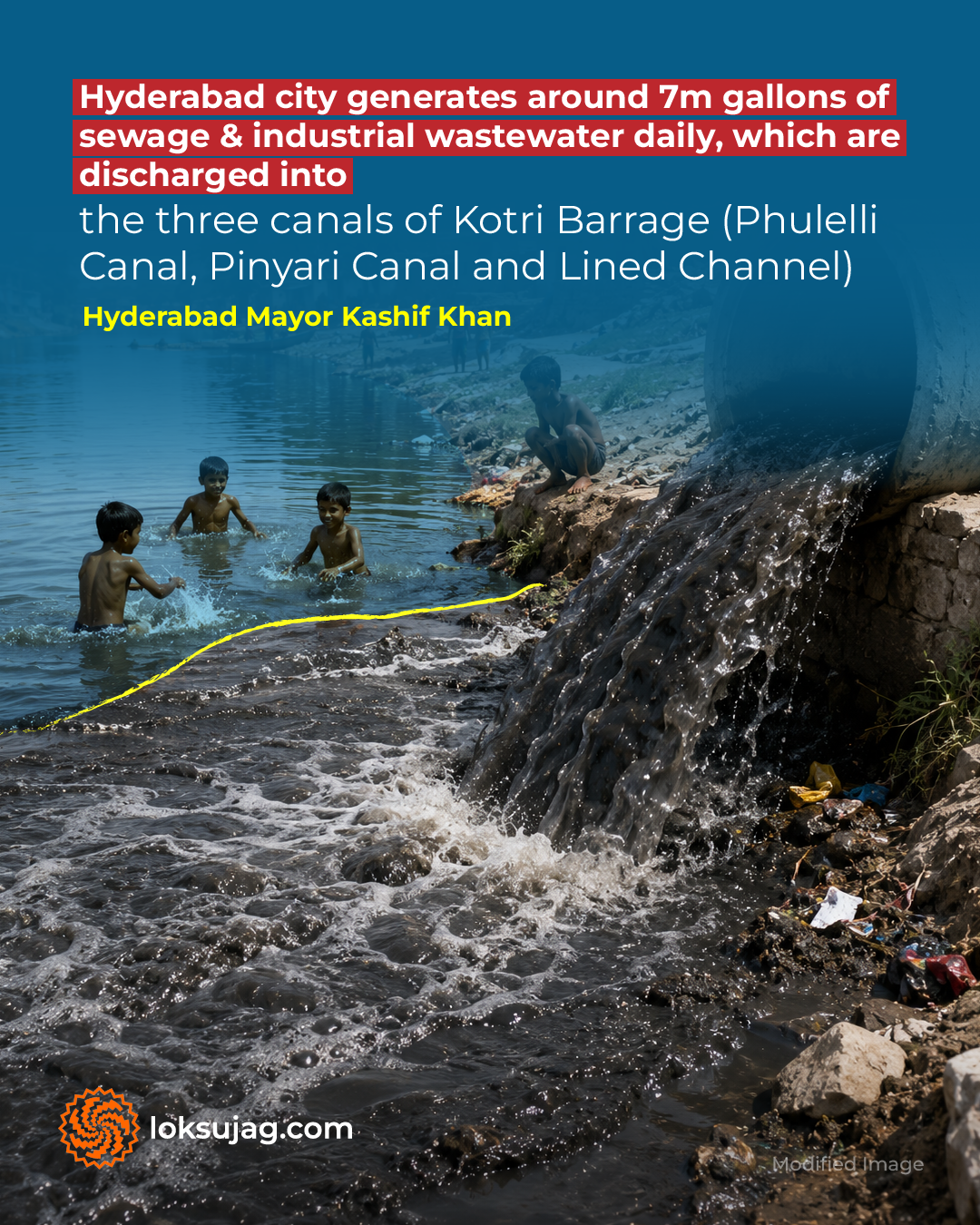
Hyderabad Mayor Kashif Khan Shoro says that the city of five million people generates about 7 million gallons of sewage and industrial wastewater every day, which is discharged into the three canals of the Kotri Barrage (Phulelli Canal, Pinyari Canal and lined channel/Akram Wah).
“People are forced to drink polluted water from these canals. In view of this problem, work is underway on a new project, which will divert the sewage to the Karo Ghungro drain as soon as it is completed,” he adds.
The city’s drainage issue is decades old. Earlier, this polluted water was released into the Indus River, then it was also discharged into the canals originating from the Kotri Barrage. Now, most of the sewage is being discharged into two major canals. Of these, the Pinyari Canal irrigates 126,000 acres of Hyderabad district, Tando Muhammad Khan and Sujawal, while the Phulelli Canal irrigates 929,000 acres of agricultural land from Hyderabad to Badin. During the reign of former president Pervez Musharraf, a plan was made to treat the water and release it into canals. For this, construction of four treatment plants began, of which two were completed in 2009, but this experiment failed and the plants became inactive.
What is an under-construction drainage project?
According to the project, a paved channel (drain) is being constructed from Darya Khan Pumping Station in Hyderabad city. It has been named 'Darya Khan Branch/Dewan Drain' with a capacity to carry 400 cusecs of sewage.
This channel will run along the Pinyari Canal till Husri, its water will be released into the old rainwater drain in front of Zeal Pak Cement Factory which will reach the Karo Ghungro Drain in Tando Muhammad Khan limits. This drain ends at Suhanro/Sunehri Lake in Thatta Sujawal from where the water flows into the sea.
This sewerage project was originally planned in 2022 but its rationalised revised PC-1 was prepared to include it in the Annual Development Programme 2024-25.
According to the current PC-1, the total cost of the project is estimated at around Rs5.5 billion, which includes rehabilitation of Karo Ghungro drain and its associated structures, new drains from Darya Khan pumping station to Karo Ghungro, and construction of several siphons and bridges.
The project was prepared by the Sindh Irrigation Department, in collaboration with Nespak, which is being constructed under the supervision of the irrigation authorities.
Government officials believe that as a result of the measures proposed in PC-1 and the rehabilitation of the Karo Ghungro drain system, 98,598 acres of land will be made cultivable again. Crops like sugarcane, rice and vegetables will grow here, which will benefit about 1 million people.
However, farmers of Tando Muhammad Khan and Sujawal districts are adamant that the plan to dump Hyderabad’s sewage into Karo Ghungro be abandoned.
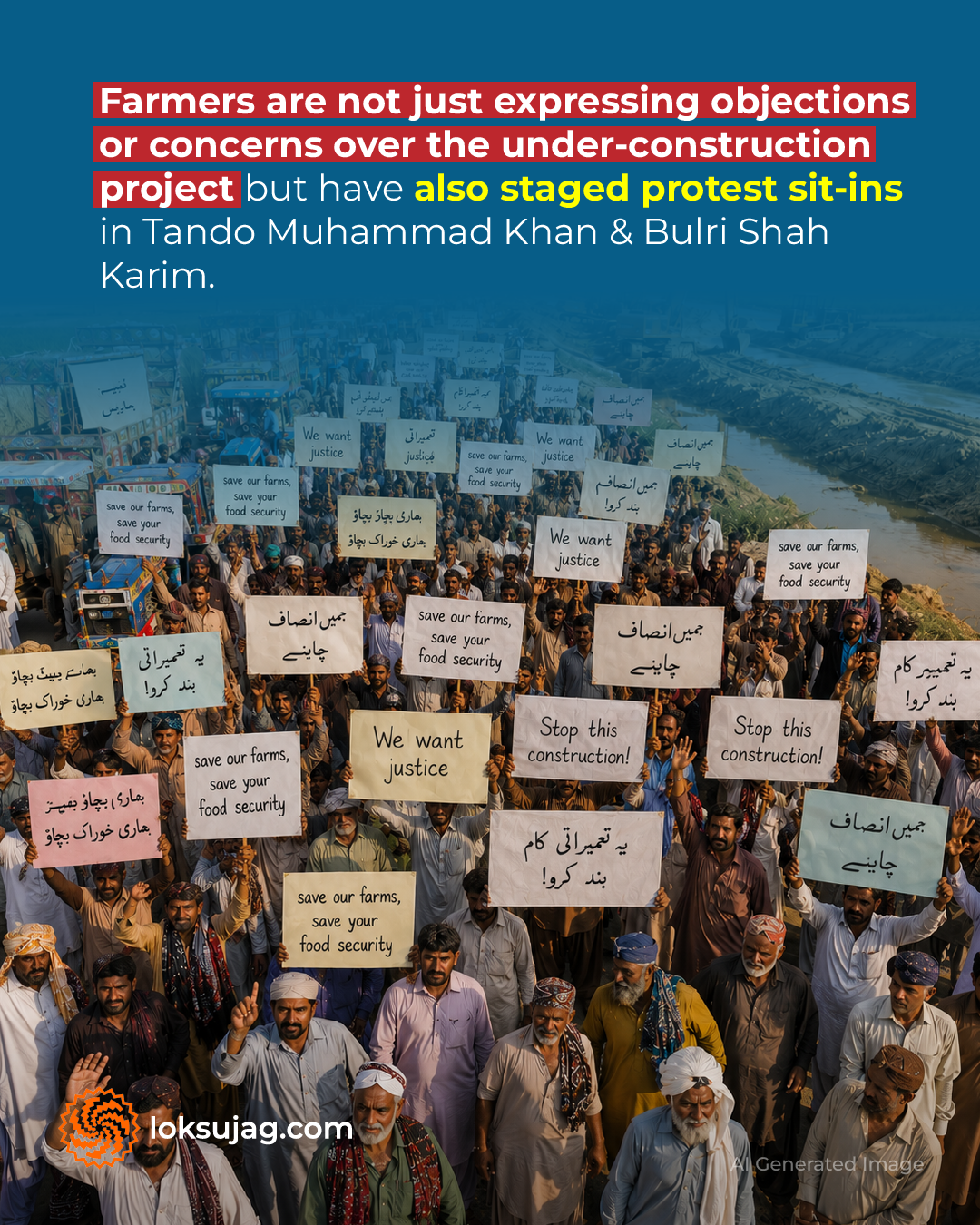
'Karo Ghungro has drowned farmers before, now it will cause more problems'
Farmers are not just expressing objections or concerns about the under-construction project, but they have also staged protest sit-ins in Tando Muhammad Khan and Bulri Shah Karim.
The Karo Ghungro Outfall Drain System, completed in 1959, was designed to drain rainwater from an area of about 400,000 acres. The 80-mile-long Karo Ghungro is the central part of the system, which is 15 feet wide and has a capacity to carry 1,232 cusecs of water.
Abadgar leader Usman Katiyar says that Karo Ghungro has drowned farmers before, now disposing of sewage into it will cause more problems. This will not only lead to floods during the rains, but also make agricultural lands permanently swamped and barren.
PC-1 confirms that the Karo Ghungro has become less efficient due to siltation, encroachment and long-term lack of maintenance. Its catchment area had a capacity to withstand 170mm of rainfall, but in 2020, 250mm of rainfall was more than the capacity of the drain, so its water overflowed and agricultural land and settlements were engulfed by this polluted water.
According to PC-1, the condition of this drain is deteriorating and it has lost its original structure and shape. Now, Karo Ghungro will be restored to drain the excess water of Hyderabad. Its width will be increased from 15 feet to 45 feet, which will further increase its water capacity.
Tando Muhammad Khan landowner and leader of the Abadgar Board, Nabi Bux Sathio, calls the official position a hoax.
“The authorities do not do what they say. We want the restoration of Karo Ghungro, but here, under the guise of this, an attempt is being made to pour another 400 cusecs of toxic water from Hyderabad, which will severely affect villages with a population of 70,000,” he argues.
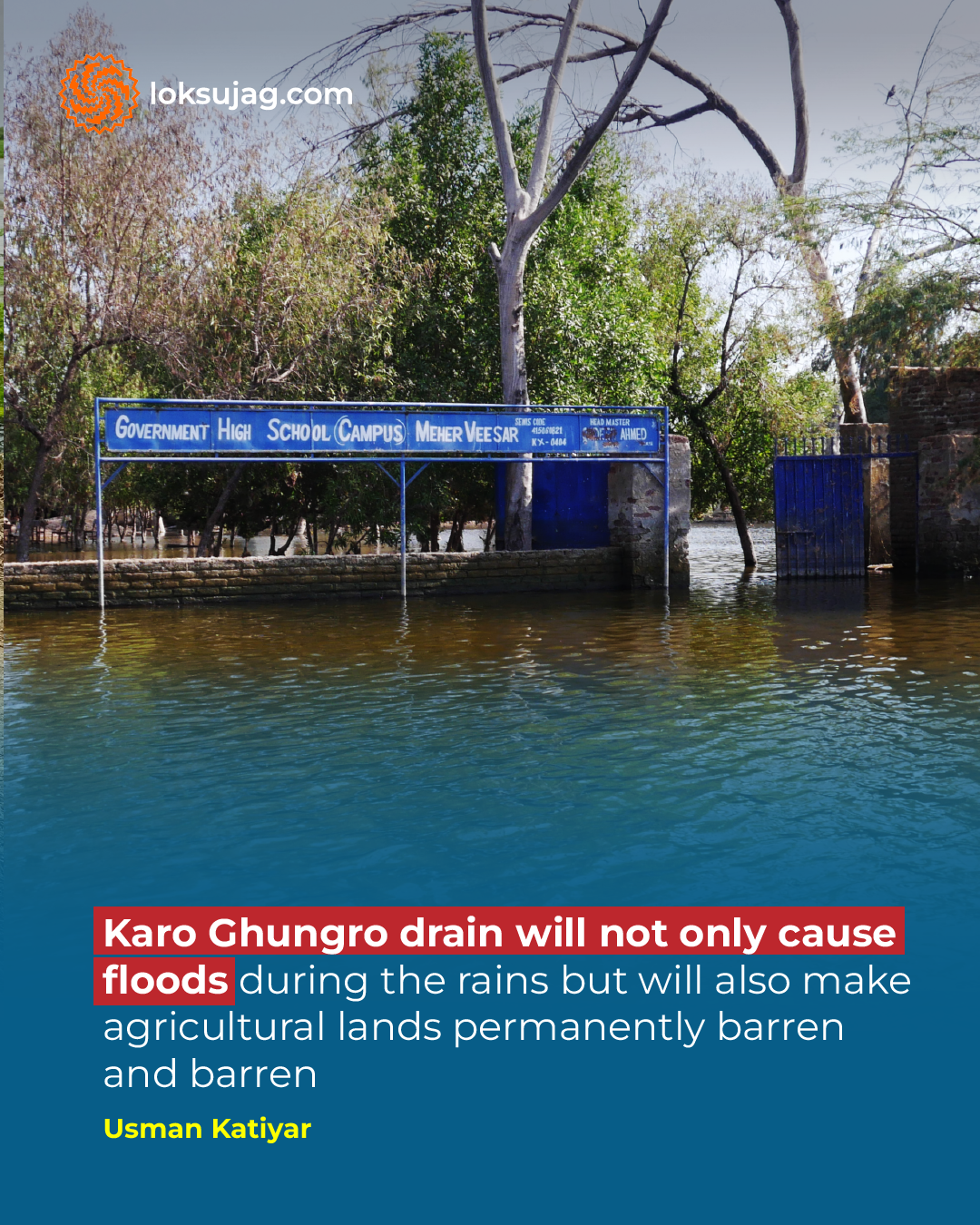
Drainage projects in Sindh have never been successful
Residents complain that they were not taken into confidence on the issue of draining the city’s drainage into Karo Ghungro. If they (the authorities) had good intentions, they would have consulted the local farmers or at least informed them of the possible impacts. But nothing like that happened.
In this regard, Lok Sujag contacted Imran Abbasi, former director of the Sindh Environmental Protection Agency (SEPA), Hyderabad. He said that he had held a meeting with the locals at the Darya Khan pumping station regarding the environmental impacts (although the people of the lower districts are the ones who are concerned) and no one there had any objection.
Environmentalist Prof Ismail of the Tando Jam Agricultural University is also against draining sewage into Karo Ghungro. He says that drainage projects in Sindh have never been successful, whether they are rain drains or sewers.
“LBOD (Left Bank Outfall Drain) and RBOD (Right Bank Outfall Drain) are clear examples of this as they have destroyed local communities. Instead of going to the sea during the monsoons, their water returns almost every year and drowns people and crops.”
According to him, this new Karo Ghungro project will also bring great destruction. The land is already being degraded by dumping toxic waste from sugar mills into this drain, now the sewage from Hyderabad’s factories and the city will cause further destruction.
Nabi Bux Sathio insists that the sewage should be treated and discharged into the Phuleli Canal, which will not only solve the drainage problem of the city but will also provide abundant water to the agricultural lands there.
“Karo Ghungro cannot bear any more water. If this project is not abandoned, we, the people of Tando Muhammad Khan and Sujawal, will continue to face the constant threat of floods and mudslides,” he says.
Despite protests, work on the Hyderabad Drainage Project continues. It remains to be seen how far the authorities will follow through on their promises to expand and rehabilitate the Karo Ghungro Drain.
Published on 30 Jun 2026