

In 2022, only 2,000 electric motorcycles or e-bikes were sold in Pakistan but this number continued to increase steadily and in 2025, it reached close to 100,000.
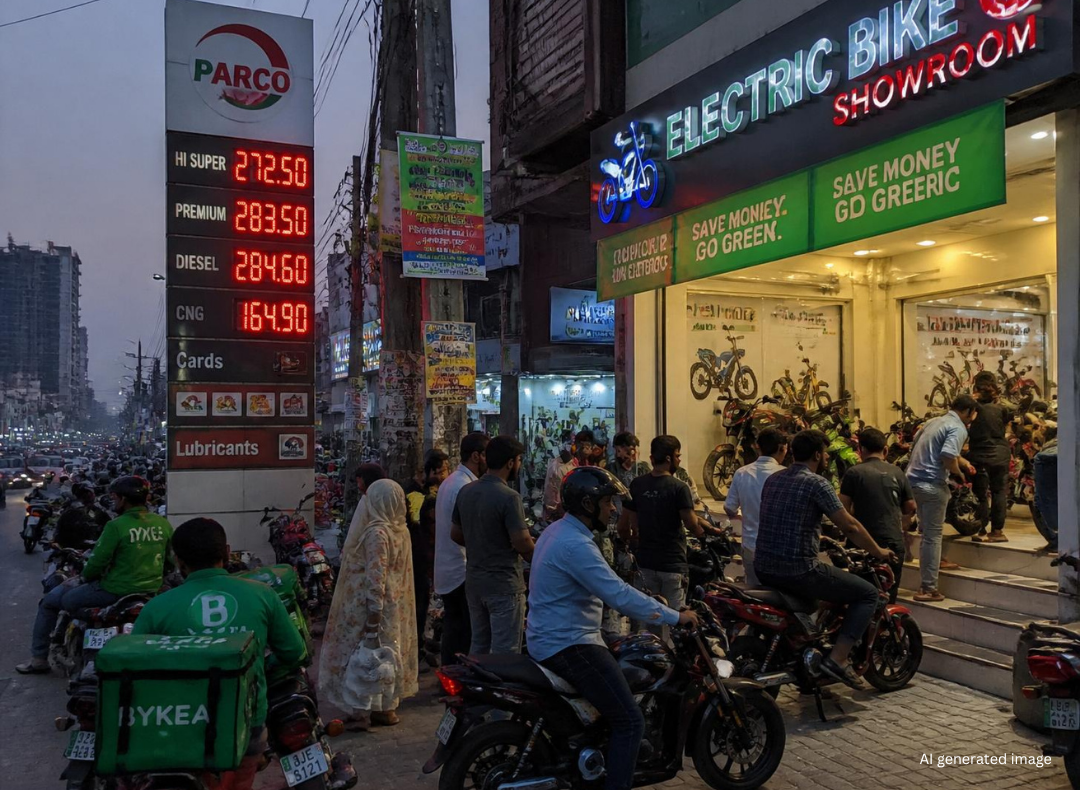
The blow that the US-Iran war dealt to petrol prices all over the world pushed the sale of e-bikes. According to market sources, around 40,000 two-wheeler units (e-bikes and scooters) were sold during April 2026 alone in Pakistan. Experts are calling it a ‘boom’ of EVs.
While this situation is welcome, a new problem has arisen for consumers, i.e. shortage of e-bikes in the market and soaring prices.
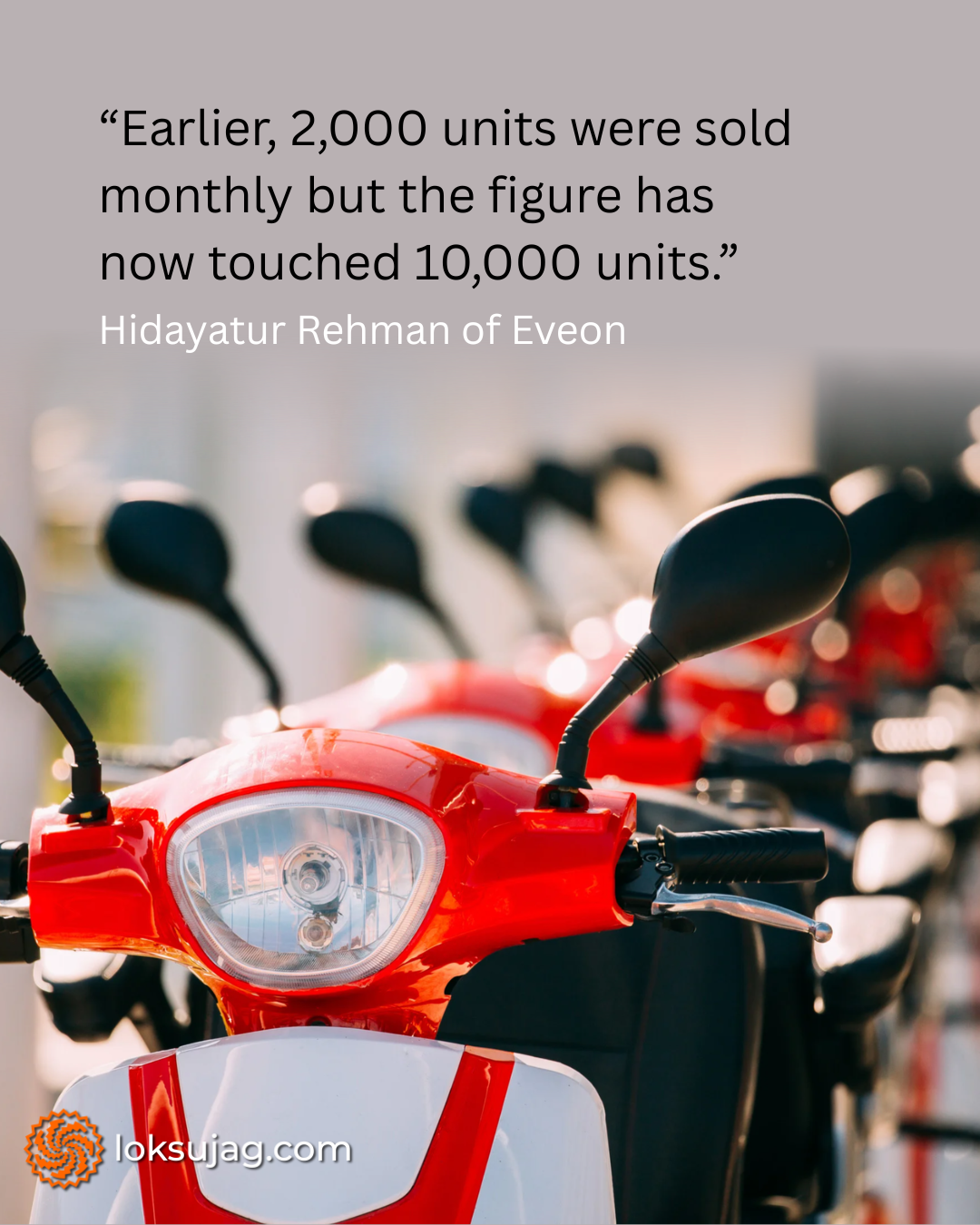
Hidayatur Rehman, the director sales and marketing of Eveon, the Chinese company in Pakistan, says that earlier, 2,000 units were sold monthly but the figure has now touched 10,000 units.
“The company had kept two to three months of stock, keeping in mind the sale, but due to the unexpected increase in demand, it was exhausted within days.”
According to him, the consignment of bikes imported from China takes two-and-half to three months to be delivered because the processing takes some time here. “That is why it has become difficult to meet the demand immediately.”
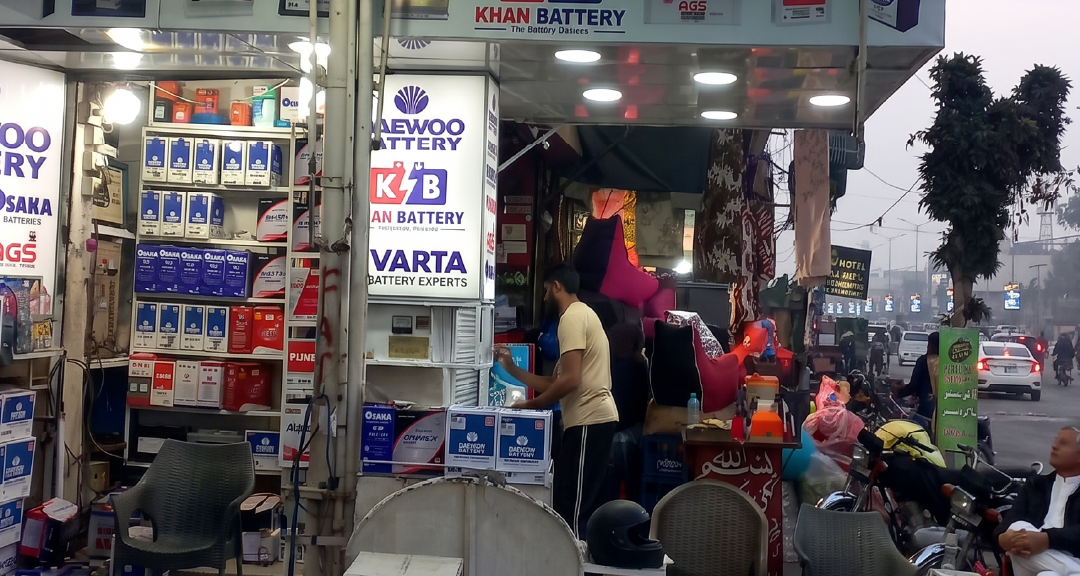
Muhammad Riaz, an EV dealer on Lytton Road, Lahore, says that buyers have to wait for several weeks and in some cases more than three months for new e-bikes. Some dealers are taking advantage of the shortage and charging customers an additional Rs10,000 to 15,000 for immediate delivery.
Several companies have also increased the e-bike price by up to Rs5,000.
Some sought-after popular models
Market dealers and representatives of EV companies indicate that the market is seeing the highest sales of low-cost EVs available as alternatives to 70cc motorcycles.
Models from Evee, Jolta, Jaguar and Yadea are selling relatively well, with the Evee C1Pro, Jaguar M-1 and Yadea T5 being particularly notable.
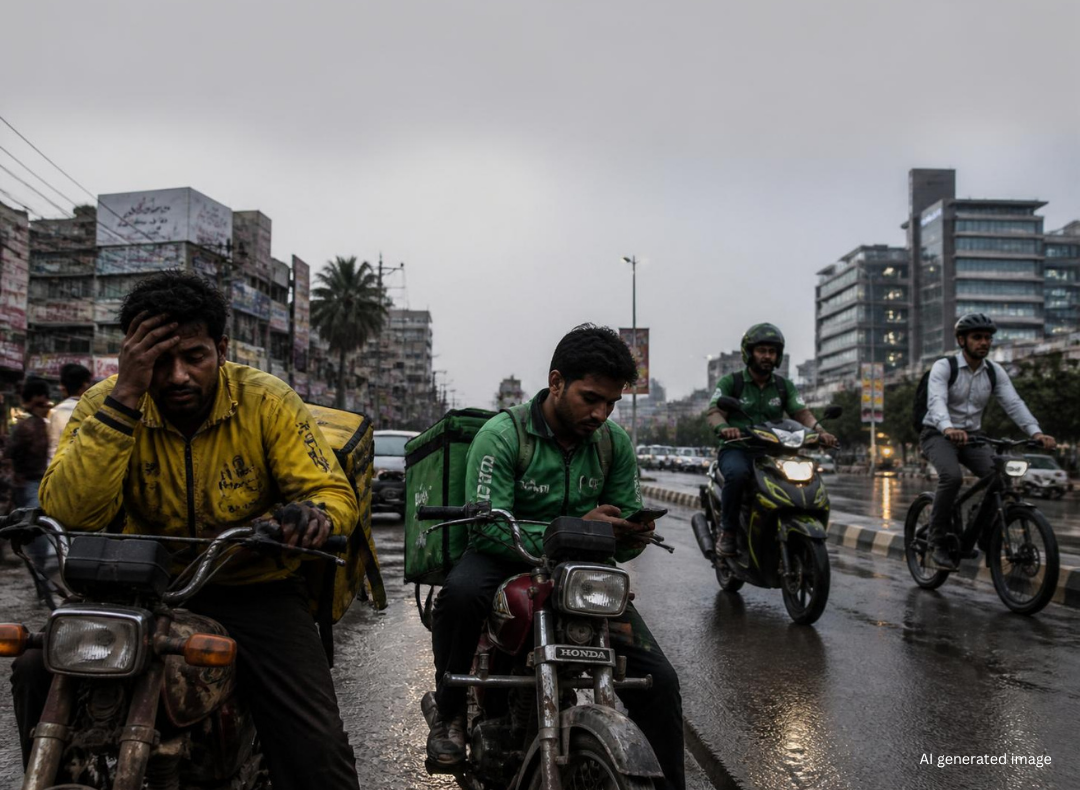
These models are more popular in urban centres like Lahore, Karachi, Faisalabad and Rawalpindi, whose buyers include students, office workers and online delivery riders.
According to a market survey, e-bikes with 1.2 to 2 kW motor power and a range of 80 to 120km have the highest demand. Especially those priced between Rs200,000 and Rs400,000.
Consumers are preferring bikes that have lithium iron phosphate batteries, fast charging and a replaceable battery option.
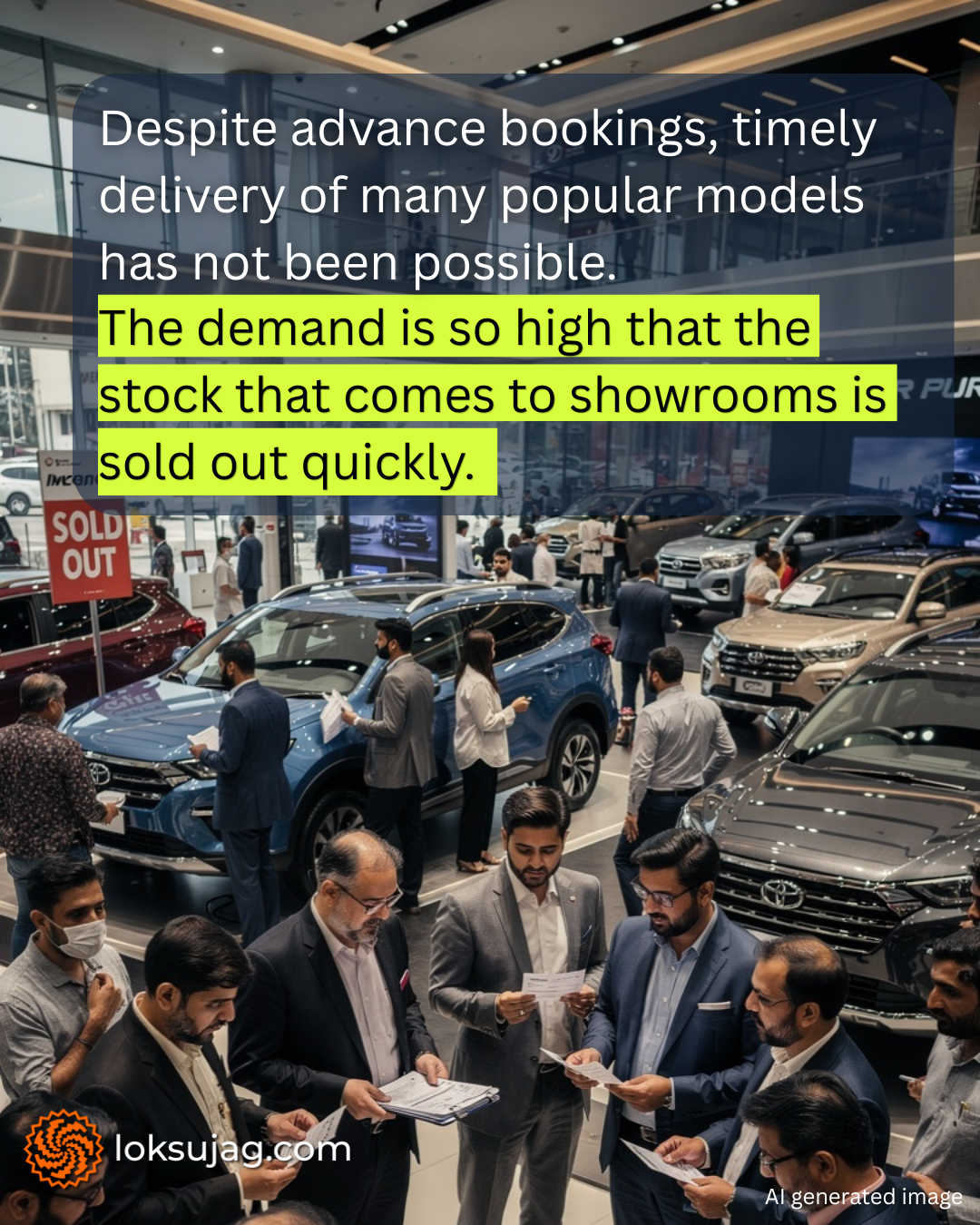
Representatives of EV companies admit in an 'off-the-record' conversation that despite advance bookings, timely delivery of many popular models has not been possible. The demand is so high that the stock that comes to showrooms is sold out quickly.
Hidayatur Rehman says the demand for e-bikes has created good business opportunities with relatively limited investment. A large number of people from small and big cities and towns are approaching companies every day for new dealerships, but for now, the most important thing is to meet the demand, he adds.
Need for domestic manufacturing of important parts
Pakistan has recorded a growth of more than 200% in the production (assembly) of two-wheeled EVs in the last four years.
According to data from the Engineering Development Board (EDB), a public organisation working to promote EVs, only 7,377 e-bikes were manufactured in the country in the financial year 2021-22. This number increased to 22,404 units in 2024-25 but it is far less than the demand.
As of July 2025, about 65 companies had obtained certificates for domestic manufacturing/assembly of EVs. At present, more than 90% of the parts of two-wheelers and three-wheelers are being manufactured locally but most of the important parts like batteries, motors and controllers are still imported from China.
Dealer Muhammad Riaz believes that if the production of batteries and components starts locally, not only will prices come down, but sales will go up and there will be no shortages.
Two months ago, EDB CEO Hammad Mansoor claimed that the government had decided to fully support local auto manufacturers under the automotive policy. The government is reducing taxes on vehicles in this year’s federal budget. The 'Made-in-Pakistan' EV car will be introduced by June or July this year. Two to three domestic companies want to make electric cars. The prices of e-bikes will be significantly reduced and a plan is also ready to export them. However, there is no progress yet to fulfill these promises. Far from exporting e-bikes, the domestic demand is not being met even through imports.
0.5m e-bikes, a promising development
The shortage of popular bike and scooter models is more noticeable in Punjab where the provincial government has accelerated registration and subsidy programmes.
Syed Ahmed Raza, a dealer in Lahore, calls the increase in e-bike sales a ‘temporary trend’. He believes that the government policies certainly play a role in this regard, but the real reason is the increase in petrol prices.
“I think that as soon as the prices of petroleum products normalise, demand and supply will return to normal,” he believes.
The Engineering Development Board does take credit for the subsidy programme, but forgets to say that the public's tendency to buy bikes has increased. But when asked about the shortage, officials repeat that the government is working to increase local manufacturing and import facilities.
However, Hidayatur Rehman believes that the current production capacity of the auto industry has not yet reached the level to immediately start manufacturing complete electric parts (CKD kits) here. This process requires certain time and huge investment. However, after the recent increase in demand, the possibilities are definitely increasing.
Hamza Asad, director sales and marketing at Evee, says that CKD kits imported from China are available in a limited quantity in ready-made form there, which caused a delay in supply.
However, now assemblers have increased import orders and it is expected that the situation will improve by the end of May or the beginning of June. He is optimistic that if two-wheeler EVs continue to receive government support, their sales could reach half a million units this year.
Published on 15 May 2026