

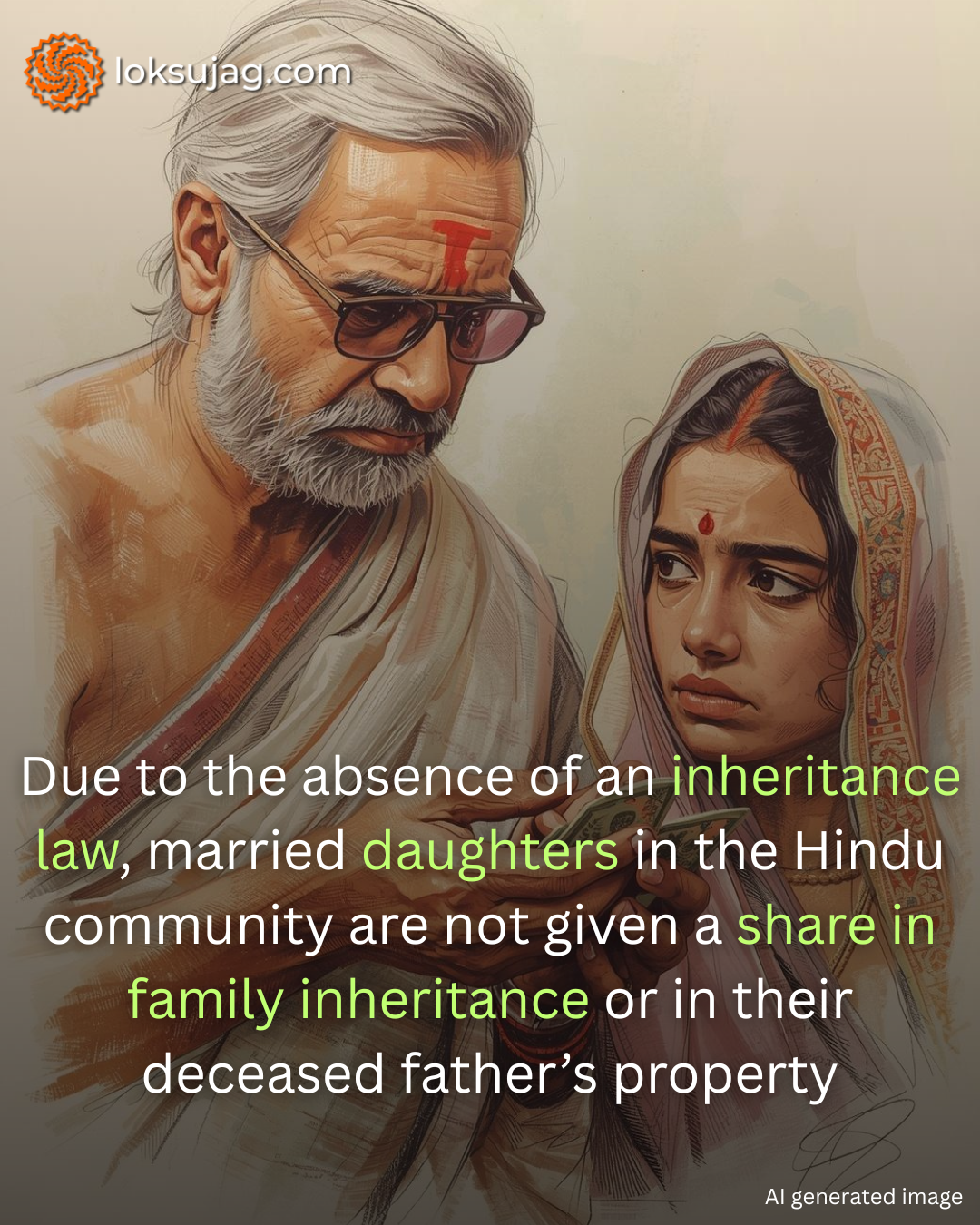
The Hindu community, consisting of five million people, is the largest religious minority in Pakistan and the married daughters of this community are not given a share in the family inheritance and the property of their deceased father. Simply because in the country, the same centuries-old outdated system is prevalent that does not consider daughters as heirs.
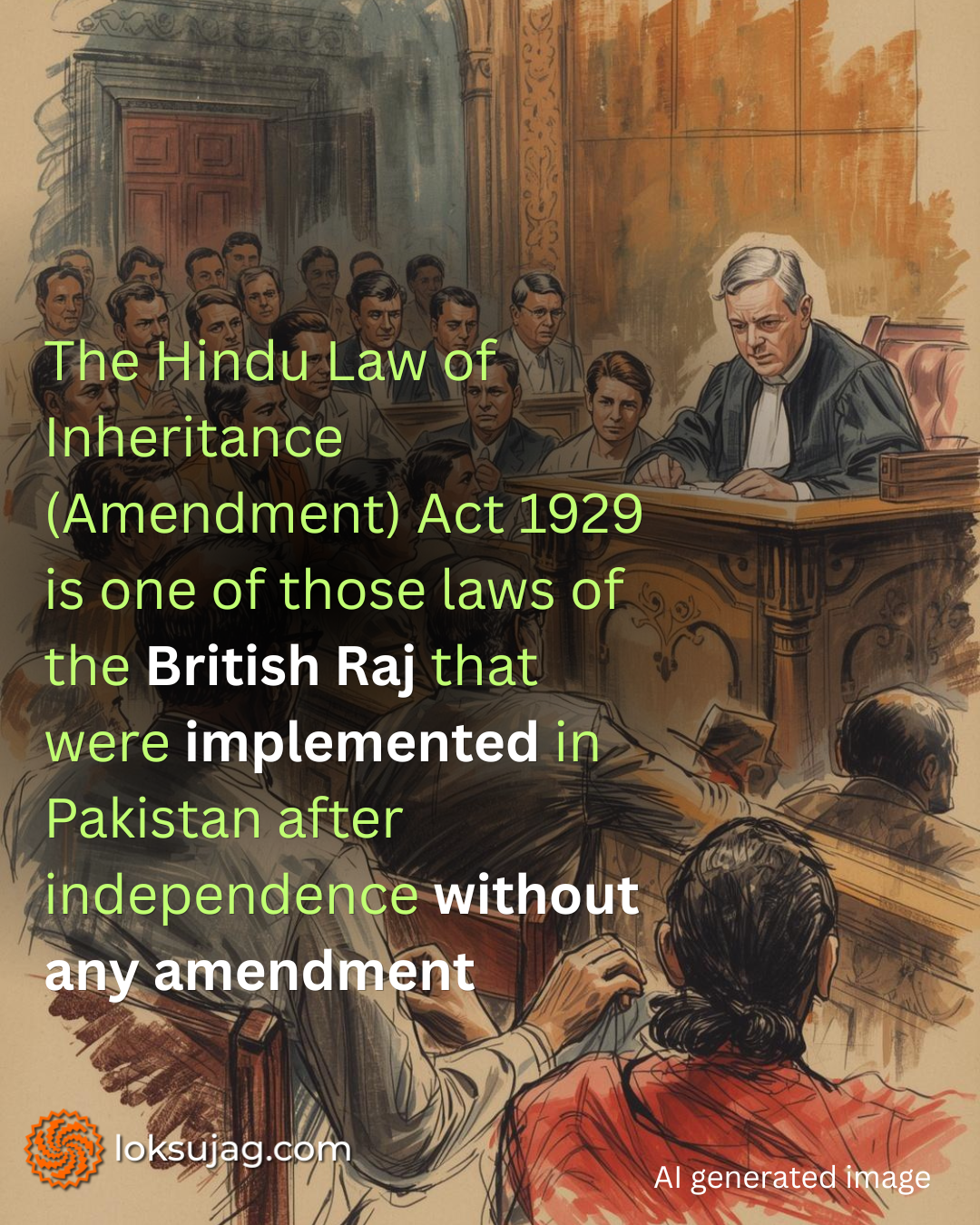
The Hindu Law of Inheritance (Amendment) Act 1929 is one of those laws of the British Raj that were implemented in Pakistan after independence without any amendment. The country's courts not only have no objection to it but they are also setting new precedents in the 'light' of old decisions.
After the 18th Amendment, these matters are the responsibility of the provinces. The largest representation of the Hindus in parliament is in Sindh, but there is no such law there that can give daughters a share in their father's property.
Momal Bheel is a resident of tehsil Islamkot of Tharparkar. She is the third of five daughters of her father, Ladhu Bheel. They are all married and live with their respective in-laws. Momal says that her parents’ house and her father’s 180 acres of arid land are in village Malho Bheel. When her father died, her uncle’s sons threw her (Momal’s) mother out of the house and occupied the entire property.
“We (five sisters) asked for our share, but they refused. Mother is forced to live in our younger sister’s house. We complained to the assistant commissioner Islamkot as well as the tehsildar but they told us to decide the matter mutually or we would have to visit to look into the matter. When our cousins came to know about the case, they sold our father’s land. Now we have no choice but to remain silent,” laments Momal.
Dozens of inheritance property cases pending in the courts
Kewal Menghwar was a resident of the village of Warwai, which was part of the Thar Coal Project. Jiyan Bai is his only child. When Kewal’s wife died, he married his daughter, kept his daughter and son-in-law in his house and died some time later.
iyan Bai says that when the coal company evacuated the village, it promised to compensate the victims for their houses and lands. As soon as this news came, her paternal cousins ordered her to go to her in-laws’ village with her husband.
“I said that I am the sole heir of my father’s property and I will take the compensation for the house. At this, they (the cousins) filed fake cases against my husband, evicted us and took the compensation for our house themselves. Now I can’t do anything.”
Tharkparkar District Council Vice Chairperson Kamla Bheel confirms that dozens of such cases are pending in the courts of Tharparkar, especially in the coal project area, which daughters have filed to claim their inheritance rights.
“They are facing endless trials. People also come to us with complaints, but we cannot do anything because there is no Hindu inheritance law,” she says
Bhagwan Das Bheel, a lawyer, informs Lok Sujag that in Sindh, the Hindu Marriage Act 2016 recognises some rights of women, including marriage and divorce, but there is no comprehensive inheritance law.
“In the cases involving Hindu women, family courts usually give decisions based on traditional Hindu principles or British-era law, which go in favour of men,” he adds.
No share of married daughters in father’s property during mother’s life
Bhagwan Das Bheel refers to a judgment of last year (March 6) in which the Sindh High Court quashed the order of the district court under which a married Hindu woman was declared a legitimate sharer of her deceased father’s property. The high court passed the said order on the petition of Shrimati Saraswati Devi, who had challenged the decision of the lower court. The petitioner maintained that the survivors of her husband Khem Chand included three daughters, two sons and a widow (herself). Under the Hindu law, married daughters are not entitled to share in their father’s property during their mother’s lifetime. Two daughters did not object, while the third daughter objected, so the trial court gave her a share contrary to Hindu law. The petitioner's daughter argued that she was entitled to her rightful share in the inheritance as the daughter of the late Khem Chand. She said the country's Constitution guarantees equality without discrimination on the basis of sex, caste, religion or race, and any law that contradicts the Constitution is considered null and void.
“The trial court's decision is in accordance with the constitutional principles that protect the rights of women and prohibit gender discrimination.”
The lawyer for the defendant (daughter) cited the precedent of the Indian Supreme Court's decision under which daughters have been given equal inheritance rights as sons. However, a single bench of the Sindh High Court ruled that the district court's decision was not correct because laws and customs applicable to the Hindu community in Pakistan should be interpreted within the Pakistani legal framework. Therefore, the inheritance certificate will be issued only in the name of the deceased's sons, widow and grandchildren, excluding married daughters.
Chief justice’s daughter was also ‘deprived of justice’
Punjab is still under the Hindu Succession Act of 1929, while Sindh sometimes takes help from the Indian Hindu Succession Act of 1956, sometimes the Hindu Succession Act of 1929 and the Hindu Women's Right to Property Act of 1937.
In the Saraswati Devi case, the high court had made it clear that the trial court had misapplied the Mitakshara principle in the decision. Under Mitakshara, daughters are not entitled to share in the father's property during the mother's lifetime, their right to inheritance arises only after the mother's death.
The Sindh High Court also gave a similar decision on the petition of Ratna Devi, widow of former caretaker Chief Justice Rana Bhagwandas. His daughter Mrs Anita Kumari was deprived of her father's inheritance while the widow (the petitioner) and her two sons were declared entitled to the property.
In the sub-continent, Hindu law of inheritance was derived from two major cultural and traditional principles called 'Mitakshara' and 'Dayabhaga'. The Dayabhaga system was prevalent in Bengal and adjoining areas, while the Mitakshara was prevalent in the northern and eastern parts of India and the present-day Pakistani territories. Under this, the daughter was not considered a sharer in the family property. Only the widow could get a share after the death of her husband, and that too was limited. Both the above systems, which are based on patriarchal agricultural social traditions, deprive daughters of inheritance. India replaced these traditional rules with the Succession Act in 2005, but in Pakistan, they are still being ruled on by outdated customs.
Advocate Bhagwan Das explains the above traditions as follows: “In the Hindu community, marriages are not done within blood relations. Therefore, the dowry is declared as the daughter's share so that the inherited land and house are not divided.”
A glimmer of hope for Hindu daughters
Last month, a meeting of the Sindh Assembly Parliamentary Working Group (Minority Parliamentary Caucus) was held under the chairmanship of Giyanchand Essrani, and Hindu inheritance laws were also discussed along with Christian marriage.
The meeting was attended by Special Assistant to the Chief Minister Dr Sham Sundar Advani, Deputy Speaker Anthony Naveed, Rana Hamir Singh, minority members of the assembly, the secretary Minority Affairs Department and other officials, as well as members of the National Lobbying Delegation (NLD) for Minority Rights.
The participants said that due to the vague Hindu inheritance laws, daughters are being abused in the distribution of property. During the discussion, several suggestions came up, on which Giyanchand Essrani directed the law department to prepare a legal draft and present it in the next meeting so that progress could be made towards legislation.
NLD member Krishan Sharma, who is also the chairman of the Pakistan Hindu Temple Management Committee, says that neighbouring India, which has the largest Hindu population in the world, has had a comprehensive inheritance law since 2005, which declares sons and daughters as equal sharers of the father’s property.
Sharma adds: “We want our daughters to have equal rights. We are working on a legal draft that will be presented in the assembly after consulting Hindu panchayats and legal experts. Hopefully, our daughters will get good news soon”.
Published on 30 Apr 2026