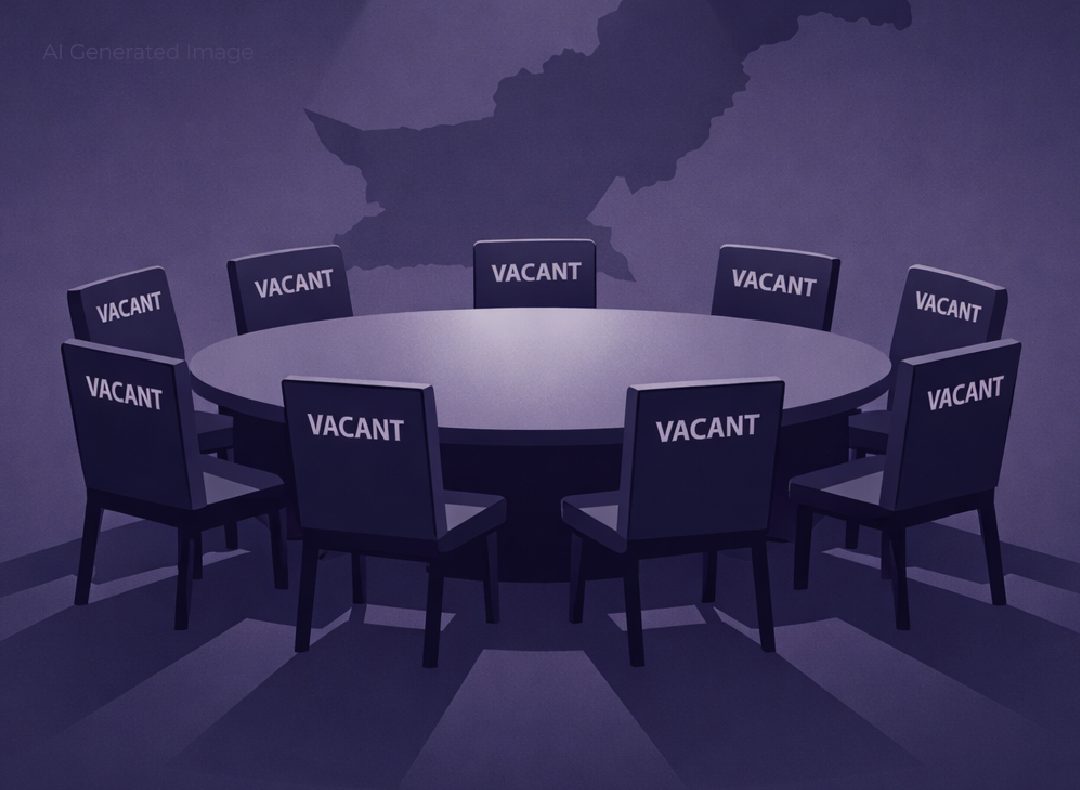


In Pakistan, a women's commission is working at the federal level and four at the provincial level. There are separate women's commissions for Gilgit-Baltistan and Azad Jammu and Kashmir. Thus, there are a total of seven commissions in the country whose aim is to eliminate gender discrimination and ensure inclusion and equality of women at every level in every sector. But all of them have the same story. The commissions are inactive and their important posts have been vacant for years.
The National Commission on the Status of Women (NCSW) in Islamabad has not been able to appoint a permanent chairperson for almost a year and a half. In November 2024, Umme-Laila Azhar was appointed as the chairperson for a month and she is still performing the duties of the interim chairperson.
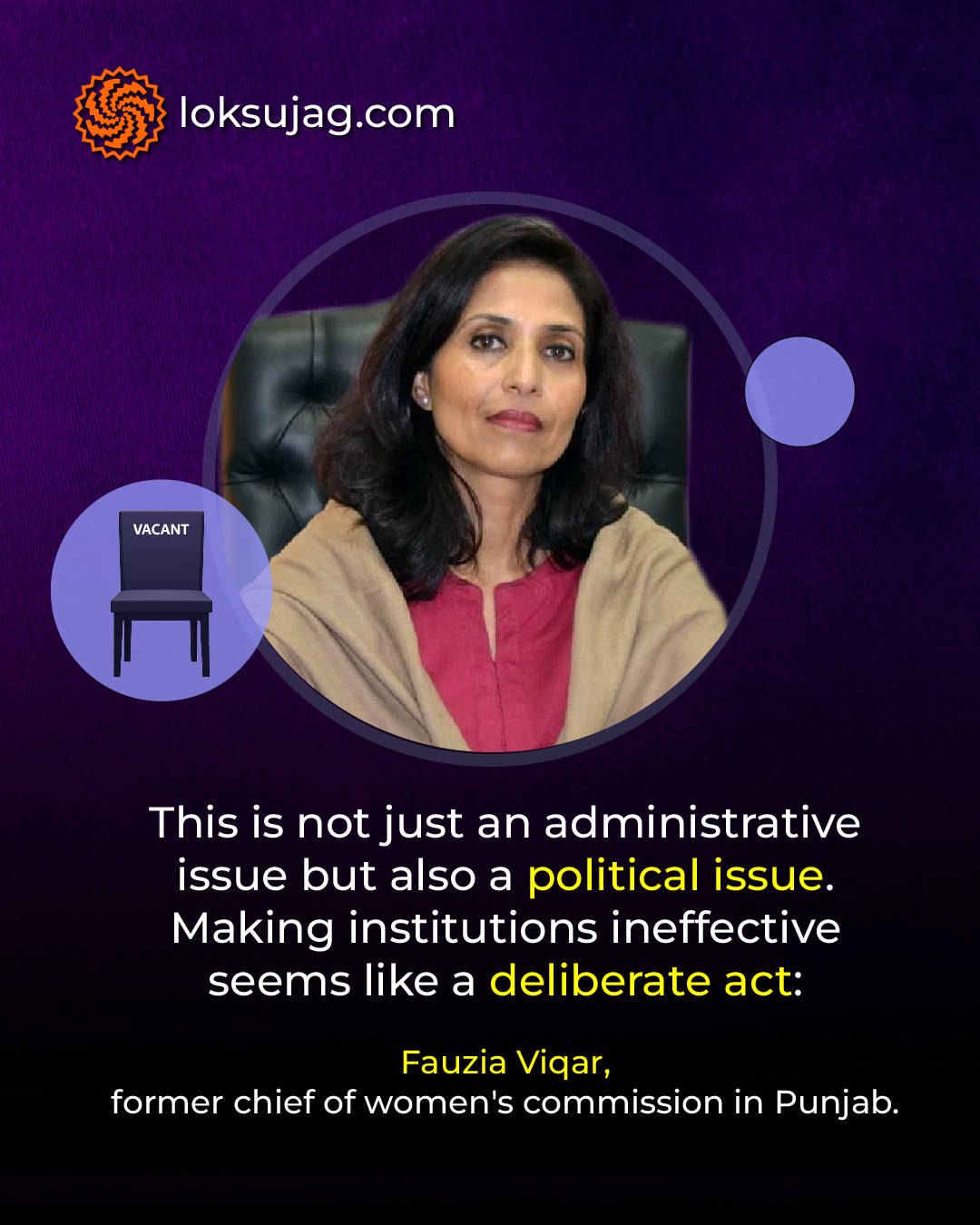
In Punjab, the second term of Punjab Commission on Status of Women Fauzia Viqar was suspended in May 2019 but since then no new appointment has been made, even after six-and-a-half years. The Punjab government had invited applications for a new chairperson two months ago but no progress has been seen.
A similar situation was seen in Khyber Pakhtunkhwa. For three years, the institution continued to function under an interim head where a permanent chairperson could be appointed late last year.
The post of chairperson in the Sindh Commission on Status of Women had been vacant since the completion of the term of Nuzhat Shirin in 2023 and the interim responsibilities were being assigned to a male officer of the concerned department. However, in January this year, Advocate Rubina Aman Brohi was appointed as the chairperson who is now performing her duties.
The Balochistan Commission on Status of Women was set up in 2017 but a permanent chairperson was not appointed for the last five years. In 2022, Fauzia Shaheen was appointed for the first time and now Kiran Baloch is working as the chairperson.
The Gilgit-Baltistan Commission on Status of Women is still not functional. Earlier, the bill to establish the commission got controversial, the GB Assembly passed the law but it was stopped by the governor. In Gilgit, Ruqaiya Abbas, the member GB of National Commission on Status of Women, says the legislation on the commission has been completed, but due to political reasons, the matter is not moving forward.
Azad Jammu and Kashmir is also running the women's commission under an interim head.
Without a permanent leader, commission loses its direction
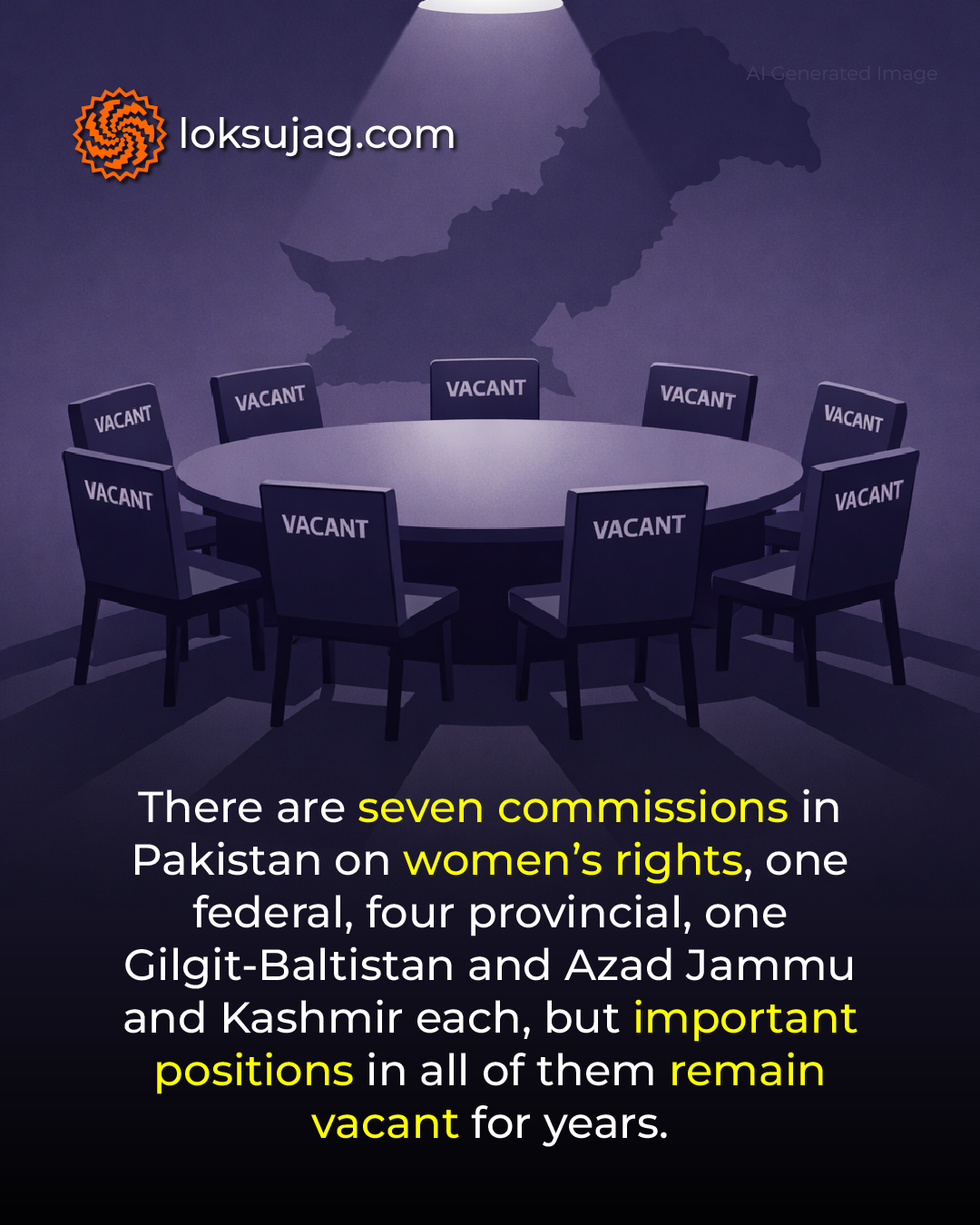
Khawar Mumtaz, who has been the chairperson of the National Commission for Women for seven-and-a-half years from 2012 to 2019, says that since the acting chairperson cannot remain in office for more than 30 days, they get an extension every month. This clearly shows the government's lack of seriousness towards the institution.
“There is no denying the competence and efficiency of the interim chairpersons but due to ad hocism, their capabilities cannot be fully utilized,” she adds.
Fauzia Viqar says that interim heads neither have full powers nor are they provided with the required resources. That’s why both the status and efficiency of the commission are limited.
“Without permanent leadership, the commission loses its direction, decisions are delayed and the morale of the staff is low. The leadership vacuum in Islamabad is having a very negative impact on the women of GB and Azad Kashmir,” she says.
It should be noted that the GB and Azad Kashmir commissions are also supervised by the NCSW.
Over the past 25 years, several women have served as chairpersons of the NCSW, but most of the appointments were made with long intervals between interim heads. When the charge is given to bureaucrats, the very purpose of the commission is lost.
The current chairperson of the NCSW has been working as a caretaker for about a year and a half. According to Khawar Mumtaz, repeated interim appointments have not only hindered the continuity of the commission but also damaged its reputation.
Governments don’t like women’s commissions
Former chairpersons of women's commissions believe that there is a constant conflict between the institutions for women’s protection and governments. Whenever the commission questions the non-fulfillment of promises made to the international community regarding gender discrimination and women's rights, it is often not liked by governments. The governments try to limit the autonomy of the commissions, recommendations are ignored and administrative, financial and legal obstacles are put in their way.
Khawar Mumtaz believes that clear rules and regulations and conditions should be set for the commission. Such oversight bodies must be independent; otherwise, they become ineffective and their work is limited to making suggestions for education, employment and access to justice.
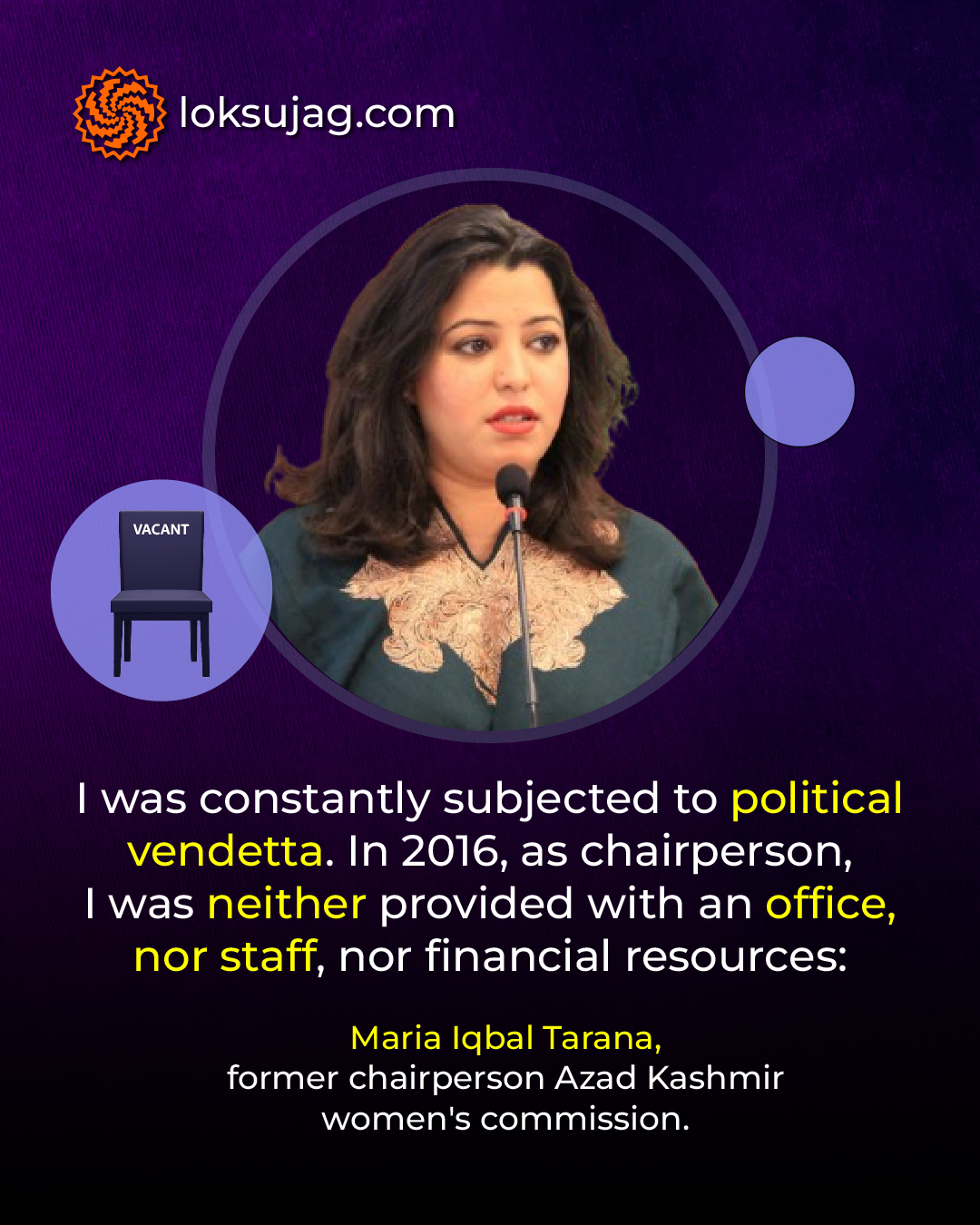
Maria Iqbal Tarana, former chairperson of the Commission on Status of Women Azad Kashmir, says she has been a constant victim of political vendetta. In 2016, she was not even given an office as chairperson nor was she provided with staff and financial resources.
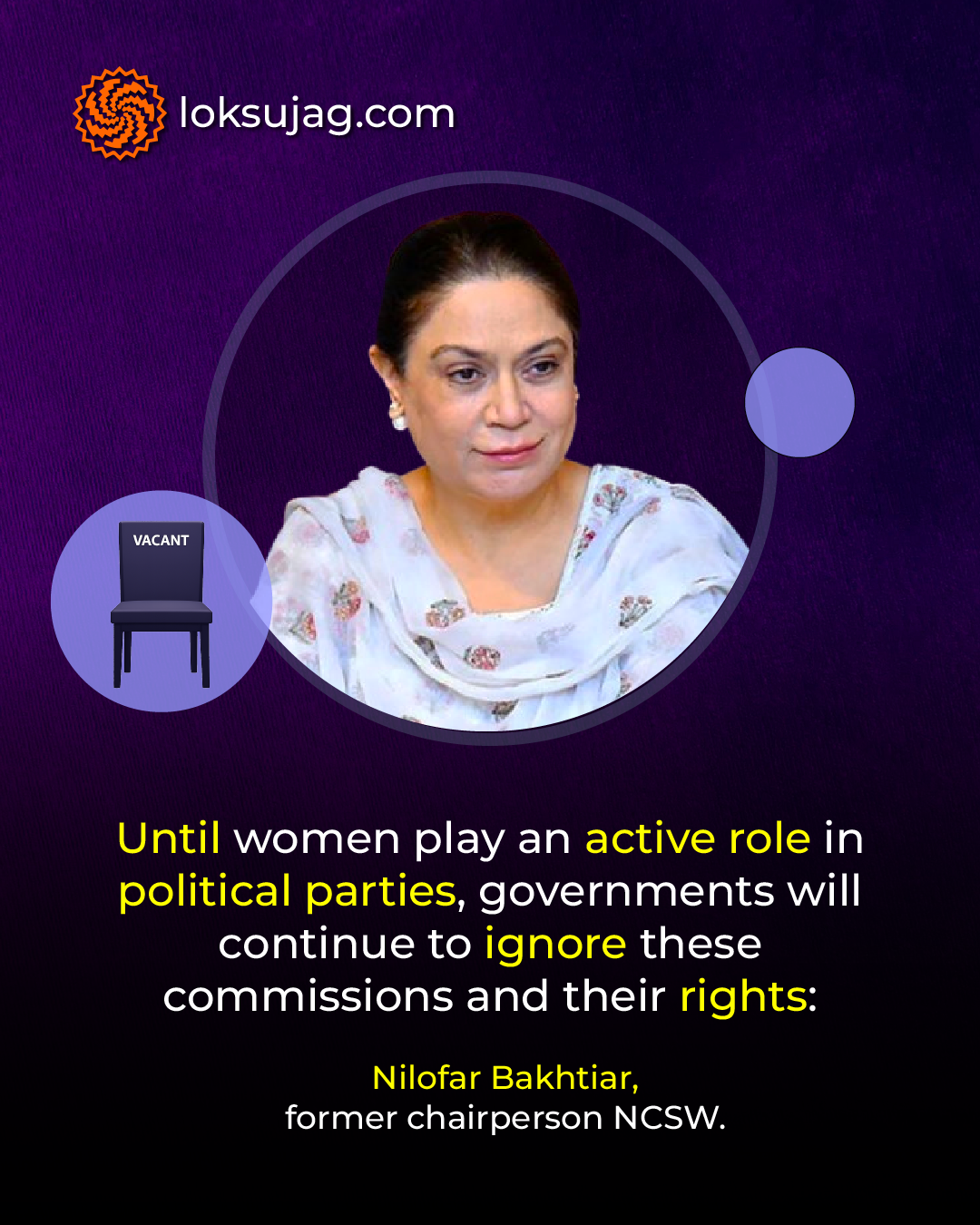
Former chairperson of NCSW, Nilofar Bakhtiar, says that in recent years when a decision was made to appoint a woman as chairperson in Khyber Pakhtunkhwa, there was a backlash against her. She could not even take up the post and eventually her nomination was withdrawn. She says that chairpersons are often appointed on political grounds and do not have an understanding of women’s issues or experience. Appointment of a competent board and chairperson in women’s commissions is inevitable.
Pakistan’s dismal position in global gender index
According to the World Economic Forum report, Pakistan is not only the worst in Asia in the Global Gender Gap Index 2025 but also ranks last in the list of 148 countries (excluding Afghanistan).
Khawar Mumtaz says women's protection institutions are mired in problems and it took her five years to get the service rules of the commission approved.
“Although the situation has improved somewhat, there are many obstacles, including delays in funding, vacancies in areas such as research, legal and finance,” she adds.
Fawzia Viqar says that this is not just an administrative problem, but also a political one. Making institutions ineffective seems like a well-thought-out process. It should be strengthened by reviewing the performance of the commission heads, but here they are being further weakened by ad hocism. This attitude must be changed.
Fawzia Viqar and Maria Iqbal Tarana are strong critics of subordinating provincial women commissions to a ministry or social welfare department. They say how can a male head of the department understand the problems of women or find effective solutions to them?
Women commissions must be made truly autonomous.
MCSW ex-chief Nilofar Bakhtiar believes that there are two major reasons for inactivity of women’s commissions; one is government neglect and the other is the lack of inclusion of women in the agenda of political parties.
“Until women play an active role in political parties, the government will continue to ignore these commissions and their rights,” she stresses.
How is the NCSW chairperson appointed?
According to the law, the establishment of the NCSW in Islamabad, which consists of a chairperson and more than 20 members, is the responsibility of the federal government. The commission consists of two members from each province (at least one must be a woman), one woman each from Azad Kashmir, GB, Islamabad and minorities.
The ministries of law, finance, foreign affairs, interior and women development each include one representative. Apart from them, the chairperson of each provincial women commission or their nominated member is also part of the national commission.
The procedure for appointing the chairperson of the commission is similar to that of the chairman NAB or the chief election commissioner.
Under the law, the federal government is supposed to send a list of suitable candidates to the prime minister and the Leader of the Opposition. In case the PM and the Leader of the Opposition do not agree, a separate list of three names or both is sent to the parliamentary committee. The parliamentary committee is formed by the speaker of the National Assembly, half of which will be from the government and half from the opposition.
The one-third of the maximum 12-member would be senators. The candidate endorsed by this committee will be appointed by the PM as the chairperson for a period of three years. According to the law, in the event of the death, illness, resignation or any other reason, the position of the chairperson becomes vacant, a woman from among the members of the commission is appointed as the acting chairperson for a maximum period of 30 days.
The women's commissions in provinces work under the laws of the respective provinces. The procedure for the appointment of the chairperson in Sindh is the same as that of the NCSW while it is different in other provinces, including Punjab. The period of the interim chairperson in the provinces has been fixed at three months (one month in Sindh).
These commissions were established by the federal government under the commitments/agreements (protocols) made to the international community to improve the conditions of women. The federal commission was first constituted in 2000 through a presidential ordinance and then formal legislation was made for it in 2012. The powers and duties of this commission range from reviewing government policies and measures for gender equality, provision of justice, empowerment of women, political representation to investigating, assisting and redressing complaints of violations of women’s rights.
This institution has the powers to inspect the conditions of women and girls in prisons and detention centres and take measures for the education, development, employment and access to justice for girls.
The NCSW also liaises with provincial commissions and other relevant organisations.
After the 18th Constitutional Amendment, separate legislation was enacted to establish women's commissions in the provinces, and thus instead of one national commission, seven women's commissions came into existence across the country for protection of women, which was a positive step. Apart from the national commission, these include commissions in Punjab, Sindh, Khyber Pakhtunkhwa, Balochistan, Azad Jammu and Kashmir and Gilgit-Baltistan.
Published on 10 Mar 2026