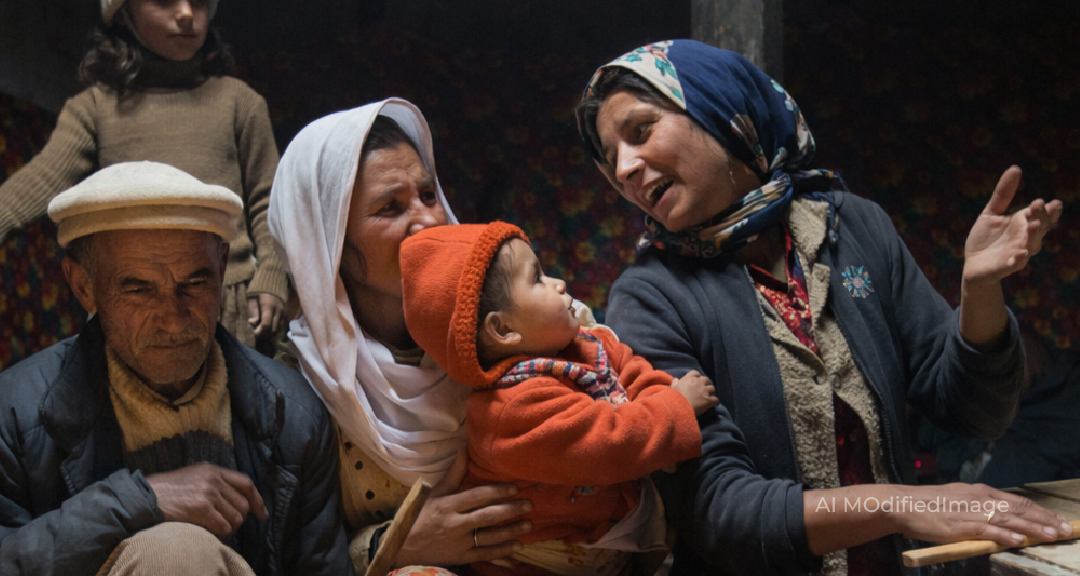


Seventy-one-year-old Haji Attaullah Burki lives in Madina Colony of Dera Ismail Khan. He had left his native area of Kaniguram (South Waziristan) 20 years ago due to an old family enmity and settled here in Dera Ismail Khan with his family.
Sabeel Khan, 34, from the same family, says that his mother tongue is Ormuri but now most of his family members have forgotten their language due to marriage in other communities or mixing and mixing with them. All of them speak Pashto or Seraiki. He himself understands Ormuri but cannot speak it.
Nisar Ahmed, another resident of Madina Colony, says that his father, whose mother tongue was Ormuri, came to Dera Ismail Khan 30 years ago for employment. When his father married a local woman of Dera, he settled here. Now he (Nisar Ahmed) and his children speak Seraiki.
“People who speak Seraiki and Pashto live around us. Pashto or Seraiki is spoken everywhere, including schools, markets, neighbourhoods, and mosques, which is why Ormuri is not spoken even at home.”
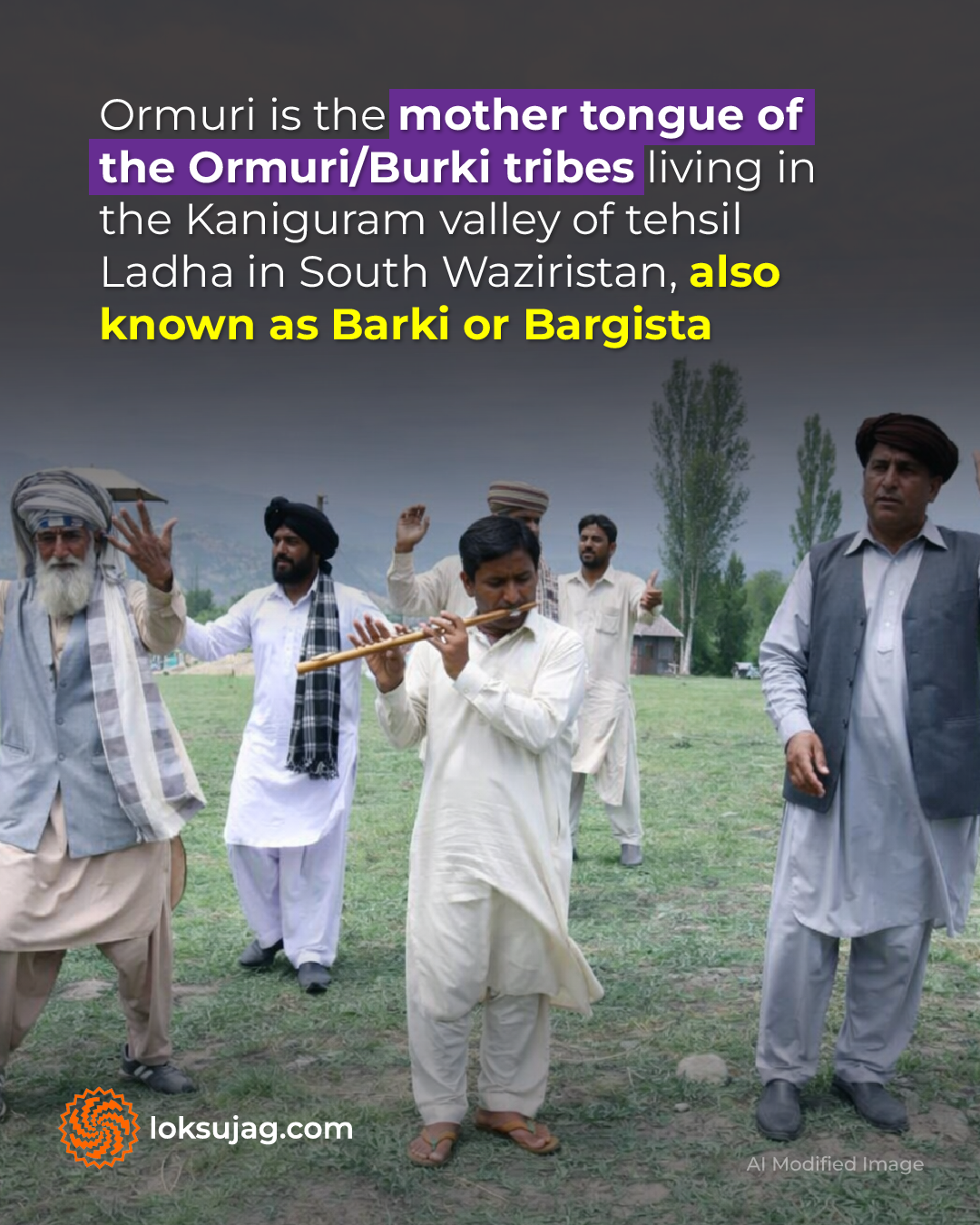
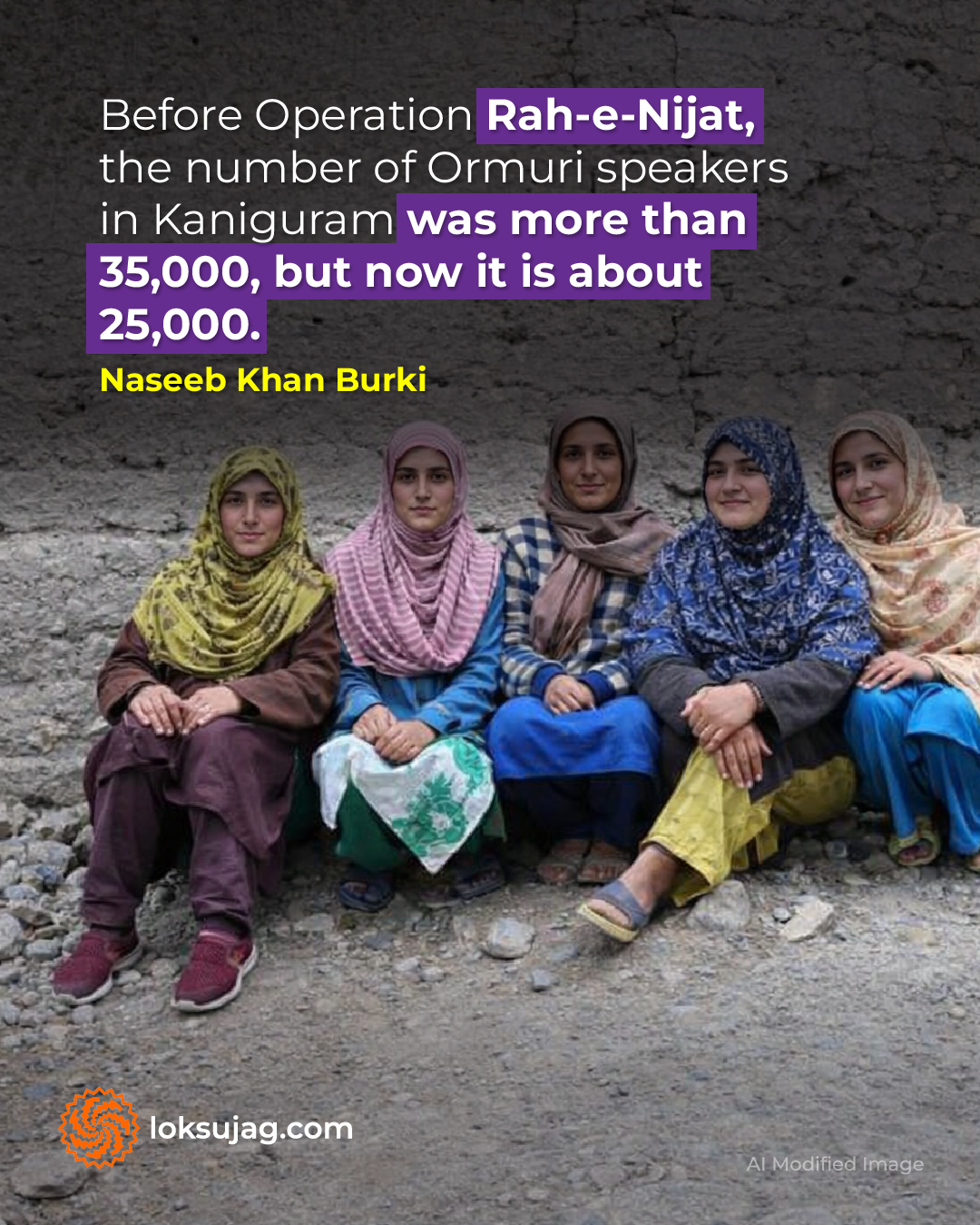
Ormari is the mother tongue of the Ormuri/Burki tribes living in the Kaniguram valley of tehsil Ladha in South Waziristan, also known as Burki or Bargista.According to Naseeb Khan Burki, an old man, before Rah-e-Nijat, the Pakistani military operation against terrorists, the number of Ormuri speakers in Kaniguram was more than 35,000, but now there are about 25,000 left. Those who leave here often leave their language behind.
Migration of Burkis and adoption of different languages
Researchers believe that the Ormuri language and culture have been severely affected by crises such as migration, displacement and official neglect.
Arif Zaman Burki is the central president of the Burki Welfare Association Pakistan, established to preserve the Ormuri language. He says that before the formation of Pakistan, there were eight settlements of Burki families in Jalandhar. These people migrated to Lahore in 1947 and now speak Punjabi or Urdu.
“Ormuri people live in two villages in Afghanistan, one of which is Baraki Rajan and the other is Barki Barak. Due to various reasons, only 12 people who speak the Urmari language are left in the Barki Barak village, and they also speak Pashto mixed with Ormuri. Ormuri has completely disappeared in the Barki Rajan village, and Pashto and Persian are now spoken there.”
Arif Zaman Burki says that the Burkis live in the areas of Ormur Payan, Ormur Bala and Ormur Miana in Peshawar, but they have also forgotten their mother tongue and speak Pashto. Dr Hikmatyar, a researcher of the Ormuri language, says that during the war against terrorism, the Burki tribe was displaced on a large scale from Kaniguram. After the operation, most families returned, but a large number of them did not as they had settled in different areas and adopted the languages of those areas. He says those who went to Karachi spoke Urdu, and those who settled in Pashtun areas started speaking Pashto. Burki youth are using Urdu, Pashto or English on social media. Thus, on the one hand, migration and on the other hand, the effects of the digital world are causing these people to lose their mother tongue, he says.
“In such a situation, weak languages always come under pressure. Urmanri is also now facing the threat of extinction, which can only be saved by the government patronage and speaking at homes,” suggests Arif Zaman Burki.
Ormuri was taking its last breath, but not now
Former bureaucrat and researcher Dr Rozi Khan Burki has done extensive work on Ormuri. He says that Pashto, Urdu, etc. belong to the group of Iranian languages, which came into existence as a result of the arrival of people from the ancient Buddhist Saka kingdom of Khotan on the Silk Route to the Hindu Kush.
“Over time, Pashto has become stable, Ormuri is declining and Parachi is almost endangered.”
The Indo-Iranian languages are the easternmost branch of the Indo-European family, which emerged from a common ancestor (Proto-Indo-Iranian language) and are divided into two main groups. One is called Indo-Aryan, which includes Hindi, Urdu, Marathi, Bengali, etc spoken in South Asia.
The other is the group of Iranian languages, which has two branches. The modern Iranian language group includes Persian, Pashto, Kurdish, etc. The Ormuri language also belongs to this group.
According to Dr Hikmatyar, the ancient Greek historian Herodotus used some words in his book in 411 BC that are closer to the Ormuri language. This makes it 2,500 years old. However, if we look at the Baburnama, the Ormur people lived on the outskirts of Kabul. According to this calculation, Ormuri seems to be a six centuries old language.
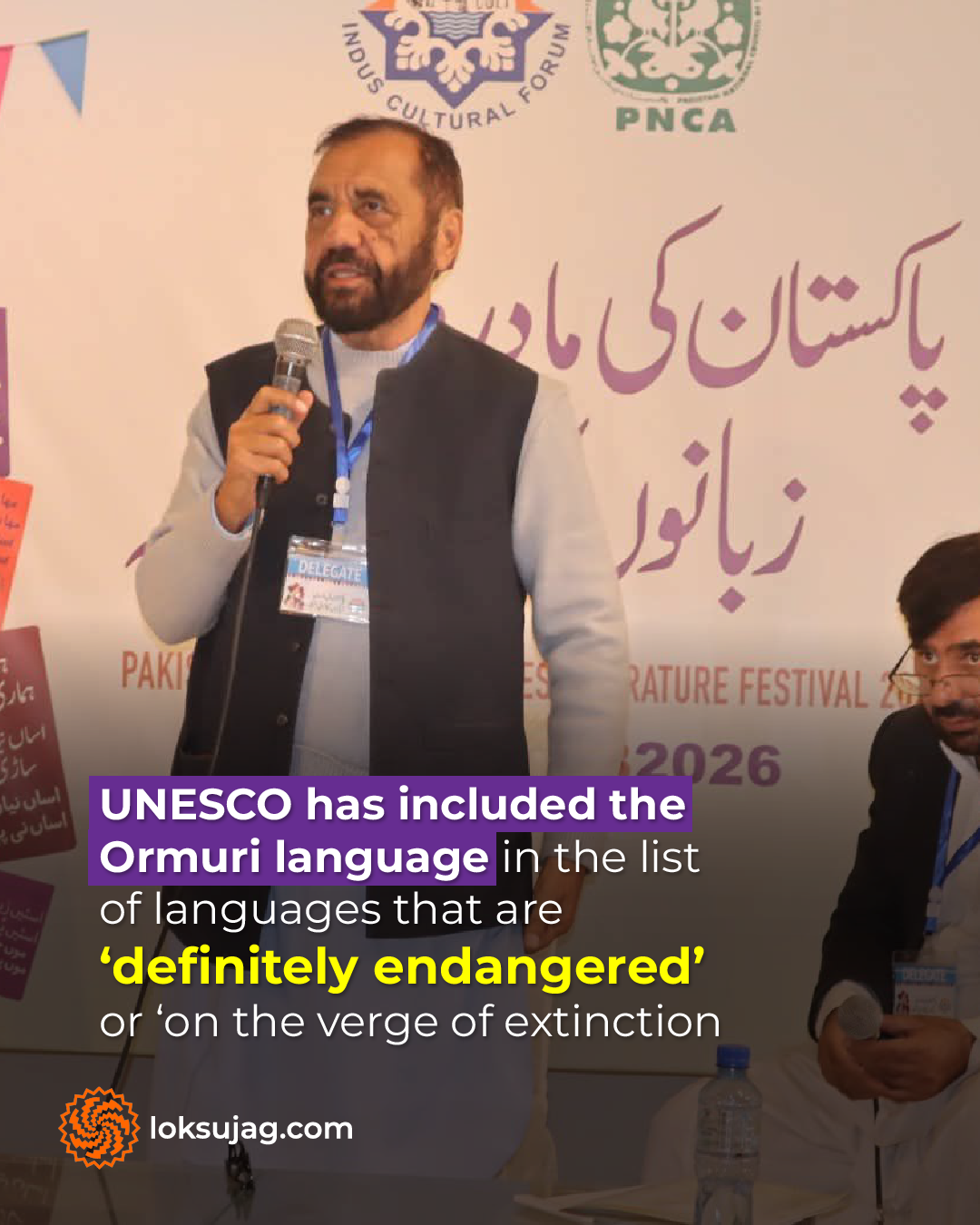
The United Nations Educational, Scientific and Cultural Organisation (UNESCO) has included the Ormuri language in the list of languages that are ‘definitely endangered’ or ‘on the verge of extinction’.
Dr Shakirullah Burki, a resident of Kaniguram, is associated with education and teaching. He says that the Ormuri language seemed to be dying in the recent past, with no poets, singers or alphabets. The work of revitalising Ormuri began in 1990 at an individual level, then songs started being written and books were also published. Later, the curriculum was set up till the fourth grade but the government did not include Ormuri in the mother tongue education programme.
No language can survive if children stop learning it
UNESCO divides endangered languages into four categories. The first category is 'Critically Endangered', which includes languages that are close to extinction, meaning that only a few elderly people can speak them.
The second category is 'Severely Endangered', which includes languages that are spoken by the elderly and middle-aged people but are not being learned by children at home. Such languages may become extinct in the next one or two generations.
The third category is ‘Definitely Endangered’, which means that native languages are spoken by parents but not learned by children. Such languages become critically endangered after a few generations.
The fourth category is ‘Vulnerable Languages’.
Dr Rozi Khan writes in his research paper that an alive and flourishing language is which keeps getting new speakers. No matter how many elders speak a language, if it is not passed on to the next generation, its end is certain. No matter how long a language has been spoken, if children stop learning it, its end is imminent.
According to UNESCO, at least 40% of the 7,000 languages spoken in the world are facing the threat of extinction. On average, a language goes extinct every two weeks, which is taking away the cultural and intellectual heritage of communities. To overcome this situation, it is essential to keep all languages alive, preserved, and promoted.
How is Urmari getting a new breath of life?
Dr Rozi Khan compiled the alphabets of the Ormuri language in 1999 and used the Pashto script for it. He told Lok Sujag that Ormuri has a total of 48 alphabets, out of which 45 are Pashto and three are additional.
“The Pashto alphabets were compiled by Bayazid Roshan, who came from Kaniguram. That’s why I adopted the Pashto alphabets for Ormuri and wrote my book in the Pashto script. The grammar of both languages is the same.”
Dr Hikmatyar also considers Ormuri and Pashto sister languages. However, according to him, Urmari in Afghanistan is more influenced by Persian and in Waziristan by Pashto.
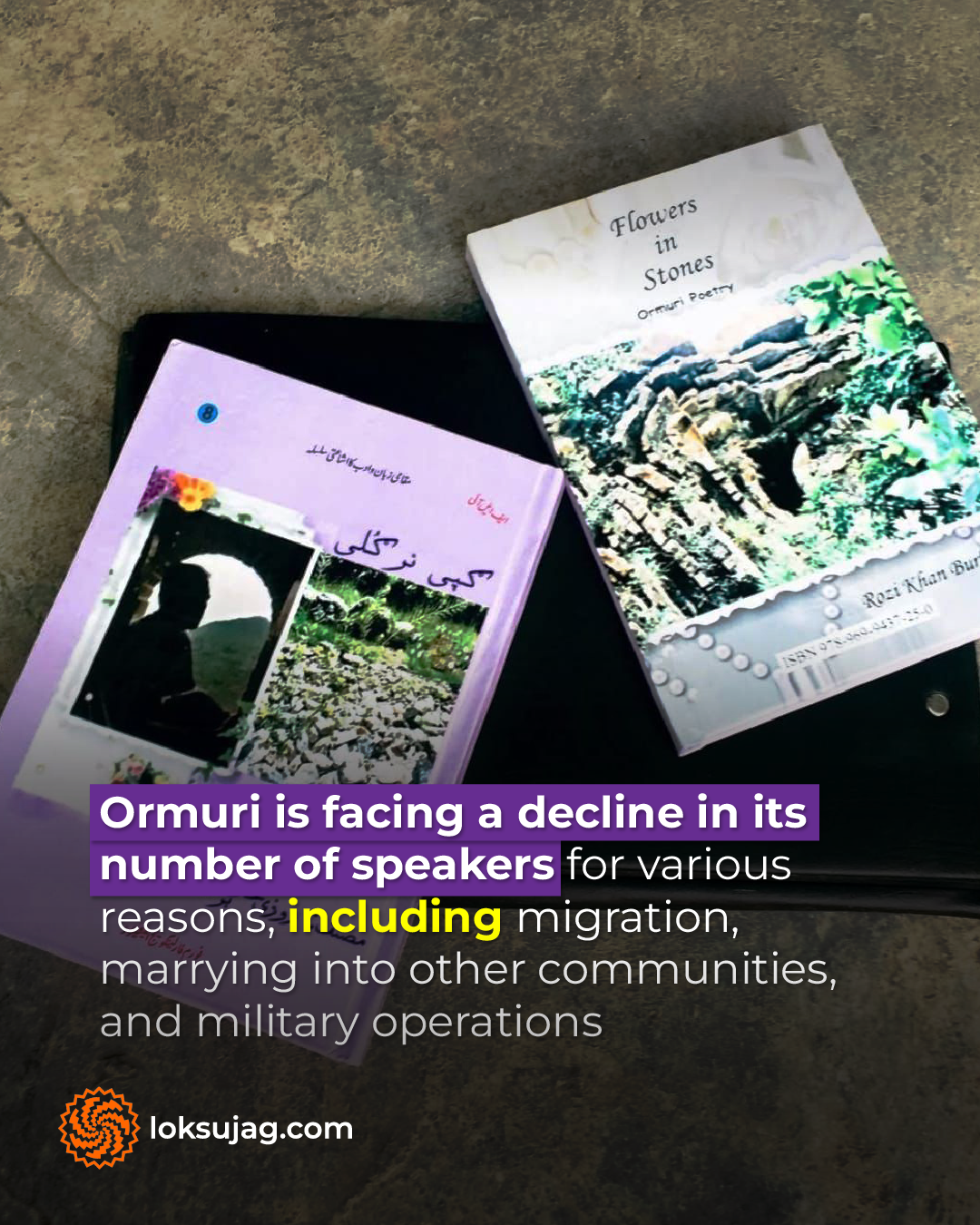
Ormuri has a vast vocabulary with around 300 proverbs and around 15 folktales. Now it has its own dictionary, which Dr Rozi Khan has compiled. Several Urmari books, including his poetry collection 'Pathron Mein Phool', have been published. Songs etc are also being written and sung.
Arif Zaman Burki is not disappointed. He says that now there are many Urmari poets and two or three folk singers also sing songs in this language. Among them, singer Adeel Burki is particularly famous, who also writes poetry himself. The people of the Burki tribe sing songs in their huts and private gatherings, which include folktales and contemporary poetry. Many Pashto and Seraiki singers have also started singing Ormuri songs.
"However, we fear the extinction of our mother tongue. We want to keep it alive through art, education, culture and communication.” Arif Zaman Burki says that an agreement has been reached between the Burki Welfare Association and the Forum for Languages Initiative (FLI), an organisation working on regional languages, under which Urmari mushairas will be organised. The conversations of the elderly, proverbs and idioms will also be made a part of the digital record.
Published on 20 Feb 2026