

This song sung by Thar folk singer Mai Dhai is very popular.
'Ankharli Pharo Ke Mahare Gharan Naan Padharo Thana Joey Joey Jeevan' (My eyes are fluttering. Come to my house. I will get life by seeing you).
But most of those who sing this song do not know what language these lyrics are in. Did you know?
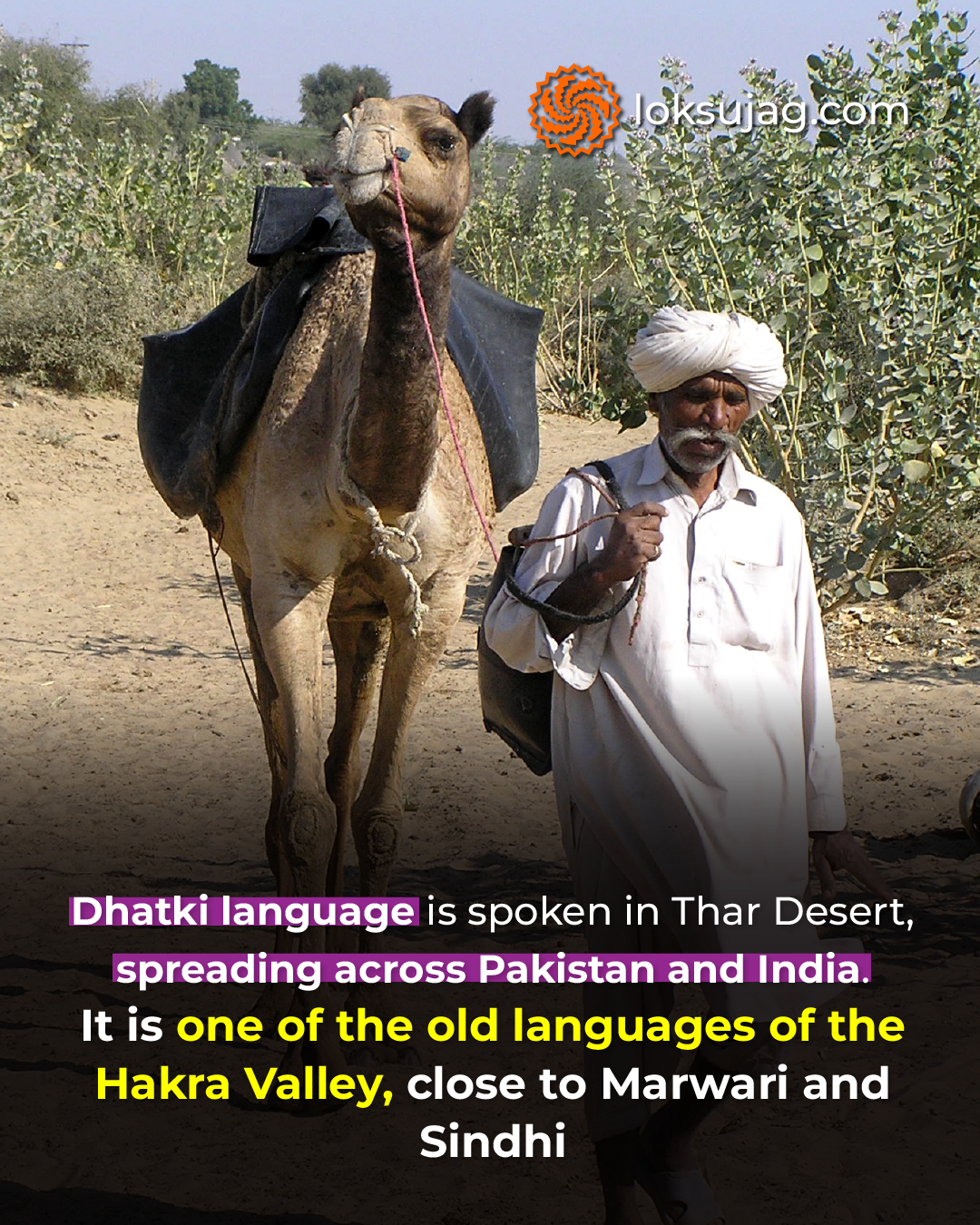
This is a folk song in the Dhatki language, which is considered a dialect of the Thar Desert spread across Pakistan and India. It is one of the old languages of the Hakra Valley, which is close to Marwari and Sindhi.
Bharumal Amrani, a well-known Thar writer and researcher on the Dhatki language, says the Thar Desert has two parts, one was called Dhat and the other was called Rajputana or Rajasthan. At the time of the Partition, the Dhat area became a part of Pakistan and Rajasthan became a part of India. Thus, in Pakistan, this language is called Dhatki (some people also call it Sodhki) and in India, Rajasthani or Marwari.
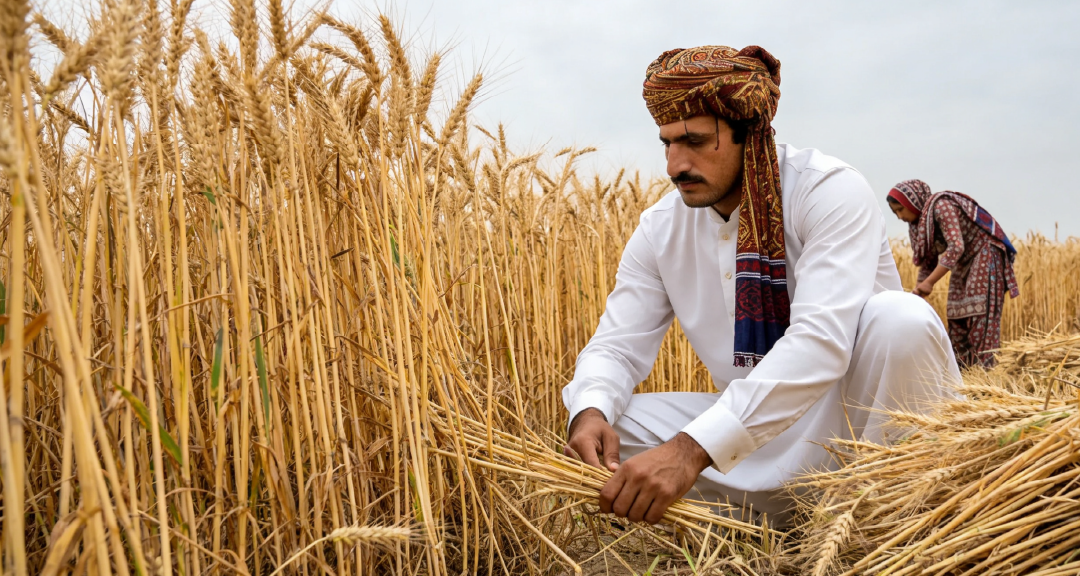
Dhatki is the mother tongue of millions of people. The boundaries of Dhat include the Thar area of the present day Umerkot tehsil, Mithi tehsil of Tharparkar, Islamkot, Chhachro, Dahli and the northern desert villages of Nangarparkar. In addition, Dhatki is also spoken in Badin, Mirpurkhas, Sanghar, Tando Allahyar, Tando Muhammad Khan, Matiari and various areas of Hyderabad.
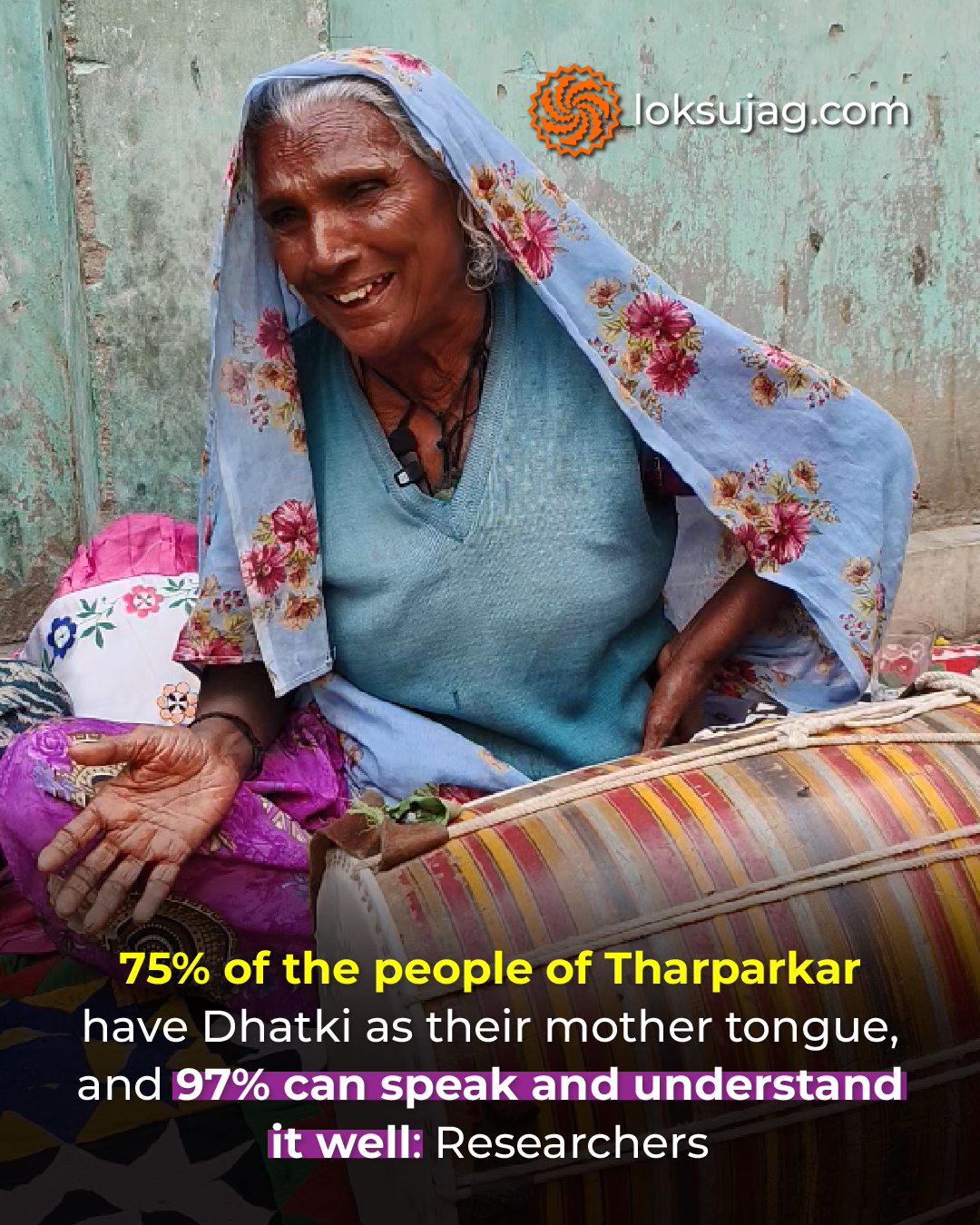
According to the research of Dr Abdul Jabbar Junejo and linguist Dr Hidayat Prem, 75 percent of the people of Tharparkar have Dhatki as their mother tongue and 97 per cent can speak and understand it well. Fifty-four percent of the people of Umerkot district have Dhatki as their mother tongue and more than 80 per cent understand and speak it. The members of the Silawat community who were already settled in Hyderabad and those who came to Karachi and Hyderabad from Jaisalmer after the Partition also speak Dhatki.
A complete language in its essence
According to the Encyclopedia Sindhiana, compiled by the Sindhi Language Authority, Dhatki is a dialect of Sindhi, also known as Dhati or Thari.
Encyclopedia Sindhiana says that Tharparkar is physically divided into seven parts, which are called Dhat, Samruti, Wat, Wingi, Parkar, Khayar and Kanthi. A sub-dialect of Dhatki is spoken in each part.
The Thakur, Sonara, Mehraj, Vaniya, Sothar, Meghwar, Rahma, Nehri, Sameja, Bheel, Bijir, Kambhar, Mangaria, Aresar, Mallah and many other Muslim and Hindu communities living in Thar speak this language.
In the Dhatki dialect, a ‘o’ is often added to the noun, for example, Somar is addressed as Somario, Wahid as Wahidio. Many speakers of this language are associated with education and employment in different cities of the province and speak standard Sindhi well.
Contrary to the Sindh Language Authority, educationist and writer Prof Noor Ahmed Janjhi considers Dhatki a complete language.
According to him, "Some people are mistaken that Dhatki is a dialect while it is a complete language on its own. It is true that its alphabets are not fully prevalent but a lot of work is being done in this regard”.
Large-scale translations from Sindhi into Dhatki
The ancient writings of Dhatki are found in the Devanagari script. In the Indian states of Rajasthan and Gujarat, it is still written in Devanagari; however, in Sindh, it is being written in the Arabic script.
Work on an individual level for the development of Dhatki began in the 1980s. When the folk songs of this language reached other regions, poetry progressed and writing began. An alphabet was established from the Sindhi and Arabic scripts, which includes 34 letters. These do not include about 11 Arabic letters and about four Sindhi letters.
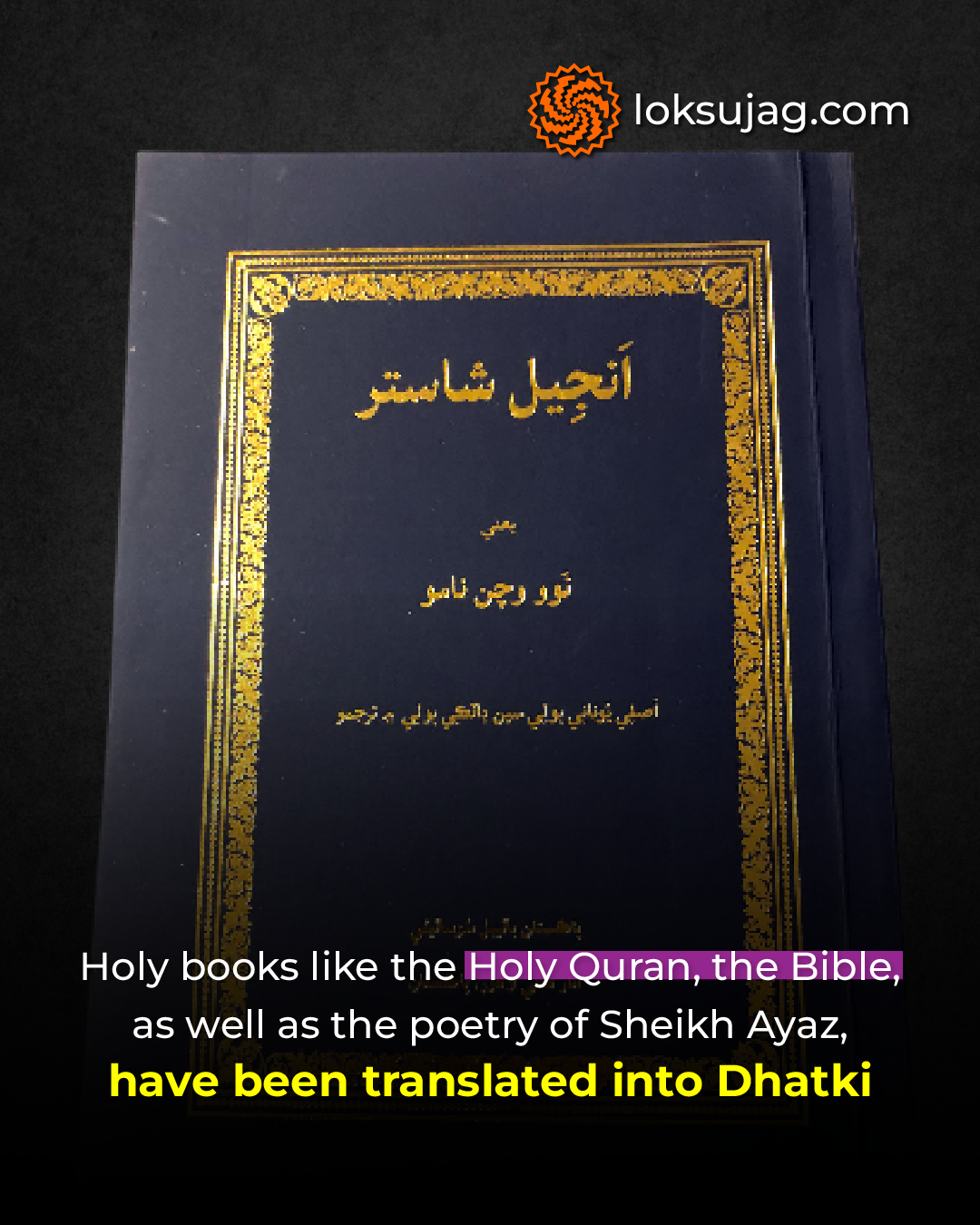
Mirpurkhas social worker Poonam Paschal says the missionary institution Institute of Applied Linguistics not only prepared courses for elementary education in the Dhatki language but also had the Holy Bible translated into it.
There is also a translation of the Holy Quran in Dhatki by Haji Muhammad Siddiq Rahimoon. The first story was written by Haji Muhammad Kambhar and Shah Latif’s poetry (Shah Jo Risalo) was translated into this language by the famous Sindhi writer Luqman Laghari, also known as Ustad Laghari. A Dhatki translation of Sheikh Ayaz’s poetry has also been published.
Apart from these translations, several books have been published in Dhatki, including Bharomal Amrani's books Chatar Boli Charan (Analysis of the Poetry of the Charan Community), Dharti Gay Geet, Geet Sanwan Mann Bhavan Ja, and Saroop Chand Shad’s a collection of poems. Further publication work is also underway.
Singers of Dhatki language: From Mai Bhagi to Shafi Faqir
Like the major languages of the world, Dhatki also has a vast vocabulary, which is confirmed by the dictionaries of the desert language compiled across the border. Hamir Nam-Mala, Dingal Kosh, Hekarthi Kosh and Udharam Kosh are dictionaries in which hundreds of Dhatki words have been recorded.
In Sindh, Abdul Karim Azad Samejo has compiled a Dhatki dictionary. In the Sindhi dictionaries, compiled under the supervision of Dr Nabi Bakhsh Baloch, the founding chairman of the Sindhi dictionaries, Dhatki words are also found under Thari words. Renowned poet, writer and intellectual Bharumal Amrani says that Dhatki has a rich repertoire of poetry, especially folk songs, couplets and surthas. Now, Baet, Ghazal and Nazm are also being written.
Syed Misri Shah and Khalifa Nabi Bakhsh Qasim are considered classical poets, Bagh Ali Shauq (Rajasthan) and Bankidas Charan are well-known names.
Among the modern poets, Saroop Chand Shad, Sai Dad Sand, Faiz Muhammad Firaqi, Piyaro Showani, Bharumal Amrani, Chitun Rohlai, Mircho Vartio, Mahendra Mastano, Ramchand Rahmi and others are prominent.
When it comes to Dhatki folk literature, Doro and Charmi etc are famous folk songs. Many folktales, including Sadowant Saranga, Dhol Maruyal and Odhe Hothal, are literary masterpieces of this language.
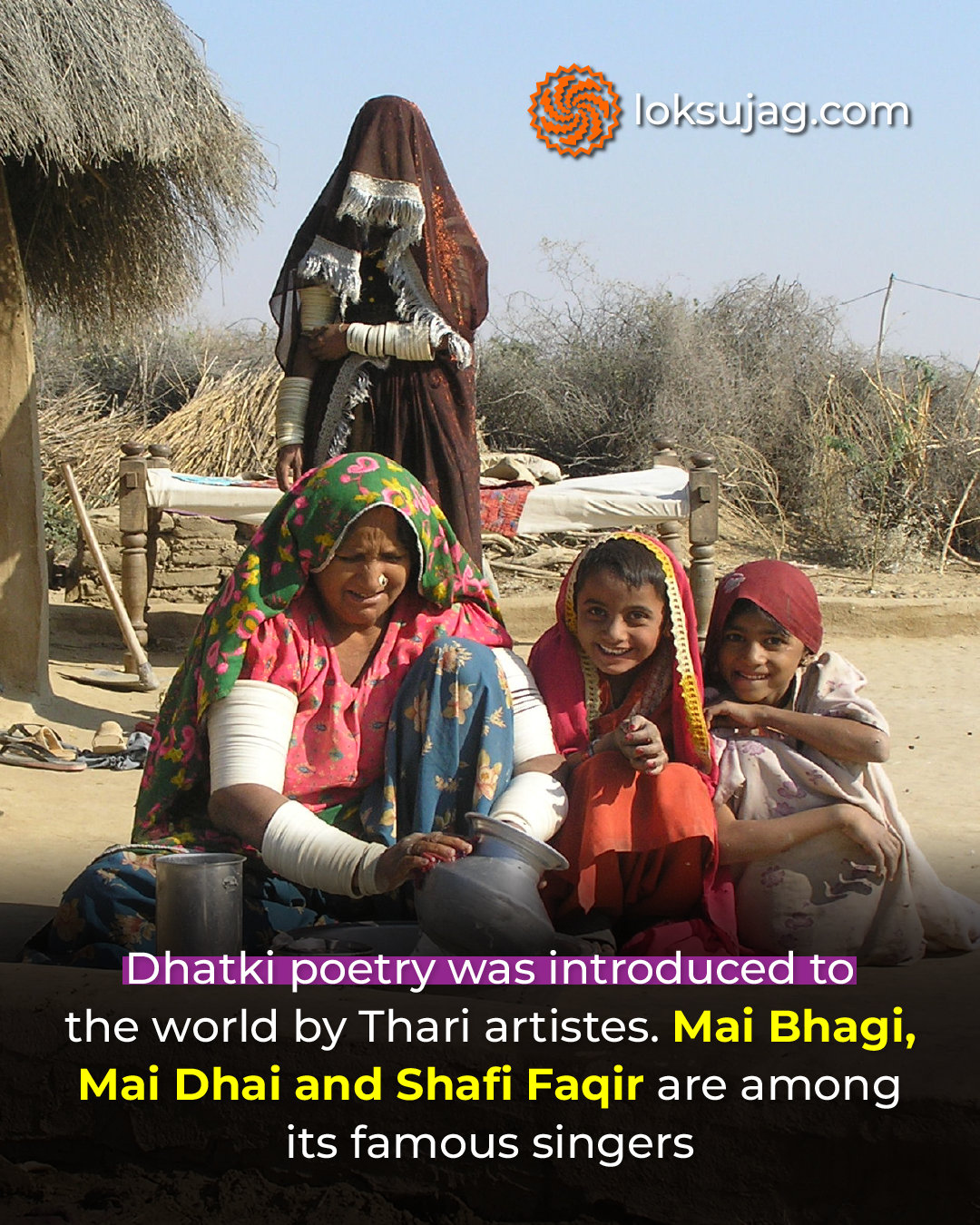
Dhatki poetry was introduced to the world by Thari artistes. Mai Bhagi, Mai Dhai, Shafi Faqir, Murad Faqir, Budhu Faqir, Sadiq Faqir, Barkat Faqir, Bhagro Nacheez, Karim Faqir, Rajab Faqir and other singers and others are popular across the borders of the country.
In Thar, the Bhagats (bhajan singers) often sing poetry from Hindi, Sindhi, Marwari and other languages in the Dhatki style or devotional singing.
According to the research of Dr Abdul Jabbar Junejo, about 70 percent of the folk literature of Dhatki is influenced by the neighbouring desert languages, in which not only the characters are the same but the creators are also the same people. The role of Charan, Bhat, Bhan and Maganhar among these tribes, who are the guardians of art, is highly commendable.
At present, Radio Pakistan broadcasts two programmes in Dhatki from Mithi while Mithi FM Radio also plays local songs and runs programmes.
Who is doing what to preserve Dhatki?
Sohail Sangi, a journalist from Thar, says that Dhatki is one of the languages in the world that is part of the oral tradition, i.e. it is spoken. The migration of people from Thar for education and employment is also affecting the language here, but now work is being done on its writing.
He believes that very few languages have such a vast literature, poetry and folk literature as Dhatki. “There have been some attempts to preserve it through cassettes and videos in the past, but a lot of work remains to be done,” he adds.
Professor Noor Ahmed Janjhi is hopeful that Dhatki is now being used commonly in schools, colleges and digital media. “People are uploading a lot of content in their own language on Facebook, TikTok and other platforms on both sides of the border, and the trend of adopting mother tongue is also increasing among the youth.”
Dr Phuloo Sundar Menghwar, who is doing a PhD in Dhatki language and folk literature, says that some people like Bharumal Amrani, Amar Raisingh Rajput and Professor Noor Ahmed Janjhi are working on the preservation and documentation of Dhatki on their own, but nothing like this is happening at the official and institutional level.
“Articles 251 and 28 of the Constitution guarantee the protection of local cultures and languages, but so far government resources have not been spent here. In Thar, missionary institutions had compiled textbooks to teach children up to the first and second grades, but nothing like this has happened in government schools.”
Menghwar suggests that there should be a separate government institution for indigenous languages or that some budget be allocated for the development of local languages in the Sindh Language Authority, which can also digitize the literature of languages like Dhatki for future generations.
Published on 21 Feb 2026