

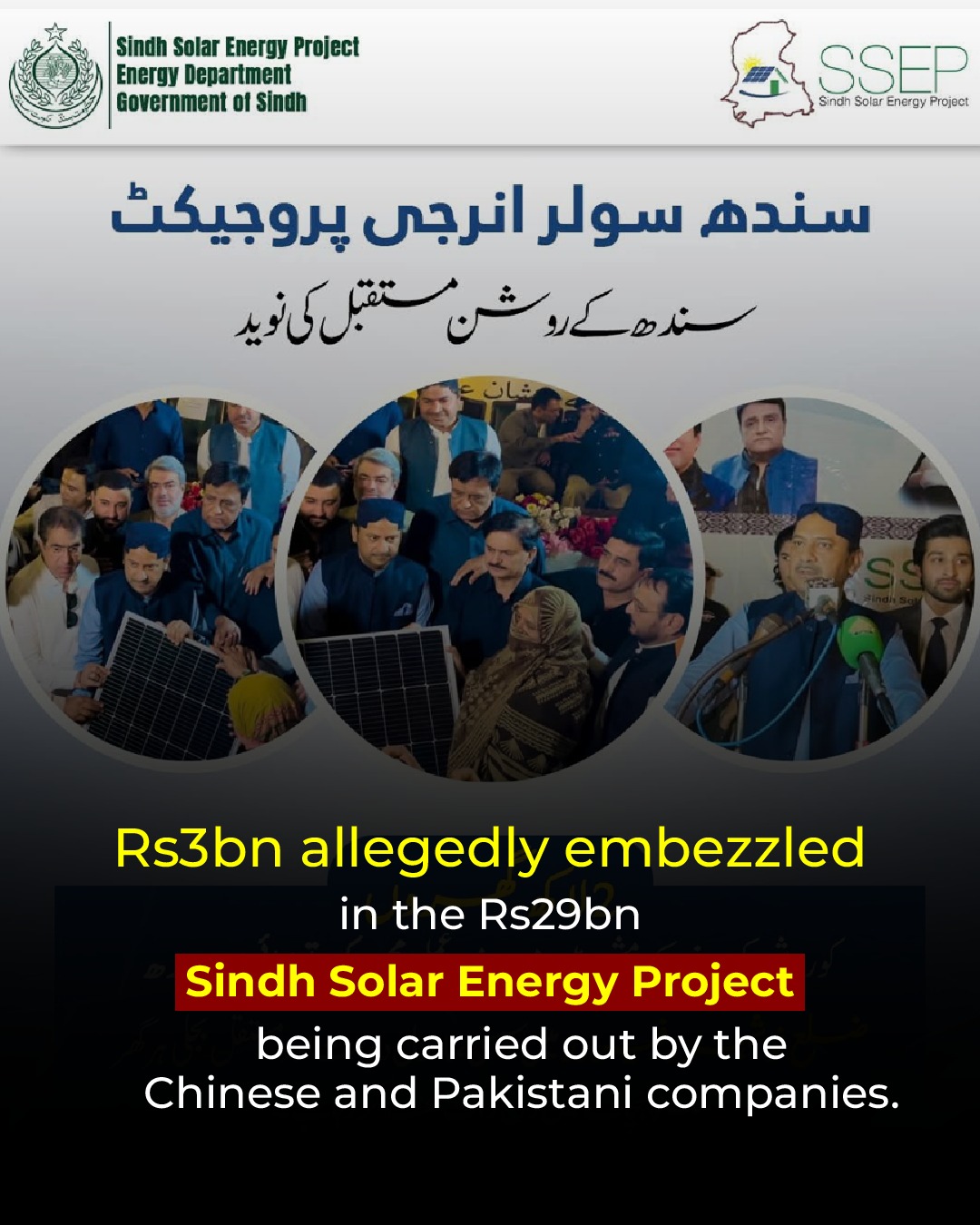
The Rs29 billion Sindh Solar Energy Project (SSEP) has been facing corruption allegations since August 2025 with reports alleging embezzlement of about Rs3 billion in the project.
The allegations have echoed the Sindh Cabinet and the Senate Standing Committee that led to the launch of a probe by the Anti-Corruption Establishment (ACE). The World Bank, which had funded the project, is also conducting its own investigation. Sindh Chief Minister Syed Murad Ali Shah has issued orders for a comprehensive audit of the entire solar project, investigation into it and blacklisting of the responsible companies.
When will these investigations be completed? Will they ever be done? What will be their result? Will something come out of them or not? It is difficult to say, however, Lok Sujag has investigated the matter and found out some facts, as well as what impact this matter will have on the ordinary poor families who have benefited from this project.
What was Sindh’s solar energy project?
On Jan 9, 2019, an agreement was signed between the Government of Pakistan and the World Bank in Islamabad with the aim of increasing electricity generation from solar projects in Sindh and making it accessible to the people.
The total cost of these projects was $105 million, of which $100 million was contributed by the World Bank and $5 million by the Sindh government.
The project had four components. These included building solar parks, installing 20MW rooftop solar panels on the government buildings, providing home solar systems to 200,000 households consuming less than 100 units of electricity per month, and providing technical training (capacity-building) to youth.
These projects were to be completed under the supervision of the Sindh Energy Department, for which Engineer Mahfouz Ahmed Qazi (BPS-19) was posted as the project director of the Sindh Solar Energy Project.
In this project worth a total of around Rs 29bn, about Rs12bn was allocated for the supply of 200,000 home solar systems (or solar kits).
Each kit included an 80-watt solar panel, an iron mounting frame, a charge controller unit, an 18-ampere lithium battery, three LED bulbs, a metal DC pedestal fan and a mobile phone charging facility.
Who won the tender for the solar kits?
A tender was issued in the newspapers and on websites in October 2023. It was approved by Project Director Engineer Mahfouz Ahmed Qazi, inviting offers from international companies for the supply of 200,000 solar kits within 18 months.
Nineteen companies participated in the tender, out of which the Chinese company, Shenzhen LEMI Technology Development Co., which offered the lowest price, was awarded the contract. Due to lack of registration in Pakistan, the company partnered with Pakistani company 'Beyond Green Solar Solutions' and started supplying kits.
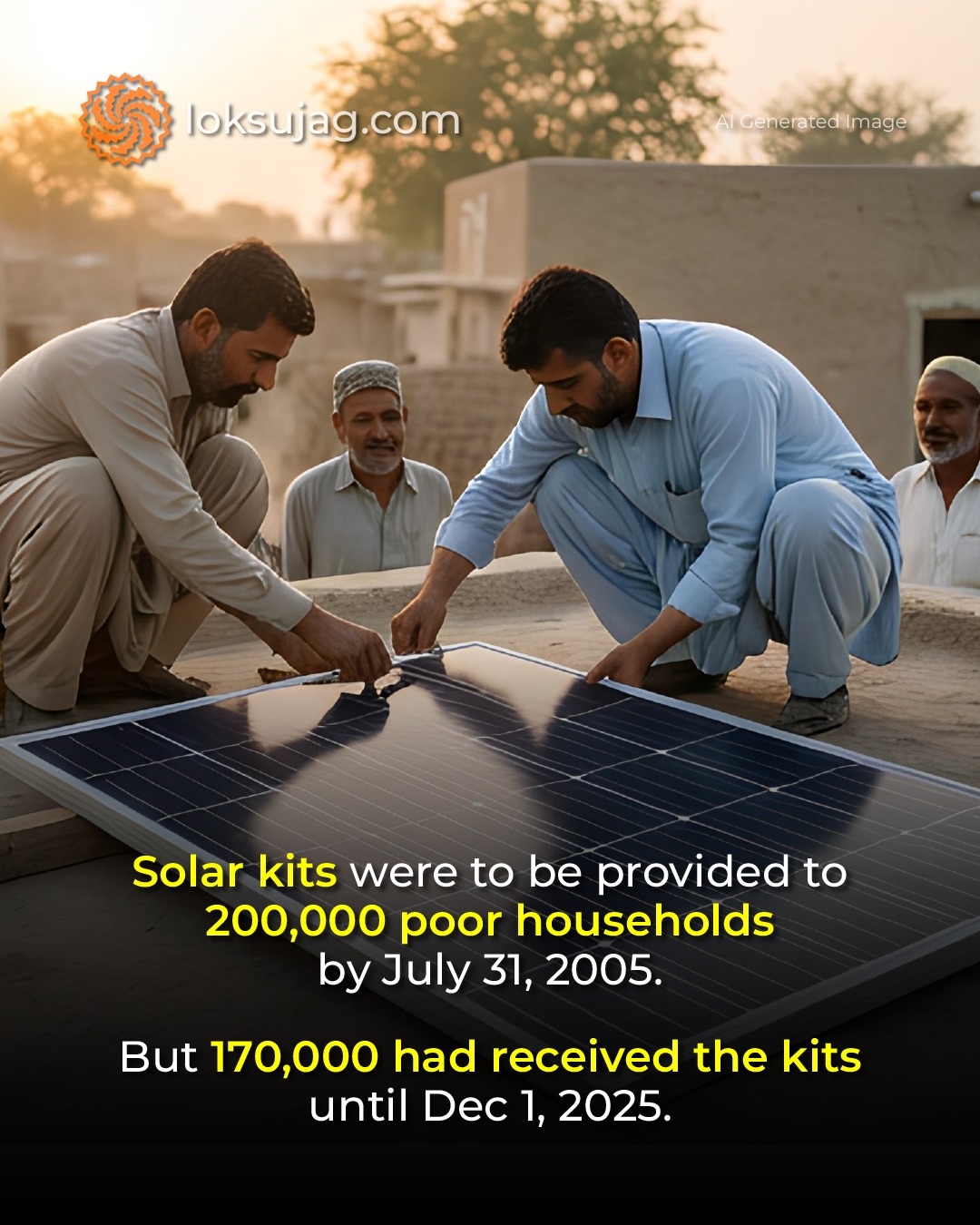
The distribution of solar kits to poor households was to be completed by July 31, 2025, but in the Sindh Cabinet meeting on December 1, 2025, it was revealed that by then only 170,000 home solar kits had been distributed and installed and the remaining 30,000 were still pending.
The Sindh Solar Energy Project, however, has been facing allegations of corruption since August, when it had not even met half of its target.
Why did the project director not follow the secretary’s orders?
According to the available documents, on August 7, the energy department sent two letters to Project Director Engineer Mehfooz Ahmed Qazi and deputy director Niaz Ahmed Jhanji on the instructions of the energy secretary, asking them that the project period had been completed on July 31 and why were they sitting in the offices?
“Stop the money transactions from the project account and if any money is due, formal approval should be taken for it.”
In another letter on August 11, the energy department warned Engineer Mahfooz Qazi that he had failed to comply with departmental orders. He had also not followed the instructions to deposit the cheque book with the section officer (admin) and not to withdraw money, so he should clarify his position within three days.
Engineer Qazi sent a clarification to the energy secretary in August, saying that there was still a lot of work left to be done on the project and this was evident in the relevant documents of both the Sindh government and the World Bank. He was given instructions to collect the cheque book over the phone, which is a violation of the rules.
What did the new project director find?
The project director also wrote to the secretary that on August 11, three officers of the energy department, during a visit to the project office in Karachi, pressured him to vacate the office on the assumption that the project had been completed. He demanded an investigation into incident of harassment of staff and withdrawal of notice seeking explanation from him.
According to sources, after this explanation, he was given six months to complete the project.
However, on September 4, the S&GAD department issued orders to Mr Qazi to report to the Secretariat. On the same day, Junaid Iqbal Khan, an officer of the Administration Services Group, was appointed as the new project director of the Sindh Solar Energy Project.
The new project director, Junaid Iqbal, decided to verify the imported goods of the solar company, Shenzhen Shenzhen LEMI Technology Development Co, and sent 21 goods declarations (customs payment receipts) along with a letter to the Chief Collector Customs Karachi on September 30, 2025.
The customs authorities replied that five receipts were valid and duty had been paid, while there was no record of the remaining 16, meaning they turned out to be bogus. They said that according to the five verified goods declarations, the importing company deposited Rs166 million with the customs account, while it received Rs3.4 billion (Rs17,000 per kit) in duty from the solar energy project.
Fans, solar frames ‘imported’ from Gujranwala but customs duty was claimed
Junaid Iqbal Khan says that when he reported the forgery to the Chinese company, the World Bank and the secretary of the Energy Department, the company’s lawyers and a Chinese woman, named Monica, contacted him.
“LEMI’s position is that it was the responsibility of the Pakistani company, Beyond Green Solar Solutions, to complete the tax procedures and that the local customs clearing agent cheated us.”
The LEMI company had to import 200,000 solar kits from China at a cost of $151.3 per kit. The panels were duty-free, while the company had to collect all taxes on the remaining goods from the project administration.
Junaid Iqbal Khan says that the DC pedestal fan and metal frame supplied here were purchased from Gujranwala, instead of China and their customs duty was also claimed.
Meanwhile, on Nov 9, former project director Qazi was suspended.
Based on Junaid Iqbal’s letter, the energy secretary sent a detailed summary to the chief minister, which was also confirmed by the Chief Minister’s Inspection, Enquiries and Implementation Team (CMIE&ITD) after initial inquiry.
It should be noted that until September 2025, the portfolio of the Energy Department was with Provincial Minister Syed Nasir Hussain Shah and since then, this department has been looked after by Chief Minister Murad Ali Shah himself.
The CM brought the matter to the Sindh Cabinet meeting on Dec 1, where it was referred to the Anti-Corruption Establishment (ACE) for further investigation.
According to the Chief Minister’s House, the Cabinet was informed that despite almost the entire budget of the Sindh Solar Energy Project being utilised, the full targets of construction of solar parks, installation of rooftop panels and distribution of household solar kits could not be achieved.
The chief minister issued orders for a comprehensive audit of the entire solar project, investigation and blacklisting of the responsible companies in this situation.
Also read this
Keenjhar Lake: Will Floating Solar Panels Project Sink Ecosystem?
Are the solar kits of good quality?
As many as 170,000 solar kits have been distributed among the poorest electricity consumers but it has not yet been confirmed whether the equipment was as per the set standards or not. It is also alleged that the project administration chose the NGOs of its choice for the distribution and installation of the solar kits. These include the National Rural Support Programme (NRSP), Health and Nutritional Society (HANDS), Sindh
Agricultural and Forestry Workers Coordination Organisation (SAFWCO), Sindh Rural Support Organisation (SRSO) and Thardeep Rural Development Programme (TRDP).
Engineer Qazi says he was selected because he was successfully working on a project to build houses for flood victims in Sindh. He claims he has fulfilled his responsibility in installing the kits. Qazi strongly denies the allegations of corruption against him, adding that the Chief Minister’s investigation team prepared its report without hearing him or serving him with a notice.
In a written reply to the Anti-Corruption Establishment, he claims that the quality of the solar kits and their physical verification were the responsibility of the Manager Component III (Solar Home Systems).
He claims that payments were made to the company in terms of customs duty as per the prescribed procedure and with the approval of the finance specialist of the Management Unit.
Also read this
Why shifting of government schools to solar energy failed Almost half of schools reported solar panels theft
Who will now give guarantee of solar kits?
According to the project officials, the original price (bid price) of the solar home kit was Rs42,000, on which there are taxes of about Rs 17,000 and the consumers deposited Rs6,000 per kit. According to them, the home systems have a two-year guarantee (insurance), if it is damaged, it will be returned.
Rasti belongs to the village Fazal Chand of Tando Allahyar. After submitting a challan of Rs6,000, the battery included in the solar kit that she received from the NRSP soon drained out and was no longer charging. Rasti says she contacted the NRSP representatives in December to get the battery replaced, but was told that the project had been completed and that they could not replace the equipment, etc.
The battery problem was also faced by Arjun, son of Manji, of Tando Allahyar. He approached the NRSP representatives a couple of times, but was told by the representatives that they had nothing to do with the malfunction or replacement of equipment.
According to the current head of the Sindh Solar Energy Project, the warranty is the responsibility of the LEMI company and the NGOs are responsible for replacing the defective equipment. How much can consumers who consume less than 100 units of electricity run to claim the warranty?
Published on 15 Jan 2026