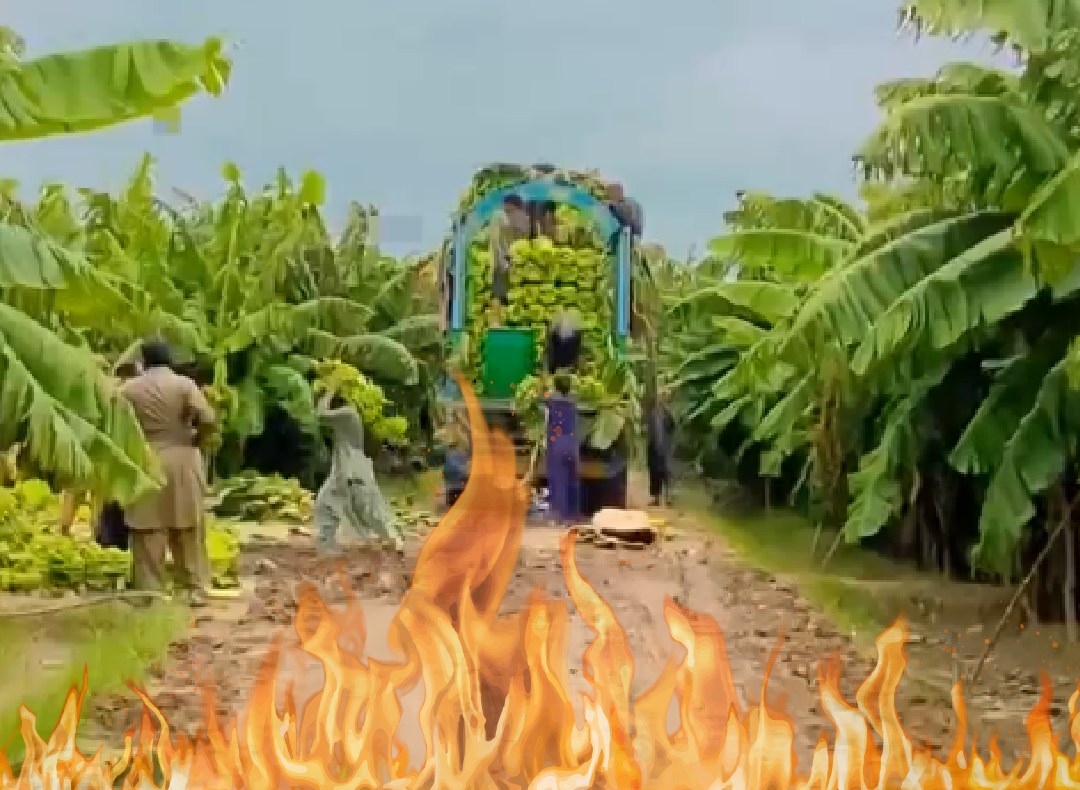


For banana farmers, managing and disposing of residue of their crop is a big problem and everyone has only one solution, i.e. collecting it and setting it on fire.
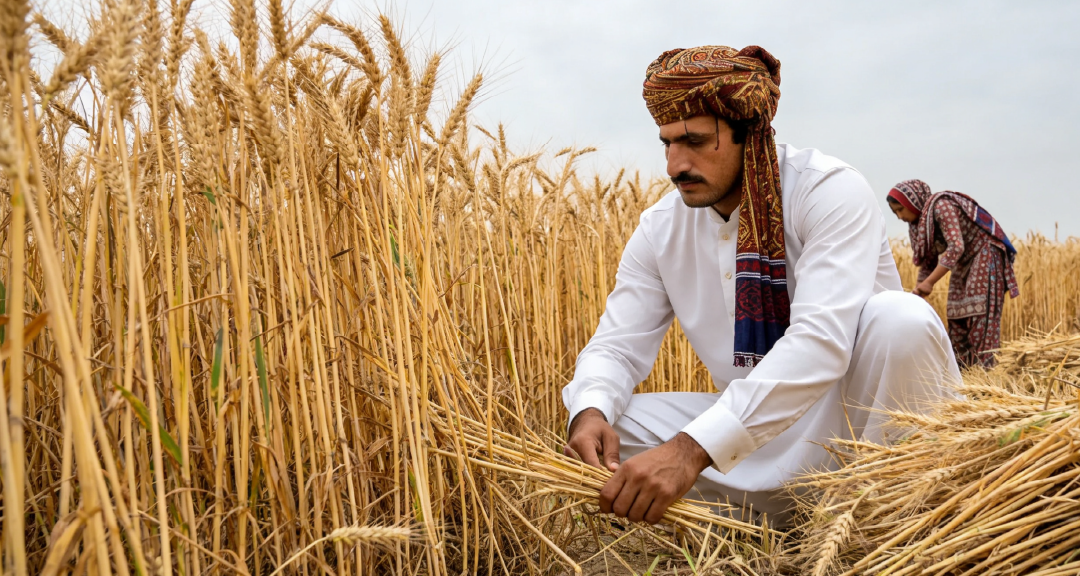
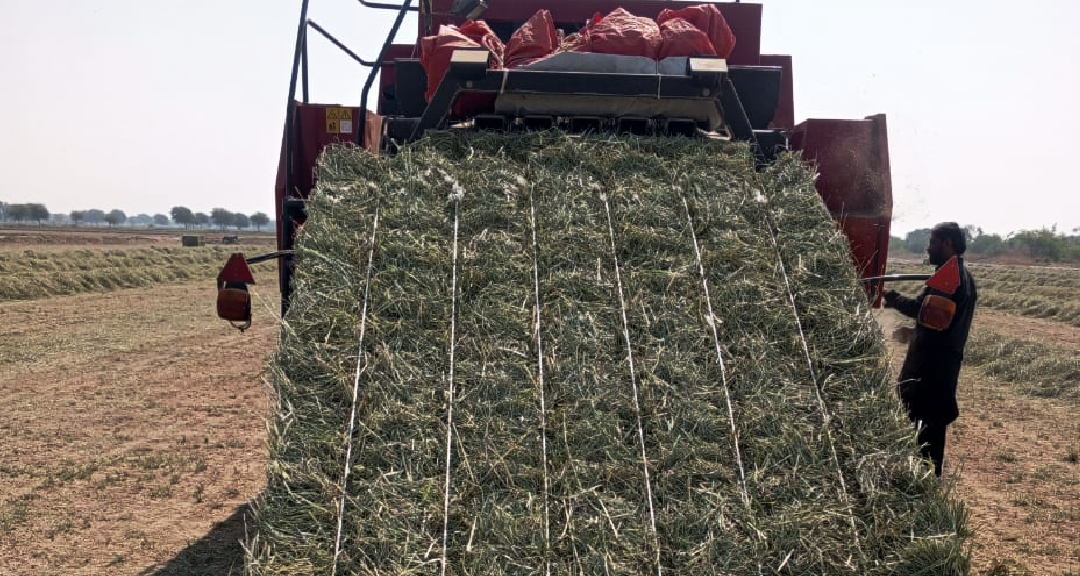
But Agha Zafarullah Durrani was not satisfied with this solution. A resident of Tando Ghulam Ali town in the coastal Badin district of Sindh, he graduated in agricultural engineering from the Sindh Agriculture University, Tando Jam, and retired as director general of Agriculture Sindh eight years ago. Today, he has planted banana orchards on 300 acres of his land and mango orchards on 200 acres. According to Mr Durrani, 600 to 800 banana plants are planted on each acre. When the fruit is ready, the bunch of bananas, locally called Dongar, is cut and the remaining plant is destroyed and replaced by a new plant. In this way, the farmers continuously keep cutting plants in the field and piling the biomass (plant stem and leaves) in nearby lands and burning it there.
All farmers do the same, but Mr Durrani not only keeps experimenting with modern farming himself but also learns from the innovations in other countries.
“I saw in Sri Lanka and India that many items, including clothes, were being made from ‘banana fibre’ (banana stem fiber). On my return, I started looking for a buyer for the fibre here and got in touch with the Interloop Limited of Faisalabad.”
After some discussions, he signed a contract with the Interloop Limited, installed 10 machines on his farm and started extracting fibre from banana stems. Workers would carry the cut banana stems from the field to machines where the fibre was extracted, dried in the sun, and then sent to the company.
What can be made from banana fibre?
As the world’s demand for eco-friendly and sustainable products increases, banana fibre is becoming popular as a substitute to plastic due to its strength, light weight, and natural shine.
Its consumption is also increasing day by day in paper, textile, and automobile industries (car interior parts such as seat covers, etc.).
The use of banana fiber in textiles is not a new invention as the Japanese were making cloth from it in the 13th century. This fibre was mixed with cotton to make yarn of different qualities, which was used to make carpets, ropes and bouquets in addition to clothing.
Currently, India is the largest banana producer in the world, supplying about 22% of the global production. This is followed by China, the Philippines, Ecuador, Brazil and others.
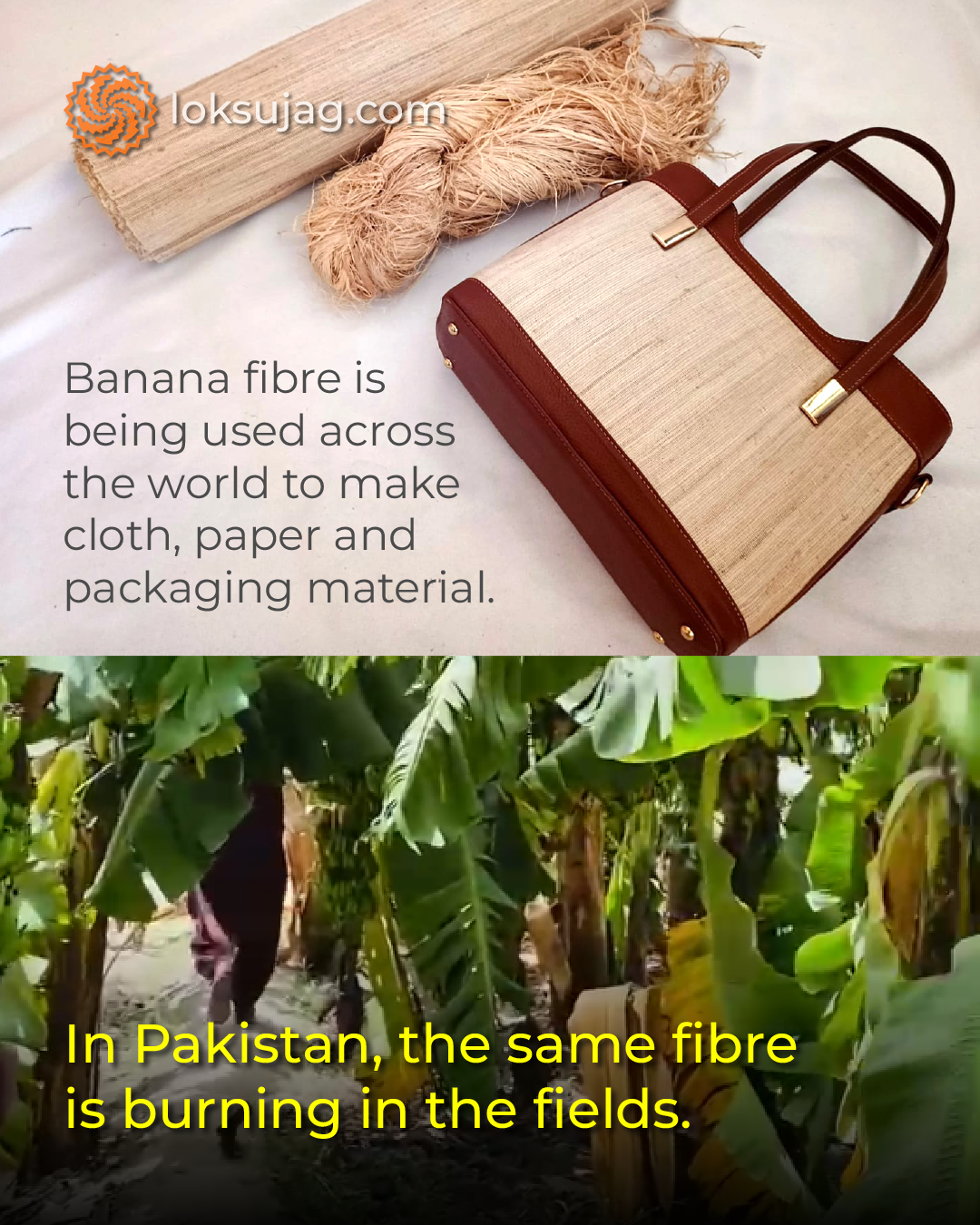
Some countries are using it in textile products, while some are making paper from it. Banana Paper is used to make packaging and wrapping paper, notebooks and sketchbooks, as well as business cards, envelopes, greeting cards, stickers, etc.
In India, most bags, baskets and wrapping and packaging materials are made from banana fibre.
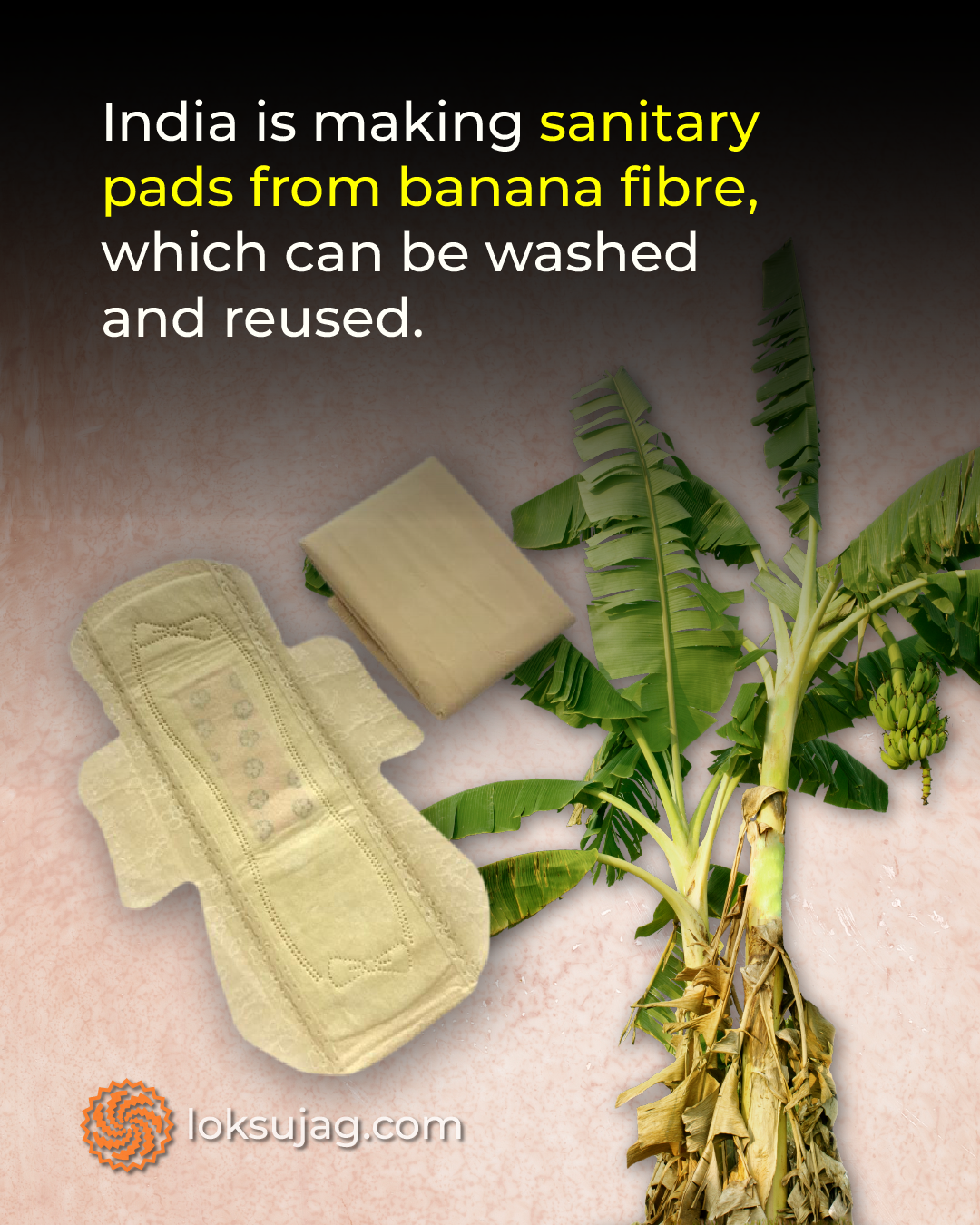
However, the production of women’s sanitary pads from banana fibre is considered an important invention in India, which can be washed and reused. This can significantly reduce environmental pollution.
In India, about 2 million tonnes of ordinary sanitary pads go into the garbage every year, polluting the environment and millions of gallons of water are also wasted in the production of these pads.
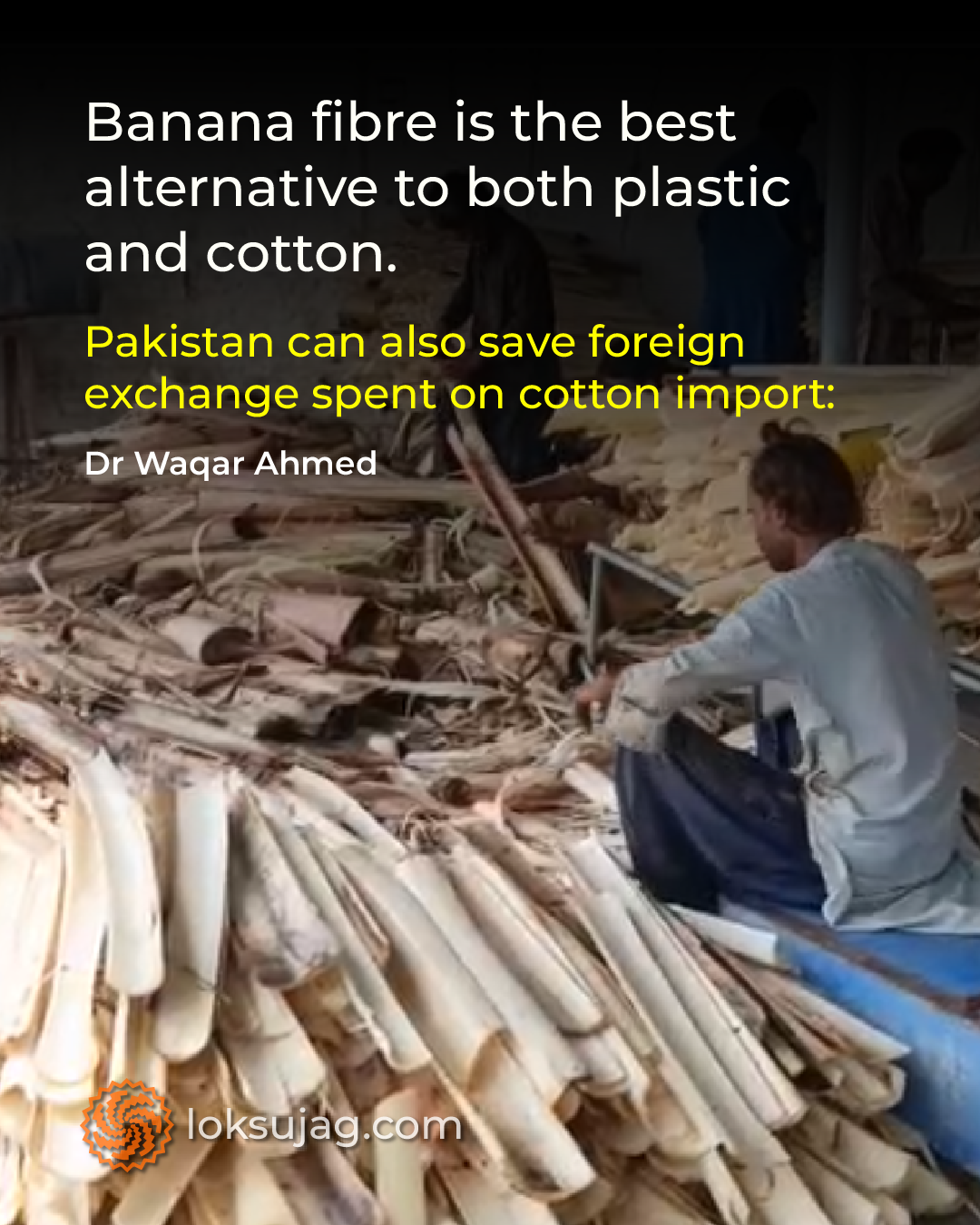
Experts say that banana fibre is the best alternative to both plastic and cotton, which can save Pakistan valuable foreign exchange spent on cotton imports. It should be noted that the country has seen a major decline in the area under cotton cultivation and production over the past decade. Cotton production, which was 14 million bales 10 years ago, has now decreased to about 6 million.
According to Dr. Waqar Ahmed, former associate professor at the University of Agriculture, Faisalabad, banana fibre is inexpensive, strong and biodegradable, which can be an excellent way to avoid plastic and other waste. It can be easily used to make value-added textile products and sanitary pads, as well as baby diapers, fishing nets, mats, shoes, gloves and sacks or bags.
100 billion rupees worth of garbage!
Agha Zafarullah Durrani has entrusted the management of his banana plantations to his 35-year-old son, Agha Samiullah, who is also keen on modern farming.
Seeing the growth of the banana fibre business, Samiullah has registered his company under the name of BinJan Fiber. He says that banana production is good, and when its wet stem is put into a machine, three environmentally friendly and profitable elements are obtained, namely fibre, pulp, and water.
“Fibre provides raw material for many industries. Egg trays or molds, disposable glasses, plates, etc. are made from pulp, and the water from the plant stem is used as fertilizer in crops.”
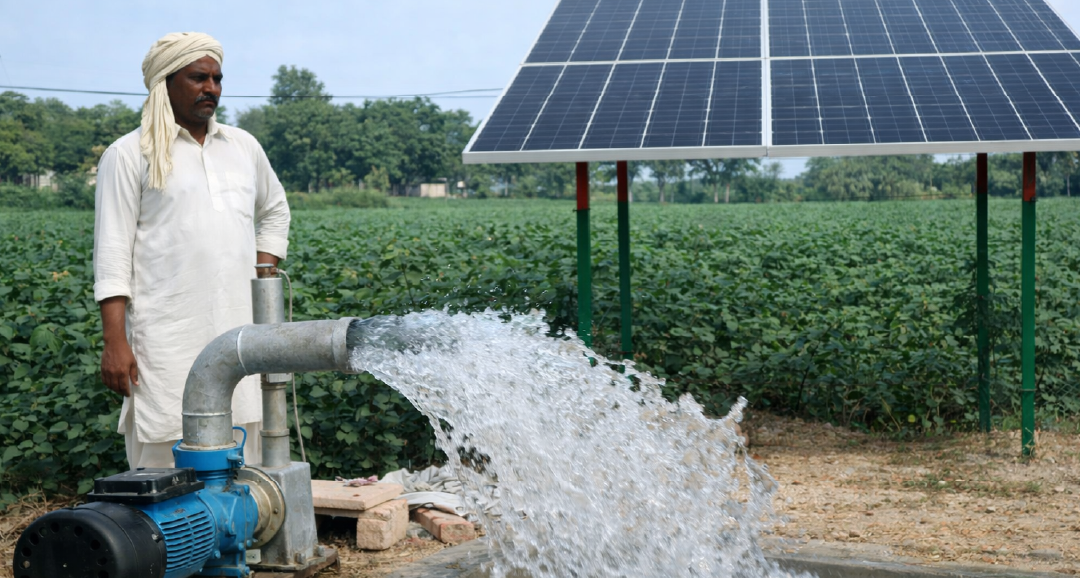
According to him, a banana fibre extraction machine can be manufactured for about Rs300,000, for which a one-horsepower motor is sufficient. This solar-powered machine produces 15 to 17 kg of fibre in eight hours.
Statistics show that banana cultivation in Pakistan is continuously increasing. In 2014-15, banana production here was 119,000 tonnes, which increased to 311,000 tonnes in 2023-24. That is, an increase of 162 per cent in 10 years. Eighty per cent of banana production is in Sindh, and it was cultivated here on about 96,000 acres in 2023-24.
Dr Rizwan Mahmood is associated with Interloop Limited and has been assisting the company with banana fibre for the past six years. According to him, 50 tonnes of biomass is produced from per acre of banana annually, of which two tonnes of dry fibre can be extracted. This means Sindh could have produced about 200,000 tonnes of fiber in 2023-24, worth Rs100bn at a price of Rs500 per kg.
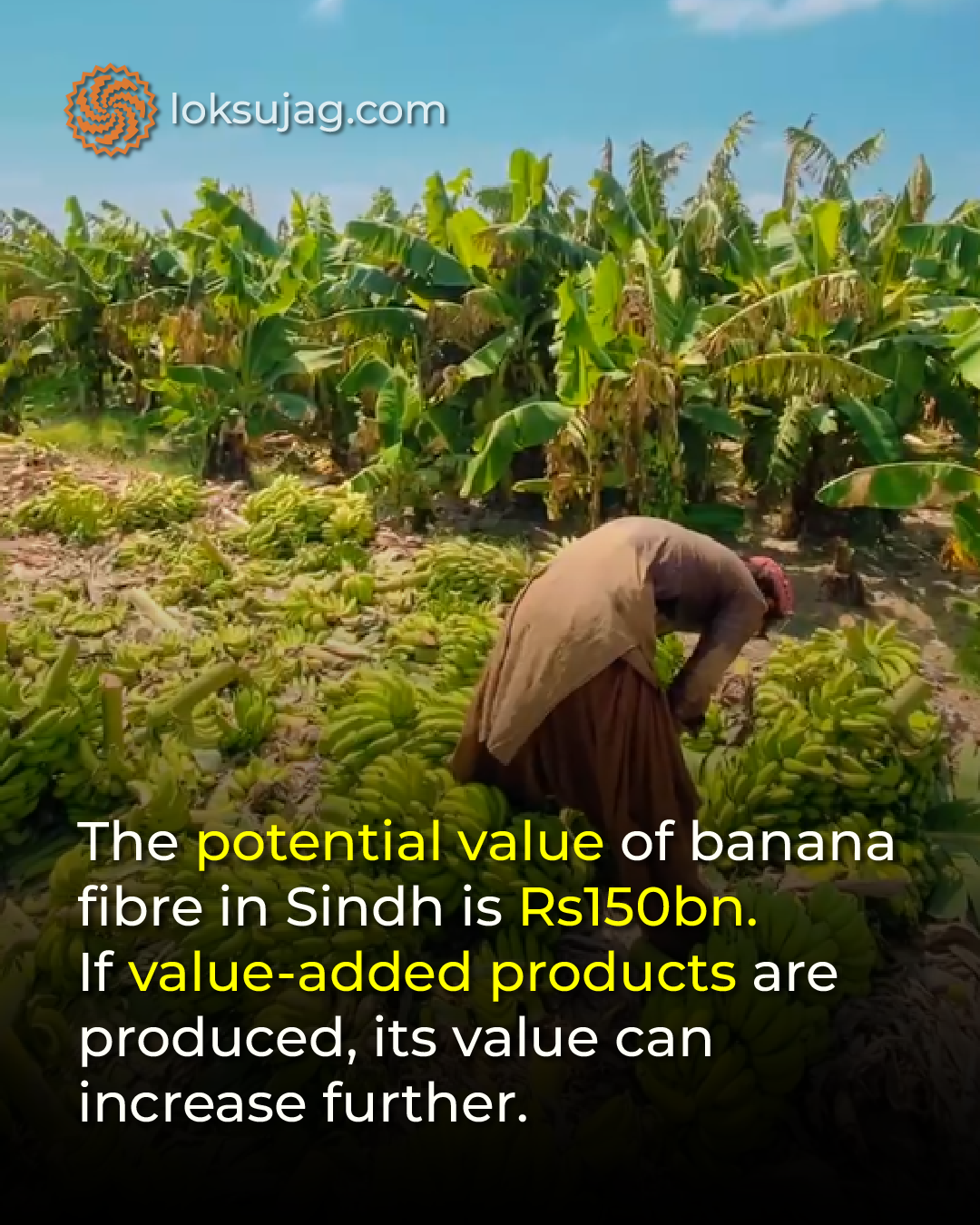
Agha Samiullah told Lok Sujag that he had sold his banana fibre to a Faisalabad company last October for Rs500 per kg. However, at that time, the domestic price of raw banana fibre was Rs830 ($ 2.97), in India it was 367 to 917 Pakistani rupees and in the global market it was at least two to three dollars per kg. At Rs800 per kg, the total potential value of banana fibre in Sindh is Rs150bn ($ 500m). If value-added products are made from this fibre, its value could increase even more. The global banana fiber market was worth $1.37 billion in 2021. It is expected to reach $3.26bn by 2033, growing at an average annual rate of 7.5 percent.
Is cloth made by banana fibre expensive?
Mirza Suleman Baig, a textile design graduate who has been working as an assistant manager, production design, at the Sindh Rule Support Organization (SRSO) for the past six years, told Lok Sujag that under the poverty reduction programme launched by the Sindh government, the SRSO was tasked with creating small business opportunities for rural women, and his team decided to use banana fibre after consulting experts from Faisalabad and Tando Jam Agriculture Universities.
“We got the banana fibre spinning (making or spinning) done by Sherbano Bibi, a farmer from Sobho Dero village in Khairpur Mirs. The yarn produced there was handed over to the cloth makers in Larkana (Moenjo Daro). The cloth makers mixed cotton and banana fibre threads for us and made the cloth in which cotton was used as warp (standing thread) and banana was used as weft (cross thread).”
Mirza Suleman Baig says that SRSO got handbags, women’s purses and shopping bags made from this “banana fibre cotton fabric”. SRSO also had 200 bags made on order from the same fabric for the Sindh Literature Festival 2025 in Karachi, which were very popular. However, he says that this cloth was produced at around Rs2,000 per meter, the main reason being the cost of the thread made from banana fibre. The cloth made in this way is certainly eco-friendly and sustainable, but it is expensive.
Agha Zafarullah disagrees with Mr Baig. He insists that when the work is being done on a small or household scale, it will obviously be expensive. But if yarn and products are produced from banana fibre at an industrial scale, they will not be more expensive than cotton or plastic.
Who will buy banana fibre?
Agha Zafarullah says that 93 per cent of the total banana cultivation area in the country is in Sindh. Here, farmers are burning their products (cut plants) with their own hands, which also increases pollution. But neither the industrial institutions nor the government pay attention to this.
“Earlier, the company used to pick up our fibre on time, the work was going well, but four months ago they stopped purchasing. Now the machines are shut down and 25 to 30 workers are unemployed who were earning Rs1,200 per day at home.”
Dr Rizwan Mahmood says that his company works with global brands that are also running factories in Egypt, Bangladesh and Sri Lanka.
“We believe in reducing carbon footprints, so we are focusing more on banana fibre. Here, socks, stockings, shirts, etc. are made by mixing fibre threads and cotton yarns, which have high moisture absorption capacity.”
He says that banana fibre is hard, which requires complex processing to make it as soft as cotton fibre. Products are not being manufactured on a large scale in Pakistan, nor is quality machinery available here. Now that this work has started, machinery is also being prepared and skilled workers are also being found.
Mr Rizwan says that textile industry in Pakistan is being affected due to expensive electricity, gas and tax issues, due to which the company has temporarily stopped purchasing fibre. As soon as a large order is received, the purchase will be resumed.
Let's see when the banana fibre that turns into ash becomes a part of the Pakistani economy and when will there be any new hope for improvement for the farmers?
Published on 10 Feb 2026